

Why Ava DuVernay New 14th Documentary Matters Now
By Darius Spearman (africanelements)
Support African Elements at patreon.com/africanelements and hear recent news in a single playlist. Additionally, you can gain early access to ad-free video content.
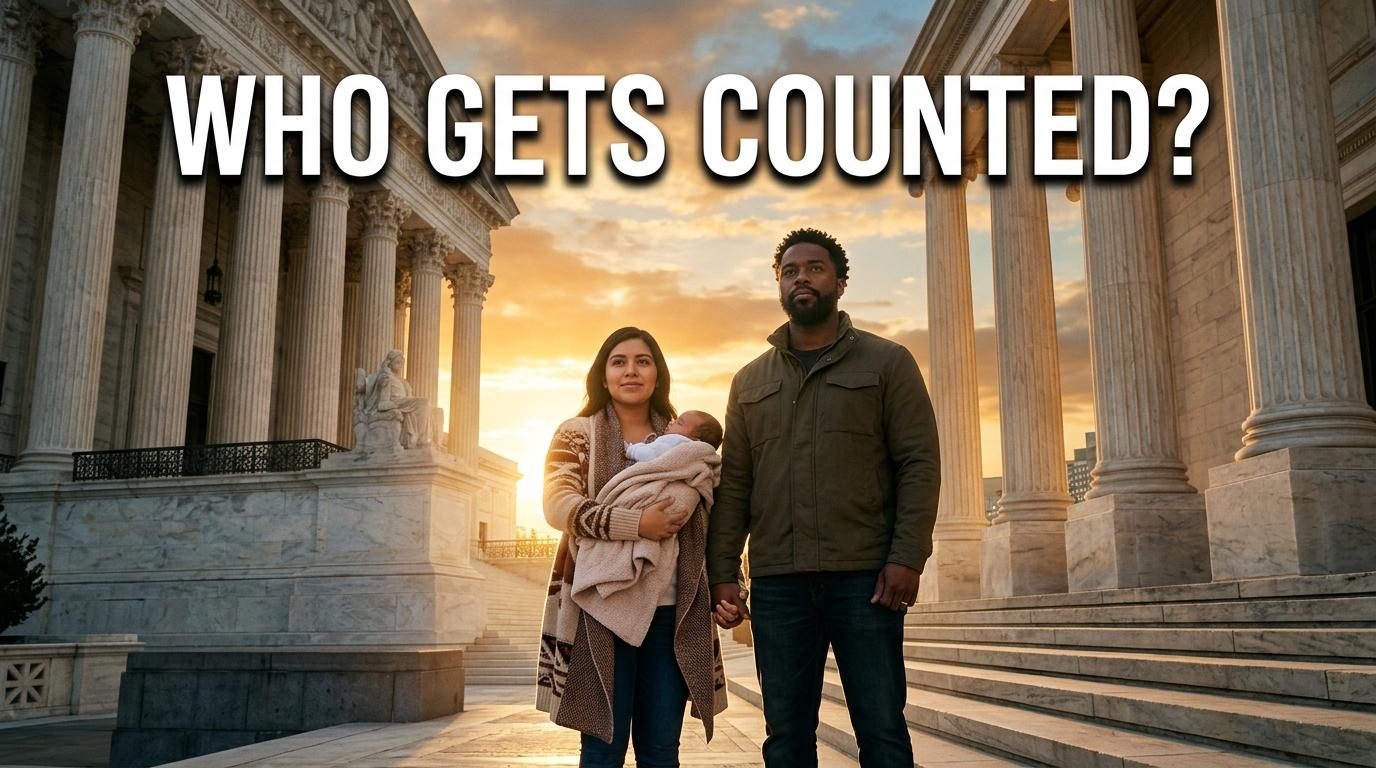
On July 16, 2026, acclaimed filmmaker Ava DuVernay officially announced her upcoming Netflix documentary, 14th (theplaylist.net, netflix.com, thegrio.com). This film serves as a direct continuation of her landmark, Oscar-nominated documentary 13th, which premiered a decade earlier (blavity.com). While her previous work exposed the racialized loopholes of the American prison-industrial complex, this new project shifts the lens directly to the Fourteenth Amendment (theplaylist.net, netflix.com). It examines the ongoing constitutional battle over equal protection, mass disenfranchisement, and birthright citizenship (theplaylist.net, netflix.com, thegrio.com). DuVernay summarized the core theme by stating that if 13th asked who gets caged, then 14th asks who gets counted (netflix.com, youtube.com).
This announcement arrives at a moment of profound constitutional tension in the United States (latimes.com). The film addresses contemporary legal struggles that threaten to reshape the very definition of American citizenship (cmsny.org). By exploring these connections, the documentary highlights how historic legal battles continue to influence modern lives (theplaylist.net, blavity.com). Viewers will see how the past remains active in current policy debates (theplaylist.net, netflix.com).
The Modern Battleground Over Citizenship
The contemporary catalyst for this documentary is a massive legal showdown over birthright citizenship. On January 20, 2025, during his first day back in office, President Donald Trump signed Executive Order 14160 (latimes.com). This order, titled “Protecting the Meaning and Value of American Citizenship,” sought to unilaterally end birthright citizenship for children of undocumented immigrants and temporary visa holders (cmsny.org). It triggered immediate lawsuits from civil rights organizations and twenty-two states (americanimmigrationcouncil.org). The legal battle culminated in the landmark Supreme Court case Trump v. Barbara (supremecourt.gov).
The primary representative in this class-action lawsuit was Barbara, a Honduran asylum applicant (americanimmigrationcouncil.org). She filed the suit in a New Hampshire federal district court after the executive order threatened to deny birthright citizenship to her unborn child (americanimmigrationcouncil.org, aclu-nh.org). On June 30, 2026, the Supreme Court ruled six to three to strike down the executive order (supremecourt.gov). The Court reaffirmed that the Fourteenth Amendment guarantees citizenship to children born on American soil, regardless of parental immigration status (americanimmigrationcouncil.org). Chief Justice John Roberts delivered the majority opinion, joined by Justices Sonia Sotomayor, Elena Kagan, Amy Coney Barrett, and Ketanji Brown Jackson (supremecourt.gov). Roberts declared that citizenship remains the right to have rights and participate in the political community (supremecourt.gov).
However, the political battle did not end with this judicial decision (washingtonexaminer.com). Republican lawmakers quickly introduced new legislative bills to bypass the ruling (washingtonexaminer.com). Representative John McGuire introduced the Birthright Citizenship Clarification Act, while Senator Jim Banks proposed the Citizenship Act of 2026 (congress.gov, senate.gov). These lawmakers relied on a concurring opinion by Justice Brett Kavanaugh, who suggested that while the president cannot act unilaterally, Congress holds the authority to define statutory exceptions under its immigration powers (supremecourt.gov, brennancenter.org). Thus, the legislative bypass strategy seeks a statutory path to restrict citizenship, hoping the Court will defer to congressional power (supremecourt.gov, washingtonexaminer.com).
The Radical Origins of Equal Protection
To understand the stakes of these modern debates, one must look back to the Reconstruction Era. The Fourteenth Amendment was drafted to nullify the infamous Dred Scott v. Sandford decision of 1857 (britannica.com). In that case, the Supreme Court ruled that Black people, whether enslaved or free, were not citizens and possessed no rights that white citizens had to respect (britannica.com). Following the Civil War, the nation faced the monumental task of integrating nearly four million newly freed Black Americans (battlefields.org, pbs.org). The amendment was engineered by a faction known as the Radical Republicans (britannica.com, billofrightsinstitute.org).
The Radical Republicans were a prominent faction within the Republican Party from the Civil War era through Reconstruction (britannica.com, britannica.com). They were passionately dedicated to the complete, rapid, and permanent eradication of slavery (britannica.com, britannica.com). Furthermore, they fought for the protection of civil and political rights for Black Americans (britannica.com, billofrightsinstitute.org). Representative Thaddeus Stevens and Senator Charles Sumner led this influential faction (britannica.com). Unlike moderate Republicans who prioritized preserving the Union, the Radicals believed the primary objective of the Civil War was immediate and total abolition (britannica.com).
Following the war, they fiercely opposed the lenient policies of Presidents Abraham Lincoln and Andrew Johnson (britannica.com, pbs.org). They successfully pushed for military oversight of former Confederate states (britannica.com, pbs.org). They became the driving legislative force behind the Reconstruction Amendments (britannica.com, billofrightsinstitute.org). Their efforts culminated in the ratification of the Fourteenth Amendment on July 9, 1868 (archives.gov). This historic amendment established the Citizenship Clause, guaranteed Due Process, and mandated Equal Protection (archives.gov).
Defining Liberty Through Due Process and Equal Protection
The first section of the Fourteenth Amendment contains the Due Process and Equal Protection Clauses (archives.gov). These clauses serve as the primary legal mechanisms designed to protect individual liberties and prevent arbitrary government action (archives.gov). The Due Process Clause states that no state shall deprive any person of life, liberty, or property without due process of law (archives.gov). This clause guarantees procedural due process, which requires fair legal procedures before rights are stripped (study.com). It also guarantees substantive due process, protecting fundamental rights from government infringement (study.com).
Meanwhile, the Equal Protection Clause mandates that no state shall deny to any person within its jurisdiction the equal protection of the laws (archives.gov). This clause requires the state to have a legitimate rational basis for its laws (study.com). It subjects discriminatory classifications, such as race or gender, to strict scrutiny (study.com). These constitutional protections have historically defended vulnerable populations, including immigrant families (wikipedia.org).
In 1898, the Supreme Court ruled in United States v. Wong Kim Ark that a child born in San Francisco to Chinese immigrant parents was a citizen (wikipedia.org). At that time, Chinese immigrants were legally barred from naturalization due to racial exclusions (wikipedia.org). The Chinese Exclusion Act of 1882 suspended the immigration of Chinese laborers and prohibited courts from granting them citizenship (wikipedia.org). Additionally, federal naturalization laws limited naturalization to free white persons and individuals of African descent (wikipedia.org). This classification left Asian immigrants as aliens ineligible for citizenship (wikipedia.org). Despite these restrictions, the Supreme Court ruled that Wong Kim Ark was a citizen under the Citizenship Clause (wikipedia.org). This ruling cemented the principle that birthright citizenship applies to children of non-citizens on American soil (wikipedia.org).
The Loophole in the Promise of Freedom
Although the Reconstruction Amendments promised equality, they contained significant weaknesses. One major issue was the loophole in the Thirteenth Amendment (wikipedia.org). Often called the penal-exception or punishment clause, this loophole permits slavery and involuntary servitude as a legal punishment for individuals convicted of a crime (wikipedia.org). The text states that neither slavery nor involuntary servitude, except as a punishment for crime whereof the party shall have been duly convicted, shall exist within the United States (wikipedia.org, archives.gov). Following the Civil War, Southern states intentionally exploited this loophole to maintain white supremacy (americanyawp.com, pbs.org). They enacted highly restrictive laws known as Black Codes starting in 1865 (americanyawp.com, pbs.org).
These codes aimed to force newly freed Black Americans into involuntary labor and bypass the Thirteenth Amendment (americanyawp.com, pbs.org). A core feature of the Black Codes was the implementation of broad vagrancy laws (americanyawp.com, pbs.org). These laws criminalized unemployment, allowing authorities to arrest freed Black people and lease them to private employers (americanyawp.com, pbs.org). The codes prohibited Black Americans from serving on juries, marrying white citizens, or testifying against white individuals in court (americanyawp.com, pbs.org). They were explicitly designed to exploit the penal-exception clause (americanyawp.com). This exploitation allowed the rise of the convict leasing system, which generated massive state revenues while subjecting prisoners to brutal conditions (americanyawp.com). The passage of these laws outraged congressional Republicans, justifying the passage of the Civil Rights Act of 1866 and the Fourteenth Amendment (britannica.com, pbs.org). Throughout these oppressive eras, African American families demonstrated remarkable resilience while navigating hostile legal and economic landscapes.
Bypassing the Right to Vote
Following the ratification of the Fourteenth Amendment, Radical Republicans recognized the need to secure voting rights (billofrightsinstitute.org). They championed the Fifteenth Amendment, which was ratified in 1870 (rockthevote.org, senate.gov). This amendment prohibits the federal or state governments from denying a citizen the right to vote based on race, color, or previous condition of servitude (rockthevote.org, senate.gov). Radical Republicans prioritized this amendment because securing the Black vote was critical for the survival of their party and the success of Reconstruction (billofrightsinstitute.org).
However, the amendment drew sharp criticism from early feminist groups (rockthevote.org). It did not prohibit discrimination based on sex, which introduced the word “male” into the Constitution and caused a bitter split in the civil rights movement (rockthevote.org). Southern states quickly bypassed the Fifteenth Amendment by implementing facially race-neutral voting restrictions (rockthevote.org, brennancenter.org). These restrictions included poll taxes, literacy tests, grandfather clauses, and white primaries (rockthevote.org, brennancenter.org). These measures successfully disenfranchised Black voters for decades (rockthevote.org, brennancenter.org). Additionally, states used criminal convictions to strip voting rights (brennancenter.org). This strategy allowed states to circumvent the Equal Protection Clause through Section 2 of the Fourteenth Amendment itself (brennancenter.org, wikipedia.org). Section 2 reduces a state’s congressional representation if it denies voting rights, but it contains an exception for participation in rebellion or other crime (archives.gov).
Felony Disenfranchisement as a Legal Bypass
The “other crime” exception became the primary legal mechanism for felony disenfranchisement (brennancenter.org, wikipedia.org). In the 1974 case Richardson v. Ramirez, the Supreme Court ruled that this language serves as an affirmative constitutional sanction (brennancenter.org, wikipedia.org). The Court reasoned that the framers of the Fourteenth Amendment could not have intended to outlaw in Section 1 a practice they explicitly exempted in Section 2 (wikipedia.org). Consequently, Southern states actively exploited this exception (brennancenter.org). They passed laws that targeted Black voters by criminalizing offenses that were selectively prosecuted (brennancenter.org). This history laid the groundwork for a massive shift in political narratives from civil rights progress to mass incarceration.
Today, felony disenfranchisement continues to restrict democratic participation. Forty-eight states place voting restrictions on individuals with felony convictions (sentencingproject.org, prisonpolicy.org). According to reports from the Sentencing Project, over four million Americans are currently barred from voting due to felony convictions (sentencingproject.org). This impact remains highly racialized (sentencingproject.org). Historically, thirteen percent of adult Black men have been disenfranchised (sentencingproject.org). In sixteen states, more than ten percent of the entire Black voting-age population remains locked out of the ballot box (sentencingproject.org). This systematic exclusion demonstrates how the historic struggle over who counts remains a contemporary crisis (sentencingproject.org). The system of federalism allows individual states to set these restrictive voting policies, creating vast disparities in political power across the nation.
The Demographic and Economic Realities of Belonging
The legal battles surrounding birthright citizenship and equal protection carry immense economic and social consequences. According to Pew Research data, births to undocumented mothers represent roughly nine percent of all three point six million annual births in the United States (cmsny.org). This represents approximately 225,000 to 250,000 births annually (cmsny.org). Ending birthright citizenship would disproportionately affect Hispanic families, who would account for eighty percent of affected births (cmsny.org).
Additionally, a 2026 study by the Center for Migration Studies estimated that birthright citizenship beneficiaries will contribute seven point seven trillion dollars to the U.S. economy between 1975 and 2074 (cmsny.org). Removing this constitutional right would result in a projected loss of 400,000 college-educated workers (cmsny.org). Furthermore, research by the Migration Policy Institute indicates that ending birthright citizenship would counterintuitively increase the unauthorized population (cmsny.org). It would add an estimated one point three million more unauthorized residents by the year 2045 (cmsny.org). These statistics reveal that attempts to restrict the Fourteenth Amendment threaten to destabilize the national economy and expand the undocumented population (cmsny.org). These ongoing legal debates also intersect with discussions surrounding racial inequality in education and other public resources, showing that the battle over equal protection affects multiple facets of American life.
What Kind of Country Is Being Written?
Ava DuVernay’s upcoming documentary 14th promises to bring these complex legal histories into the public consciousness (theplaylist.net, blavity.com). By connecting Reconstruction-era policies to contemporary court cases, the film highlights the continuous struggle for civil rights (blavity.com). The battle over the Fourteenth Amendment is not merely a historical curiosity (theplaylist.net, latimes.com). It is an ongoing argument about the fundamental nature of American identity and democracy (netflix.com, latimes.com).
As the United States approaches the 250th anniversary of its independence, the question of who is subject to its jurisdiction remains highly contested (latimes.com, constitutioncenter.org). DuVernay emphasizes that the documentary is not focused on the past tense of freedom (netflix.com, youtube.com). Instead, the film asks what kind of country is being written beneath the feet of its citizens while the public believes the stories they have been told (netflix.com, youtube.com). Through this lens, 14th will challenge viewers to examine the legal structures that define belonging in America (theplaylist.net, netflix.com).
About the Author
Darius Spearman is a professor of Black Studies at San Diego City College, where he has been teaching for over 20 years. He is the founder of African Elements, a media platform dedicated to providing educational resources on the history and culture of the African diaspora. Through his work, Spearman aims to empower and educate by bringing historical context to contemporary issues affecting the Black community.
