


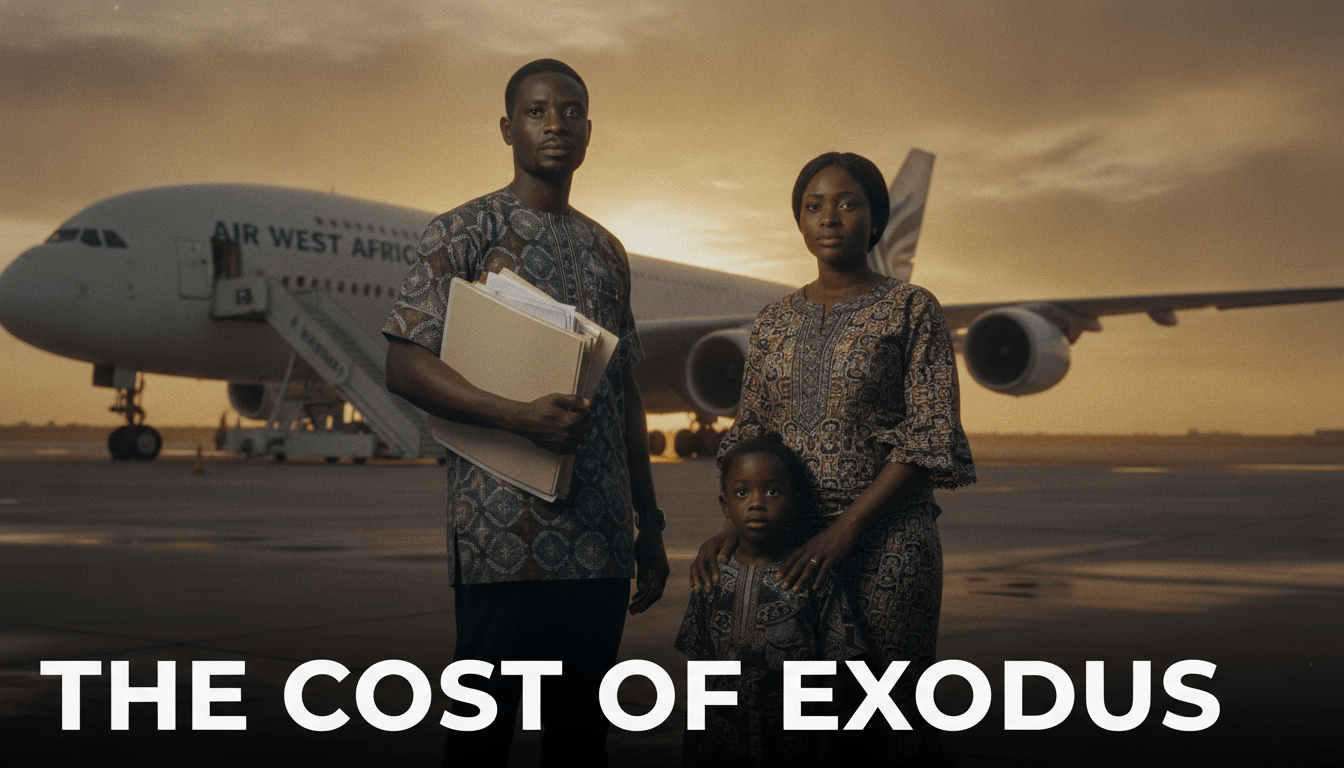
Why Nigeria Demands South Africa Xenophobia Compensation
By Darius Spearman (africanelements)
Support African Elements at patreon.com/africanelements and hear recent news in a single playlist. Additionally, you can gain early access to ad-free video content.
The Modern Exodus: The June 2026 Emergency Flights
The Nigerian government announced a major shift in its diplomatic and legal relations with South Africa on June 30, 2026 (businessday.ng). The state will formally pursue legal compensation for citizens who had to flee during violent anti-migrant protests (businessday.ng, fairplanet.org). These aggressive demonstrations forced hundreds of foreign nationals to abandon their homes, stores, and personal assets. This decision marks a historic escalation in the complex relationship between sub-Saharan Africa’s two largest economies.
To escape the growing threat of violence, many immigrants turned to their home governments for safety. In response, President Bola Ahmed Tinubu approved five emergency flights to bring affected Nigerians back home. By early July 2026, 603 Nigerians had returned safely across three flights (channelstv.com). The first flight carried 268 passengers on June 11, followed by 66 in mid-June, and 269 on June 30 (channelstv.com). Over 1,000 citizens have been screened and cleared for future evacuations as the crisis continues.
Repatriation Numbers by Country (June-July 2026)
This modern exodus is not limited to Nigeria. The escalating threat of violence has forced other African nations to organize mass repatriations for their citizens as well. Ghana evacuated 300 of its citizens to protect them from the hostile environment (ghanaweb.com). In addition, Malawi, Kenya, and Mozambique have initiated their own emergency return operations to save lives (allafrica.com). In response to the crisis, Nigeria’s Acting High Commissioner to South Africa, Alexander Temitope Ajayi, has directed evacuees to document their lost properties (businessday.ng). This process is designed to build a strong legal claim.
Deep Historical Roots of Socio-Economic Disparity
To understand why foreign nationals are repeatedly targeted, one must look at the end of white minority rule. Apartheid was a legal system of segregation in South Africa that lasted from 1948 until 1994 (wikipedia.org, britannica.com). This state-sponsored framework classified citizens by race and strictly separated them geographically, economically, and socially (wikipedia.org, sahistory.org.za). It reserved the best land, jobs, and national resources for the white minority while forcing the Black majority into underdeveloped townships.
These structural inequalities remained deeply embedded in society even after the transition to a multiracial democracy. Decades of systemic corruption, failing infrastructure, and limited economic opportunities left many Black South Africans in severe poverty. Today, the national unemployment rate stands above 32 percent, creating immense social frustration (globalcitizen.org, ips-journal.eu). This persistent economic pain has made it easy for populist movements to scapegoat foreign nationals.
Local politicians and activist groups regularly blame African migrants for stealing scarce jobs and straining public infrastructure (globalcitizen.org). A major poll conducted by the Pew Research Center revealed the depth of this hostile sentiment. The study showed that 62 percent of South Africans view foreign nationals as a burden on society (globalcitizen.org). In addition, 61 percent of respondents believe immigrants are responsible for crime, despite a lack of empirical evidence to support the claim (globalcitizen.org). This widespread anger regularly boils over into street violence.
South African Public Opinion on Foreign Nationals
The Fractured Promise of the Rainbow Nation
The concept of the Rainbow Nation was coined by Archbishop Desmond Tutu and championed by Nelson Mandela in 1994 (wikipedia.org, nobelprize.org). It envisioned a peaceful, multicultural society where all people could live with equal dignity. During the long struggle against apartheid, many neighboring countries provided vital financial and logistical support to the African National Congress (sahistory.org.za, georgetown.edu). Countries like Nigeria and Tanzania opened their arms to South South African liberation fighters during their darkest hours.
Unfortunately, that original dream of pan-African solidarity has largely fractured in the face of modern economic reality. Many impoverished Black South Africans now direct their anger at other Black African migrants instead of addressing systemic issues (globalcitizen.org). Vigilante groups like Operation Dudula actively mobilize to drive foreign nationals out of local communities (prif.org, atnews.co.za). This practice contradicts the traditional African philosophy of Ubuntu, which emphasizes shared humanity.
This tragic dynamic represents a major shift from the days of liberation solidarity. Foreign nationals who arrived seeking prosperity now find themselves facing hostility from the very communities their home nations helped liberate. This tension highlights the struggle between national identity and continental unity. To understand these complex social challenges, readers can explore the historical struggles of African workers in the region.
Chronicles of Pain: Recurring Waves of Violence
The displacements of 2026 are not an isolated event. They represent the latest chapter in a cyclical pattern of violence that has erupted since the end of apartheid. There are three major historical flashpoints that paved the way for the current crisis. The first massive, nationwide outbreak of xenophobic violence began in May 2008 in Alexandra Township (sahistory.org.za). It quickly spread across seven of South Africa’s nine provinces, caught local authorities off guard, and caused widespread panic.
The 2008 riots resulted in the deaths of at least 62 people, including 21 South African citizens (sahistory.org.za). The violence forced more than 40,000 foreign nationals to flee the country, while another 50,000 were internally displaced (sahistory.org.za, xenowatch.ac.za). The images of burning homes and fleeing families shocked the international community and damaged South Africa’s global image. Yet, the underlying social issues that caused the explosion remained largely unaddressed by the state.
The violence returned in April 2015, primarily targeting immigrant-owned shops in Durban and Johannesburg (hrw.org, irb-cisr.gc.ca). This wave claimed at least seven lives and forced foreign governments to begin organizing emergency evacuations (hrw.org). In September 2019, anti-immigrant riots erupted again in Johannesburg, causing 12 deaths and widespread property destruction (hrw.org, hrw.org). Each of these waves followed the exact same pattern of economic frustration leading to targeted violence.
The Unresolved Battle for Financial Compensation
The current diplomatic standoff between Abuja and Pretoria closely mirrors the severe diplomatic clash of 2019. During the 2019 riots, the Nigerian government took strong measures to protest the treatment of its citizens. Nigeria boycotted the World Economic Forum on Africa in Cape Town and recalled its High Commissioner (guardian.ng, placng.org). In response to the news, angry mobs in Nigeria launched retaliatory attacks against South South African businesses in Lagos and Abuja.
These reprisal attacks targeted major commercial giants like MTN and Shoprite, forcing South Africa to temporarily close its embassies (guardian.ng). To protect its citizens, Nigeria used the private carrier Air Peace to voluntarily evacuate over 600 distressed nationals (channelstv.com). At that time, Nigeria’s Foreign Affairs Minister formally demanded that South Africa pay compensation for destroyed businesses (guardian.ng). However, South Africa’s government rejected the demands, citing local legal limitations (youtube.com, guardian.ng).
South African authorities argued that domestic law did not allow the state to pay for damages caused by public riots (youtube.com). Although the two presidents met in October 2019 to discuss the issue, no systematic compensation payouts were ever made. The economic grievances of foreign shop owners remained completely unresolved. Because these financial issues were ignored, Nigeria is now pursuing a different legal path to secure justice for its citizens.
Xenophobia as a Massive Regional Trade Liability
The ongoing human rights crisis has also become a critical threat to regional economic stability. An analysis by the FW de Klerk Foundation highlights South Africa’s high vulnerability to diplomatic and economic backlashes (fwdeklerk.org, nedbank.co.za). The foundation was established in 1999 by the last president of the apartheid era (nobelprize.org). It focuses on constitutional rights and free-market economics, warning that lawlessness harms the entire nation (ebsco.com).
South Africa enjoys immense economic advantages through its trade with regional neighbors like Zimbabwe, Mozambique, Zambia, and Malawi (channelafrica.co.za, nedbank.co.za). The annual bilateral trade basket with these nations is worth at least 14.35 billion dollars (fwdeklerk.org, nedbank.co.za). If regional anger leads to consumer boycotts or transport delays, the economic fallout will be severe. A small five percent disruption to trade puts 718 million dollars in annual exports at risk (fwdeklerk.org).
South African Trade Exposure & Risk (2026 Analysis)
For Nigeria, accepting the economic ruin of its diaspora without consequence is no longer politically acceptable. The historical legacy of division must not prevent modern nations from building stronger economic ties. To explore how historical challenges shape modern economic struggles, readers can examine the rich history of Africa before modern borders were created.
Police Action and the Dispute Over Legal Status
During the June 2026 demonstrations, South African law enforcement took active steps to maintain public order. The government deployed heavy police units and South African National Defence Force assets to known hotspots (allafrica.com, elpais.com). Officers maintained a highly visible presence to deter looting and prevent direct physical clashes. Despite these efforts to keep the peace, police arrested about 900 people during the protests (allafrica.com).
Many of these arrests were for immigration-related offenses, which highlights a major point of disagreement between the two nations. South African authorities claim that many evacuated Nigerians were living in the country illegally (allafrica.com). They processed many individuals at repatriation centers to assess their status (allafrica.com). However, Nigeria’s High Commissioner strongly rejects these claims, insisting that the vast majority of evacuees had entered the country legally (businessday.ng).
Nigerian diplomats explain that their citizens became undocumented due to severe systemic delays at South Africa’s Department of Home Affairs (businessday.ng). A massive backlog left many legal residents unable to renew their papers for years (businessday.ng). These administrative failures have created severe economic distress for families who wanted to maintain their legal status. This bureaucratic bottleneck has turned legal residents into targets for deportation.
Bypassing Domestic Law for State-to-State Justice
Under South African domestic law, the government is generally not liable for property damage caused by public violence. Claims must typically go through the state-owned special risks insurer known as SASRIA (webberslaw.com, webberwentzel.com). However, SASRIA coverage is only available to businesses that held active private insurance policies (webberwentzel.com, moonstone.co.za). This system excludes most informal foreign traders, who operate without expensive commercial insurance.
To bypass these restrictive domestic laws, the Nigerian government is taking a direct diplomatic route. The Nigerian High Commission has instructed all returning citizens to carefully document their abandoned properties (businessday.ng). This inventory includes detailed records of vehicles, shops, real estate, and remaining commercial stock (businessday.ng). Nigeria’s Ministry of Foreign Affairs plans to verify these records and present them directly to South South African officials (businessday.ng).
By taking this issue directly to high-level bilateral negotiations, Nigeria aims to secure a state-to-state diplomatic settlement. This strategy bypasses local judicial hurdles entirely and holds the host government accountable for failing to protect foreign residents. If successful, this effort could establish a powerful new legal precedent for protecting diaspora communities across the African continent.
About the Author
Darius Spearman is a professor of Black Studies at San Diego City College, where he has been teaching for over 20 years. He is the founder of African Elements, a media platform dedicated to providing educational resources on the history and culture of the African diaspora. Through his work, Spearman aims to empower and educate by bringing historical context to contemporary issues affecting the Black community.
