


Why Unpaid Health Workers Battling Ebola Are Striking Now
By Darius Spearman (africanelements)
Support African Elements at patreon.com/africanelements and hear recent news in a single playlist. Additionally, you can gain early access to ad-free video content.
The Breaking Point in Central Africa
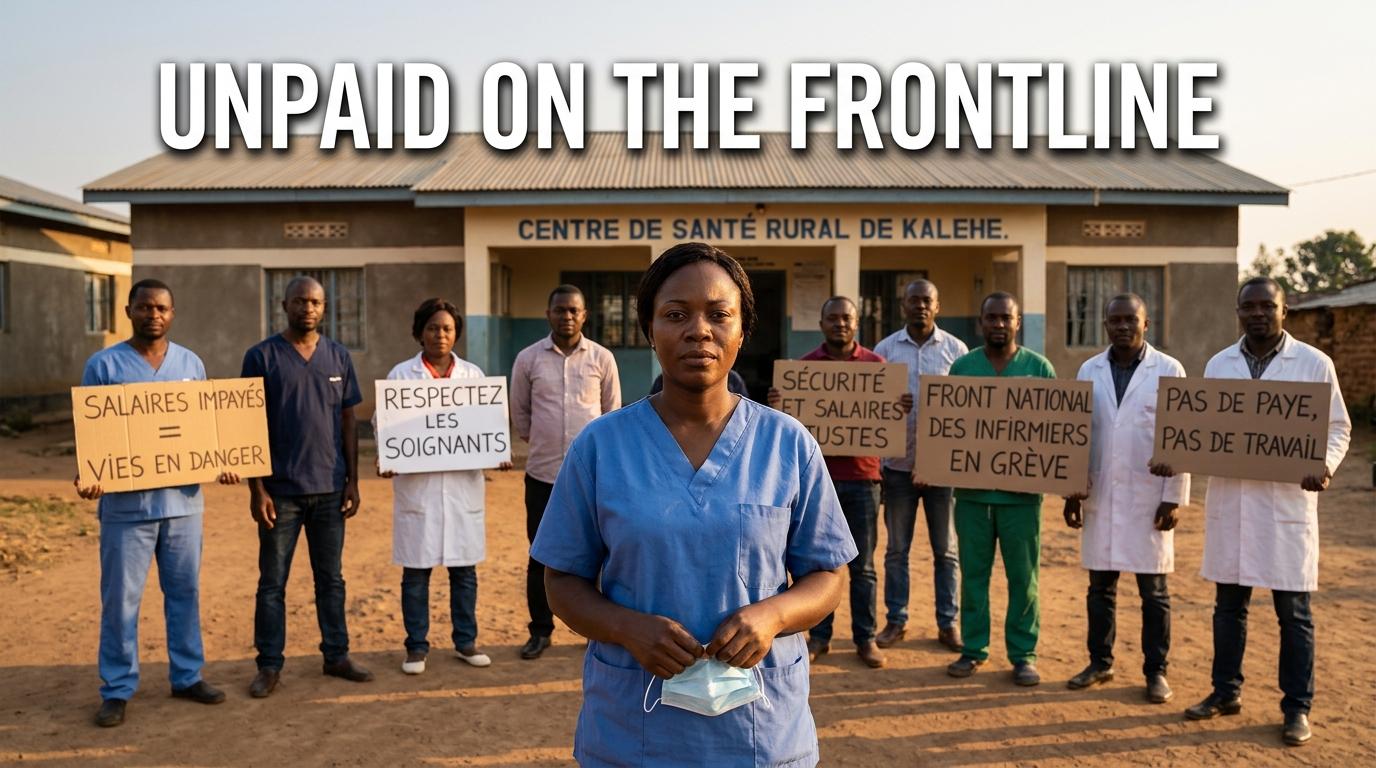
A severe public health emergency is unfolding across Central Africa as local healthcare personnel battle a rapid Ebola outbreak. Frontline workers in the Ituri province of the Democratic Republic of the Congo have staged strikes and walkouts outside government offices and medical facilities (bignewsnetwork.com, inkl.com). These nurses, sanitizers, surveillance officers, and burial teams have operated without basic wages or promised hazard allowances for months (bignewsnetwork.com).
The current epidemic involves the Bundibugyo ebolavirus strain, which has infected thousands of people and caused over 1,800 deaths (who.int, reliefweb.int). The outbreak is spreading faster than containment personnel can track it (bignewsnetwork.com, aljazeera.com). Frontline workers are forced to manage biohazardous materials without basic personal protective equipment or guaranteed medical care if they become infected (inkl.com, theguardian.com). More than 150 healthcare workers have contracted the virus during this outbreak, leading to at least 44 deaths among local medical staff (who.int, reliefweb.int).
A History Built on Volunteer Labor
The reliance on uncompensated local labor during health emergencies is not a new phenomenon. When the Ebola virus was first isolated in 1976 near the Ebola River, national public health budgets across Sub-Saharan Africa were already struggling under extreme financial deficits (cdcmuseum.org). Decades of structural adjustment programs, foreign debt burdens, and reduced public spending severely weakened local health infrastructure (imf.org). To maintain basic coverage, health systems turned to uncompensated cadres known as Community Health Workers (joinchic.org, chwcentral.org).
Understanding the deep roots of this institutional reliance requires examining the long history of Africa before colonialism altered local community care structures. Modern state health ministries shifted community health workers into permanent emergency response roles without incorporating them into civil service payrolls (joinchic.org, ilo.org). Consequently, when deadly infectious diseases emerge, national health ministries depend on informal volunteers to perform high-risk triage and epidemiological surveillance (chwcentral.org, chwcentral.org).
The Repeat Pattern of Unheeded Warnings
The 2014–2016 West Africa Ebola epidemic revealed the extreme danger of relying on underpaid local staff. In Sierra Leone, Liberia, and Guinea, over 800 health workers contracted Ebola, and more than 500 lost their lives due to unsafe working conditions and severe equipment shortages (cdcmuseum.org, cdc.gov). In October 2014, local clinic staff in Monrovia and Freetown went on strike to demand hazard allowances and life insurance promises that were never delivered (theguardian.com, wikipedia.org).
Healthcare personnel who continuously fought for economic justice faced systemic non-payment again during the 2018–2020 outbreak in the eastern DRC (theguardian.com). Despite international aid pledges exceeding one billion dollars, bureaucratic delays left local contact tracers and burial teams unpaid for months (bignewsnetwork.com, theguardian.com). In 2020, unpaid sanitizers in Mbandaka blocked access to diagnostic laboratories after working without wages during an active viral outbreak (theguardian.com). Today, the same administrative failures are repeating in Central Africa (bignewsnetwork.com, inkl.com).
The Threat of the Bundibugyo Strain
The biological nature of the current outbreak compounds the risks facing frontline personnel. The Bundibugyo ebolavirus strain is distinct from the more widely studied Zaire strain (ajmc.com, contagionlive.com). Bundibugyo carries a historical fatality rate of approximately 25 to 50 percent, compared to up to 90 percent for the Zaire strain (ajmc.com, nicd.ac.za). However, the absence of strain-specific medical countermeasures creates unique clinical vulnerabilities (contagionlive.com, nih.gov).
Licensed Ebola vaccines, such as Ervebo, specifically target the glycoprotein of the Zaire strain and offer no protective cross-immunity against Bundibugyo virus disease (nih.gov, gavi.org). Furthermore, approved monoclonal antibody treatments like Inmazeb and Ebanga do not have regulatory authorization or proven efficacy against the Bundibugyo strain (nih.gov, hopkinsguides.com). Local health workers must care for severely ill patients relying solely on basic supportive therapy, which significantly elevates their exposure to infectious bodily fluids (ajmc.com, hopkinsguides.com).
The Two-Tiered System of International Aid
The strike actions highlight a profound labor disparity between foreign aid staff and local medical responders (bignewsnetwork.com, theguardian.com). Foreign personnel deployed by donor governments or international groups receive standardized contracts, international health insurance, hazard allowances, and guaranteed medical evacuation options (theguardian.com, seedglobalhealth.org). Local nurses, surveillance officers, and sanitizers face direct exposure to viral pathogens without basic compensation or life insurance guarantees (bignewsnetwork.com, chwcentral.org).
This dynamic reflects broader historical patterns where African workers are rising against institutional inequities across various sectors. International risk management models prioritize protecting foreign personnel to avoid legal liability in home nations (nih.gov). Meanwhile, local workers bear the overwhelming weight of patient care and infectious waste management with limited equipment (inkl.com, theguardian.com). This structural segregation undermines health security by demoralizing the local workforce required to stop the epidemic (bignewsnetwork.com, seedglobalhealth.org).
Administrative Bottlenecks and Financial Hurdles
The non-payment of health workers occurs despite millions of dollars pledged by global institutions (bignewsnetwork.com, inkl.com). While international emergency aid is mobilized following an official outbreak declaration, funds travel through a complex bureaucratic trail (who.int, deliveryassociates.com). Capital flows from donor agencies into multilateral trust funds, passes to national treasuries, and then moves down to provincial health zones before reaching district offices (who.int, unjiu.org).
These complex funding channels are further complicated by national economic vulnerabilities and rising debt crisis pressures that limit immediate public expenditure (imf.org). Stringent donor verification rules, manual payroll auditing, and missing digital payment systems stall cash flow at sub-national levels (who.int, deliveryassociates.com). As central ministries and international agencies debate financial compliance, frontline health workers go months without receiving basic compensation (bignewsnetwork.com, deliveryassociates.com).
The Gendered Burden on Frontline Responders
The non-payment of community health personnel disproportionately affects women in low-income communities. Globally, women constitute roughly 70 percent of the total healthcare workforce (joinchic.org, ilo.org). Across Sub-Saharan Africa, women make up between 75 and 85 percent of community health worker cadres (joinchic.org, chwcentral.org). These workers perform essential home visits, contact tracing, and hygiene education (chwcentral.org, chwcentral.org).
Health systems exploit traditional gender expectations that frame health outreach as an extension of unpaid domestic duty (joinchic.org, ilo.org). Because national labor codes often fail to legally recognize community health workers as formal employees, health ministries omit them from standard wage protections (findlaw.com, ilo.org). As a result, female workers risk their personal safety during viral outbreaks while taking on debt to support their families (bignewsnetwork.com, joinchic.org).
Reforming Global Health Response Frameworks
Resolving the cycle of strike action and delayed outbreak response requires structural reform in global health governance. Public health organizations advocate for direct digital payment channels to bypass intermediate bureaucratic steps (who.int, deliveryassociates.com). Utilizing encrypted mobile money transfers can deliver hazard allowances directly to frontline responders on verified digital rosters from the first day an outbreak is declared (deliveryassociates.com, chwcentral.org).
Furthermore, national health ministries must formalize community health workers into salaried civil service structures (joinchic.org, seedglobalhealth.org). Grant agreements funded by international donors must require verified local wage payment before releasing administrative funds to central agencies (who.int, unjiu.org). Ensuring equal access to protective gear, medical guarantees, and fair compensation for local health personnel remains essential to building resilient epidemic defense networks (inkl.com, seedglobalhealth.org).
About the Author
Darius Spearman is a professor of Black Studies at San Diego City College, where he has been teaching for over 20 years. He is the founder of African Elements, a media platform dedicated to providing educational resources on the history and culture of the African diaspora. Through his work, Spearman aims to empower and educate by bringing historical context to contemporary issues affecting the Black community.
