

Why West African Migrants Risk the Deadly Atlantic Route
By Darius Spearman (africanelements)
Support African Elements at patreon.com/africanelements and hear recent news in a single playlist. Additionally, you can gain early access to ad-free video content.
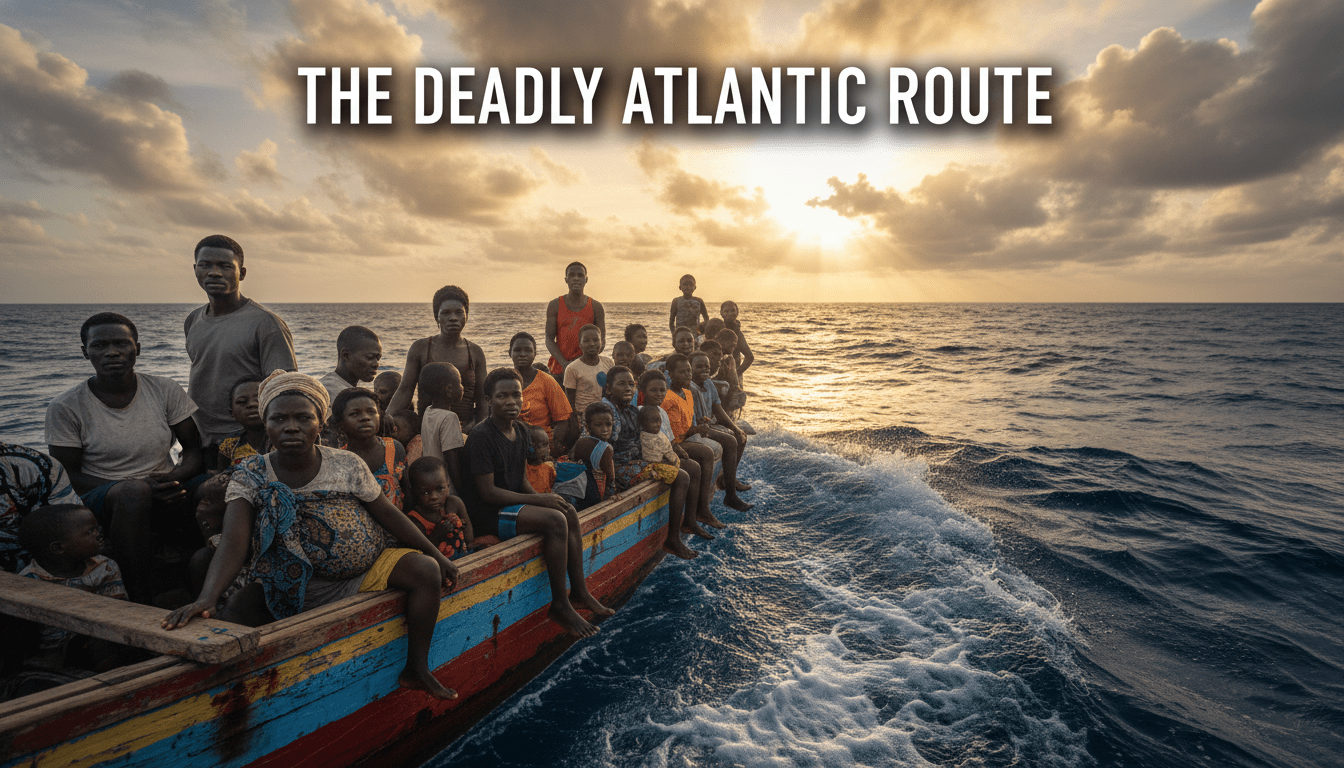
A Distressed Vessel off the Mauritanian Coast
On June 2, 2026, the Mauritanian Coast Guard intercepted a distressed wooden vessel off the coast of Nouakchott (democrata.es, vietnam.vn). The overcrowded boat had originally departed from Banjul, Gambia (vietnam.vn, africaninsider.com). However, a catastrophic engine failure left the travelers stranded in rough seas near the shoreline (democrata.es, vietnam.vn). Among the rescued individuals were twelve women and three children who faced the open ocean (democrata.es, vietnam.vn).
The group reflected the complex regional displacement occurring across the Sahel (vietnam.vn, africaninsider.com). The travelers consisted of eighty Malians, twelve Senegalese, ten Gambians, four Mauritanians, three Ivorians, and one Nigerian (vietnam.vn, africaninsider.com). This harrowing rescue occurred only forty-eight hours after Mauritanian officials saved another boat carrying nearly 150 travelers (vietnam.vn, africaninsider.com). These repeated incidents highlight a deeply entrenched humanitarian crisis that is sweeping across the West African coastline.
The Historical Evolution of the Atlantic Route
The maritime pathway connecting the West African coast to Spain’s Canary Islands is known as the Atlantic Route (iom.int). This route is not a modern development. The first recorded arrival of a migrant vessel in the Canary Islands occurred in 1994 (arcgis.com, wikipedia.org). By 1999, the corridor claimed its first major documented disaster when a boat sank near Fuerteventura (caminandofronteras.org). Originally, these journeys were shorter, launching from the coastlines of Morocco or Western Sahara.
However, the dynamics shifted dramatically in 2006 during the famous Cayucos Crisis (globalinitiative.net, researchgate.net). Over thirty-one thousand travelers reached the Canary Islands in a single year (globalinitiative.net). Most individuals departed from Senegal in traditional wooden fishing boats (globalinitiative.net). This legacy of economic struggle echoes across the global Black diaspora, where communities continue adapting through oppression to survive structural hardships.
Canary Islands Annual Migrant Arrivals
The Tyranny of a Maritime Necrocorridor
Human rights organizations and researchers classify the Northwest African Route as the most perilous migration corridor on Earth (caminandofronteras.org). Travelers attempting to reach the Canary Islands must cross up to one thousand miles of the unpredictable Atlantic Ocean (globalinitiative.net). The journey presents immense physical hazards. These dangers include violent winds, freezing temperatures, and massive ocean waves.
Traditional wooden boats, which are built for coastal fishing, are poorly equipped to handle the open ocean. The danger is compounded by the high frequency of engine failures in the open sea. When a single outboard motor dies, the strong Atlantic currents carry the helpless vessels westward into the vast, empty ocean (pbs.org). These vessels frequently become ghost boats, drifting for months while the passengers die of starvation and dehydration (pbs.org).
Colonial Legacies and Environmental Crises
The root causes of this mass displacement lie in a combination of environmental degradation and enduring colonial structures (monthlyreview.org, researchgate.net). Climate change acts as a massive threat multiplier across the semi-arid Sahel region (researchgate.net, unfpa.org). Rising temperatures and unpredictable rainfall patterns have caused rapid desertification (researchgate.net). These harsh environmental changes destroy agricultural and pastoral livelihoods.
Furthermore, foreign industrial trawlers have overfished West African coastal waters, depleting the marine life that once sustained local populations (monthlyreview.org). These modern crises are directly connected to colonial legacies that reorganized African territories for Western benefit (monthlyreview.org, researchgate.net). This systematic economic extraction mirrors how Africa’s rising debt crisis continues to impact vulnerable communities across the global Black diaspora.
Closed Doors and High Visa Rejections
Many West Africans turn to dangerous sea voyages because safe and legal pathways to Europe are practically non-existent (diasporaafrica.org). Schengen Area nations enforce highly exclusionary visa policies on African passport holders (diasporaafrica.org). The average rejection rate for African Schengen visa applicants stands at approximately thirty percent, which is significantly higher than the global average of seventeen percent (diasporaafrica.org).
For major West and North African nations, the situation is even more extreme. Countries such as Senegal, Nigeria, Algeria, and Ghana face visa rejection rates ranging from forty percent to nearly fifty percent (diasporaafrica.org). These policies impose a heavy financial burden, as non-refundable visa fees drain tens of millions of dollars from African applicants annually (diasporaafrica.org). Denied access to traditional legal channels, professionals, students, and divided family members are forced to seek out irregular and highly dangerous alternative routes.
Schengen Visa Rejection Rates (Disparity)
Average
Average
Peak (Avg)
Geopolitics and Border Externalization
To stop the flow of travelers, European nations have adopted a strategy of border externalization (hrw.org, hrw.org). This policy outsources migration management, containment, and policing to third-party transit countries (hrw.org, hrw.org). By paying non-European nations to act as border guards, wealthy European states shift the administrative burden of policing away from their own territories (hrw.org).
The primary instrument for this intervention is Frontex, the European Border and Coast Guard Agency (statewatch.org, tni.org). Although Frontex was originally created to coordinate borders within the European Union, it has rapidly expanded its operations deep into West African territories (statewatch.org, tni.org). In March 2024, the European Commission signed a two hundred and ten million euro migration partnership deal with Mauritania (ecre.org, svdcdn.com). This deal funded Mauritanian coast guard operations and anti-smuggling forces to stop vessels before they could ever reach European waters (ecre.org, svdcdn.com).
Human Rights Liabilities and Distance Creation
By shifting policing actions to non-European nations, European states attempt to bypass direct legal and human rights liabilities under international law (hrw.org). This strategy of distance-creation allows European authorities to avoid responsibility for violent pushbacks or abuses occurring at sea (hrw.org). Human rights organizations warn that externalization agreements lack transparency, leaving vulnerable travelers without legal protections (refugee-rights.eu, hrw.org).
Furthermore, the massive influx of European funding often empowers repressive domestic security forces in transit countries (hrw.org). Instead of promoting democracy, external aid strengthens state security apparatuses that may operate with little to no public accountability (hrw.org). This legacy makes addressing colonial influences in modern institutions crucial to understanding the structural challenges facing African nations.
Systematic Racism and Slavery in Mauritania
The policing of sub-Saharan travelers in Mauritania is deeply influenced by the country’s domestic racial hierarchy and historical legacy of slavery (britannica.com). Mauritanian society is divided along racial lines, with the light-skinned Arab-Berber elite holding dominant political and economic power (britannica.com). Below them are the Haratin, who are Black descendants of enslaved people, alongside several Afro-Mauritanian ethnic minorities (britannica.com).
Although Mauritania became the last nation on Earth to officially abolish slavery in 1981, systemic racism against Black populations remains highly prevalent (britannica.com, wikipedia.org). This reality highlights how legal decrees often failed to end slavery or its deeply rooted social hierarchies. Predominantly light-skinned security forces frequently target sub-Saharan transit migrants for arbitrary arrest, detention, and physical abuse based purely on the color of their skin (hrw.org).
Documented Abuses in the Buffer Zone
Under the migration control deals funded by Spain and the European Union, Mauritanian authorities have committed severe human rights abuses (hrw.org). Reports by Human Rights Watch have documented systemic physical violence, including instances where police and coast guard units beat travelers with sticks and whips (hrw.org). Many individuals have also reported sexual harassment and systemic extortion by local officers during roundups (hrw.org).
Those who are intercepted are often held in overcrowded, squalid detention facilities without adequate food, water, or sanitation (hrw.org). Following detention, Mauritanian authorities execute summary and collective expulsions (hrw.org). Thousands of sub-Saharan migrants are packed into trucks and dumped without due process in remote, harsh desert border zones near Mali and Senegal (hrw.org). These inhumane expulsions occur even as Spanish and European police forces operate alongside local authorities, raising serious questions about European complicity (hrw.org).
Land Flashpoints and the Fences of Ceuta and Melilla
While the maritime route remains highly active, land crossings also represent major flashpoints for travelers trying to enter Europe (wikipedia.org, wikipedia.org). Ceuta and Melilla are Spanish-governed autonomous cities located physically on the Mediterranean coast of North Africa, bordering Morocco (wikipedia.org, wikipedia.org). Held by Spain since the fifteenth and sixteenth centuries, these enclaves represent the only physical land borders between the African continent and the European Union (wikipedia.org, wikipedia.org).
To prevent irregular crossings, Spain has secured these enclaves with highly militarized, double-layer razor-wire fences equipped with advanced surveillance and anti-climbing mesh (washingtonpost.com, qil-qdi.org). Because these cities represent sovereign European soil, they attract thousands of desperate sub-Saharan and North African travelers (washingtonpost.com). These borders have been the site of immense violence. For example, in June 2022, a mass attempt to scale the Melilla fence resulted in a violent stampede and a severe security crackdown that claimed the lives of at least twenty-three people (theguardian.com, jurist.org).
The Legal Distinction and the Definition Dilemma
To justify harsh containment policies, international agencies and transit governments rely heavily on the distinction between transit migrants and local migrants (hrw.org). Legally, transit migrants are defined as individuals temporarily passing through a territory with the intention of reaching a final destination, usually in Europe (africanlegalstudies.blog). In contrast, local migrants move internally or settle semi-permanently for work within the region.
In practice, labeling individuals as transit migrants strips them of basic protections and leaves them vulnerable to arbitrary arrest (hrw.org). Unlike local residents, these travelers lack formal legal status or residency permits, forcing them to survive in highly precarious conditions within informal economies (hrw.org). Human rights advocates argue that using the transit label allows states to treat individuals as security threats rather than as refugees fleeing violent conflicts in the Sahel (refugee-rights.eu).
2024 Atlantic Route Fatalities
Total Route Deaths: 9,757 people
Mauritania Departures: 6,829 victims
Other Departures: 2,928 victims
Source: Caminando Fronteras 2024
The Human Cost of Closed Paths
The successful rescue of one hundred and ten West African travelers on June 2, 2026, was a rare moment of survival (democrata.es, vietnam.vn). However, it took place on a route that has claimed thousands of lives (caminandofronteras.org). While the Mauritanian Coast Guard managed to prevent a tragedy, this incident highlights the larger humanitarian crisis that continues to unfold off the West African coast. As long as geopolitical instability, climate change, and economic exclusion persist in the Sahel, people will continue to seek out alternative futures.
These travelers are not simply numbers in a news report. They are mothers, fathers, and children who have been forced to take immense risks due to the systemic denial of legal channels. To find a lasting solution, global leaders must address the deep-rooted colonial legacies and economic imbalances that drive this displacement. Until then, the Atlantic Ocean will remain a deadly highway for those searching for a better life.
About the Author
Darius Spearman is a professor of Black Studies at San Diego City College, where he has been teaching for over 20 years. He is the founder of African Elements, a media platform dedicated to providing educational resources on the history and culture of the African diaspora. Through his work, Spearman aims to empower and educate by bringing historical context to contemporary issues affecting the Black community.
