


Will Ford v. Mckesson Destroy Protest Organizer Liability Rules?
By Darius Spearman (africanelements)
Support African Elements at patreon.com/africanelements and hear recent news in a single playlist. Additionally, you can gain early access to ad-free video content.
In July 2016, a single protest in Baton Rouge, Louisiana set off a legal battle that continues today. A federal appellate panel allowed a lawsuit targeting Black Lives Matter activist DeRay Mckesson to move forward (aclu.org, ballsandstrikes.org). This decision creates a troubling precedent across the American legal system (ballsandstrikes.org). The court ruled that a protest leader can face personal financial liability for acts committed by an unknown individual (aclu.org, reason.com).
Civil rights advocates have raised severe alarms regarding this legal ruling (aclu.org). They argue that the decision undermines core constitutional protections forged during the Civil Rights Movement (aclu.org, constitutioncenter.org). For nearly ten years, this case has moved back and forth through federal courts (ballsandstrikes.org). The final outcome may permanently alter the future of public demonstrations across the country (aclu.org, icnl.org).
Chronology of the Ford v. Mckesson Legal Battle
The Spark in Baton Rouge and the Birth of a Lawsuit
On July 5, 2016, two Baton Rouge police officers shot and killed Alton Sterling outside a local convenience store (wwltv.com). Bystander video footage of the fatal shooting spread rapidly online (wwltv.com). The incident sparked mass public protests against police brutality across the city (wwltv.com). Thousands of citizens gathered near the police department headquarters to demand justice and police accountability (wwltv.com).
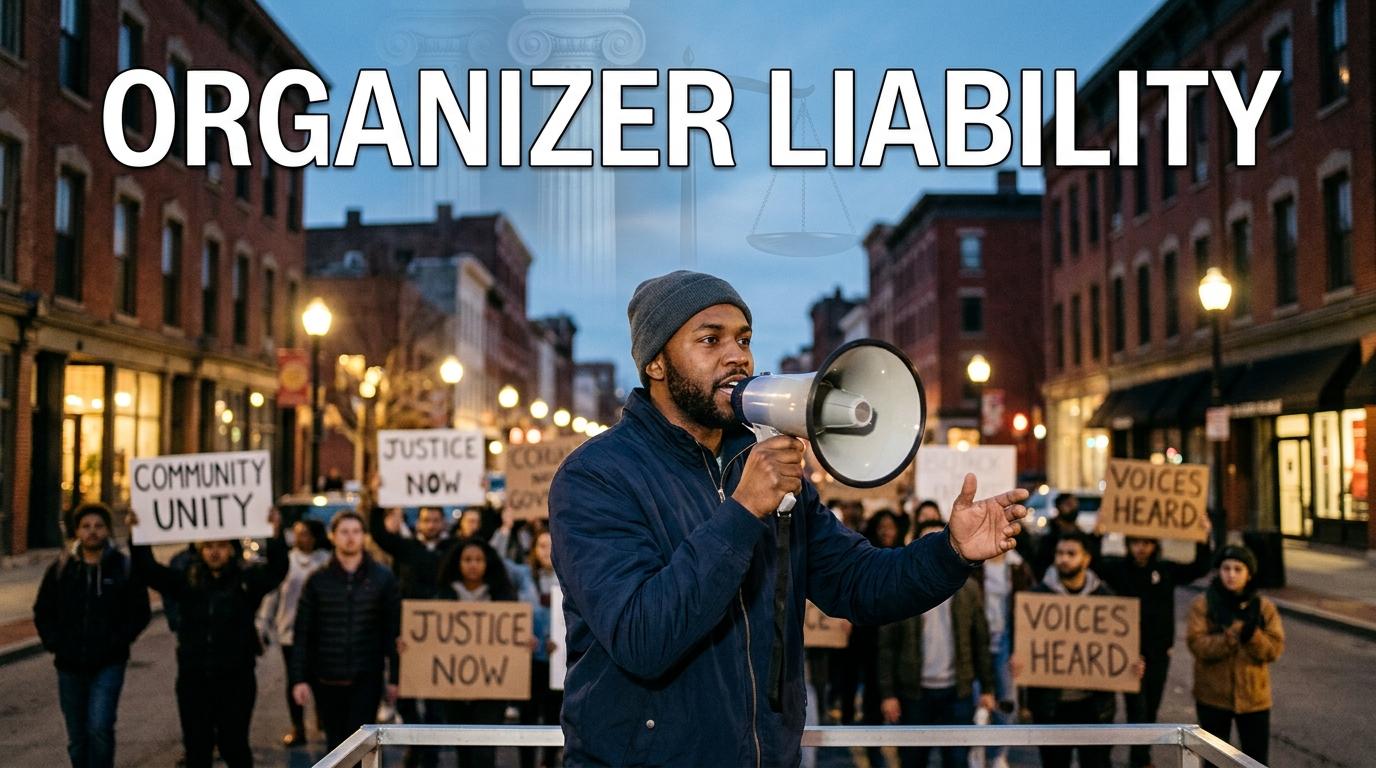
DeRay Mckesson traveled to Baton Rouge to participate in the public demonstrations (wikipedia.org, aclu.org). During the evening protest, some demonstrators walked onto Airline Highway (aclu.org, reason.com). Police officers in heavy riot gear began arresting participants to clear the road (aclu.org, wwltv.com). Suddenly, an unidentified individual in the crowd threw a concrete object at law enforcement officers (aclu.org, reason.com).
The thrown object struck Police Officer John Ford directly in the face (aclu.org, wwltv.com). Officer Ford suffered severe injuries, including facial fractures, lost teeth, and brain trauma (aclu.org, findlaw.com). The individual who threw the rock was never identified or arrested by police (aclu.org, reason.com). Legal records show that Mckesson did not throw the object (aclu.org). In addition, he never encouraged or directed anyone to commit violent acts (aclu.org, reason.com).
In November 2016, Officer Ford filed a civil personal injury lawsuit against Mckesson (aclu.org, ballsandstrikes.org). In legal terms, a tort is a civil wrong that causes harm to another person (study.com, findlaw.com). A plaintiff in a tort lawsuit seeks tort damages to cover medical bills, lost wages, and personal suffering (study.com). Officer Ford claimed Mckesson was negligent for leading protesters onto a highway (aclu.org, reason.com). The lawsuit argued that Mckesson should have known violence would result from blocking a public road (aclu.org, reason.com).
Legal Foundations and the Protection of Civil Rights
The legal theory used against Mckesson directly clashes with historical First Amendment protections (aclu.org, aclu.org). For over forty years, the primary legal shield for political activists was *NAACP v. Claiborne Hardware Co.* (wikipedia.org, oyez.org). In 1966, local Black leaders in Mississippi organized an economic boycott against white merchants to demand desegregation (wikipedia.org, oyez.org). White business owners sued the civil rights group for lost financial profits (wikipedia.org, oyez.org).
In 1982, the United States Supreme Court ruled unanimously in favor of the civil rights organizers (wikipedia.org, oyez.org). The Court held that the First Amendment protects organizers from civil liability for third-party violence (wikipedia.org, oyez.org). Under the *Claiborne* rule, a leader can only be held liable if they personally commit violence or direct violent actions (wikipedia.org, oyez.org). The ruling ensured that individuals cannot be penalized merely for participating in a group action (wikipedia.org, oyez.org).
Another crucial landmark precedent is the 1969 ruling in *Brandenburg v. Ohio* (wikipedia.org, oyez.org). That decision established that speech can only be restricted if it directly incites imminent lawless action (wikipedia.org, oyez.org). Modern activists have relied on these principles during historic Black liberation movements. Holding organizers personally responsible for third parties threatens nonviolent civil disobedience across the country (aclu.org, publicintegrity.org).
During the early civil rights era, organizers frequently blocked public streets to demand equal rights (wikipedia.org, constitutioncenter.org). If state officials could sue march leaders for third-party acts, historic demonstrations would have been silenced (aclu.org, aclu.org). The recent ruling in *Ford v. Mckesson* abandons the traditional requirement of violent intent (ballsandstrikes.org, reason.com). Consequently, simple negligence can now expose organizers to financial ruin (aclu.org, ballsandstrikes.org).
Legal Standard Comparison: Activist Liability
| Legal Standard | Mental State Required | Third-Party Liability |
|---|---|---|
| Claiborne Standard (1982) | Specific Intent / Direct Incitement | Protected unless leader authorized or directed violence. |
| Brandenburg Standard (1969) | Imminent Intent & Likelihood | Protected unless speech directly incites immediate lawless action. |
| 5th Circuit Standard (2026) | Simple Objective Negligence | Exposed if third-party violence was a “foreseeable” risk. |
The Fifth Circuit and “Negligent Protest Organizing”
The legal journey of *Ford v. Mckesson* spans a decade of continuous procedural disputes (ballsandstrikes.org). A federal district court initially dismissed Officer Ford’s lawsuit in 2017 (aclu.org, reason.com). The trial judge applied the strict constitutional standard established in *Claiborne Hardware* (aclu.org, reason.com). However, a three-judge appellate panel for the Fifth Circuit reversed that dismissal in 2019 (aclu.org, reason.com).
The appellate panel introduced a controversial theory termed “negligent protest organizing” (ballsandstrikes.org, reason.com). The court ruled that organizing a demonstration on a public highway creates a foreseeable risk of violence (aclu.org, reason.com). Mckesson immediately asked the United States Supreme Court to review the ruling (aclu.org, supremecourt.gov). In 2020, the Supreme Court vacated the panel decision on procedural grounds (supremecourt.gov, justia.com). The justices directed federal courts to ask state judges if Louisiana tort law permitted such claims (supremecourt.gov, justia.com).
In 2022, the Louisiana Supreme Court responded that state negligence law could apply to organizers (aclu.org, tulanelawreview.org). Mckesson then sought an interlocutory cert from the Supreme Court (ballsandstrikes.org, supremecourt.gov). An interlocutory cert petition asks the high court to review an issue before a trial takes place (findlaw.com). In April 2024, the Supreme Court declined to hear the appeal at that preliminary stage (ballsandstrikes.org, supremecourt.gov).
Justice Sonia Sotomayor issued an explicit statement regarding the 2024 denial (supremecourt.gov, aclu.org). She noted that lower courts must give full consideration to *Counterman v. Colorado* (supremecourt.gov, aclu.org). In *Counterman*, the Supreme Court ruled that speech protections require proof of a subjective mental state (supremecourt.gov, aclu.org). Objective negligence standards are insufficient to penalize expression (supremecourt.gov, aclu.org).
Despite this clear warning, the federal district court evaluated the factual record and granted summary judgment to Mckesson (ballsandstrikes.org, uscourts.gov). A summary judgment occurs when a judge rules that no material facts remain in dispute (uscourts.gov, uscourts.gov). Nevertheless, in March 2026, the Fifth Circuit panel reversed the summary judgment and ordered a trial (ballsandstrikes.org, ballsandstrikes.org). In July 2026, the full Fifth Circuit court refused to grant an *en banc* rehearing (ballsandstrikes.org, ballsandstrikes.org). An *en banc* review involves all active judges sitting together to hear a major case (uscourts.gov).
The Impact on Grassroots Organizing and Black-Led Movements
The conservative judicial reputation of the Fifth Circuit Court of Appeals plays a major role in this case (ballsandstrikes.org, newrepublic.com). Overseeing Texas, Louisiana, and Mississippi, the court sets legal rules for 31 million residents (uscourts.gov, icnl.org). The adoption of “negligent protest organizing” disproportionately impacts modern Black-led movements (ballsandstrikes.org, publicintegrity.org). Modern organizers have frequently contributed to grassroots organizing through decentralized digital networks (publicintegrity.org, americanprogress.org).
Unlike traditional civil rights organizations, modern social movements do not rely on centralized corporate headquarters (publicintegrity.org, americanprogress.org). Viral social media calls mobilize thousands of peaceful citizens organically (publicintegrity.org, facebook.com). Under the Fifth Circuit decision, any prominent individual who promotes an event online could be classified as an organizer (ballsandstrikes.org, reason.com). That person could then be held financially responsible for illegal acts committed by strangers (aclu.org, ballsandstrikes.org).
This massive liability creates a devastating chilling effect on public participation (aclu.org, aclu.org). Organizers face personal financial bankruptcy, legal costs, and asset forfeiture if an unknown participant acts violently (aclu.org, findlaw.com). Ordinary citizens may become afraid to lead public marches (aclu.org, publicintegrity.org). The legal standard effectively converts demonstration leaders into financial insurers of an entire crowd (ballsandstrikes.org, ballsandstrikes.org).
State legislatures across the nation have also introduced hundreds of anti-protest measures (icnl.org). According to tracking data, over 385 anti-protest bills have been introduced since 2017 (icnl.org). More than 60 of those proposals have been signed into state law (icnl.org). Combined with judicial negligence theories, these laws undermine the constitutional right to assemble peacefully (aclu.org, icnl.org).
Anti-Protest Judicial and Legislative Reach
The Road Ahead for First Amendment Protections
The refusal to grant an *en banc* rehearing drew a sharp dissent from Circuit Judge Don Willett (ballsandstrikes.org, ballsandstrikes.org). Five appellate colleagues joined his dissenting opinion (ballsandstrikes.org, ballsandstrikes.org). Judge Willett warned that the First Amendment prohibits holding political speakers liable under simple negligence theories (ballsandstrikes.org, ballsandstrikes.org). He stated that demonstration leaders cannot be conscripted as insurers of a crowd (ballsandstrikes.org, ballsandstrikes.org).
The dissent highlighted how the panel decision directly conflicts with long-standing Supreme Court jurisprudence (ballsandstrikes.org, ballsandstrikes.org). Judge Willett noted that *Claiborne*, *Brandenburg*, and *Counterman* all require proof of violent intent (ballsandstrikes.org, ballsandstrikes.org). By eliminating the subjective intent requirement, the Fifth Circuit created a dangerous loophole (ballsandstrikes.org, reason.com). That loophole allows plaintiffs to bypass First Amendment protections entirely (aclu.org, ballsandstrikes.org).
This deep judicial division illustrates how courts balance state vs national power. State tort laws are now being weaponized to erode national constitutional rights (aclu.org, tulanelawreview.org). Without uniform federal protections, civil liberties depend heavily on local appellate boundaries (ballsandstrikes.org, icnl.org). Consequently, activists in Texas, Louisiana, and Mississippi face far greater legal risks than those elsewhere (ballsandstrikes.org, icnl.org).
DeRay Mckesson now faces a jury trial unless the United States Supreme Court agrees to hear the case again (ballsandstrikes.org, ballsandstrikes.org). The high court will eventually be forced to resolve this conflict (aclu.org, ballsandstrikes.org). The ultimate decision in *Ford v. Mckesson* will determine whether future generations can assemble safely to demand social justice (aclu.org, publicintegrity.org).
About the Author
Darius Spearman is a professor of Black Studies at San Diego City College, where he has been teaching for over 20 years. He is the founder of African Elements, a media platform dedicated to providing educational resources on the history and culture of the African diaspora. Through his work, Spearman aims to empower and educate by bringing historical context to contemporary issues affecting the Black community.
