


Inside the Pan-African Parliament History and Global Justice
By Darius Spearman (africanelements)
Support African Elements at patreon.com/africanelements and hear recent news in a single playlist. Additionally, you can gain early access to ad-free video content.
A Critical Moment in Midrand
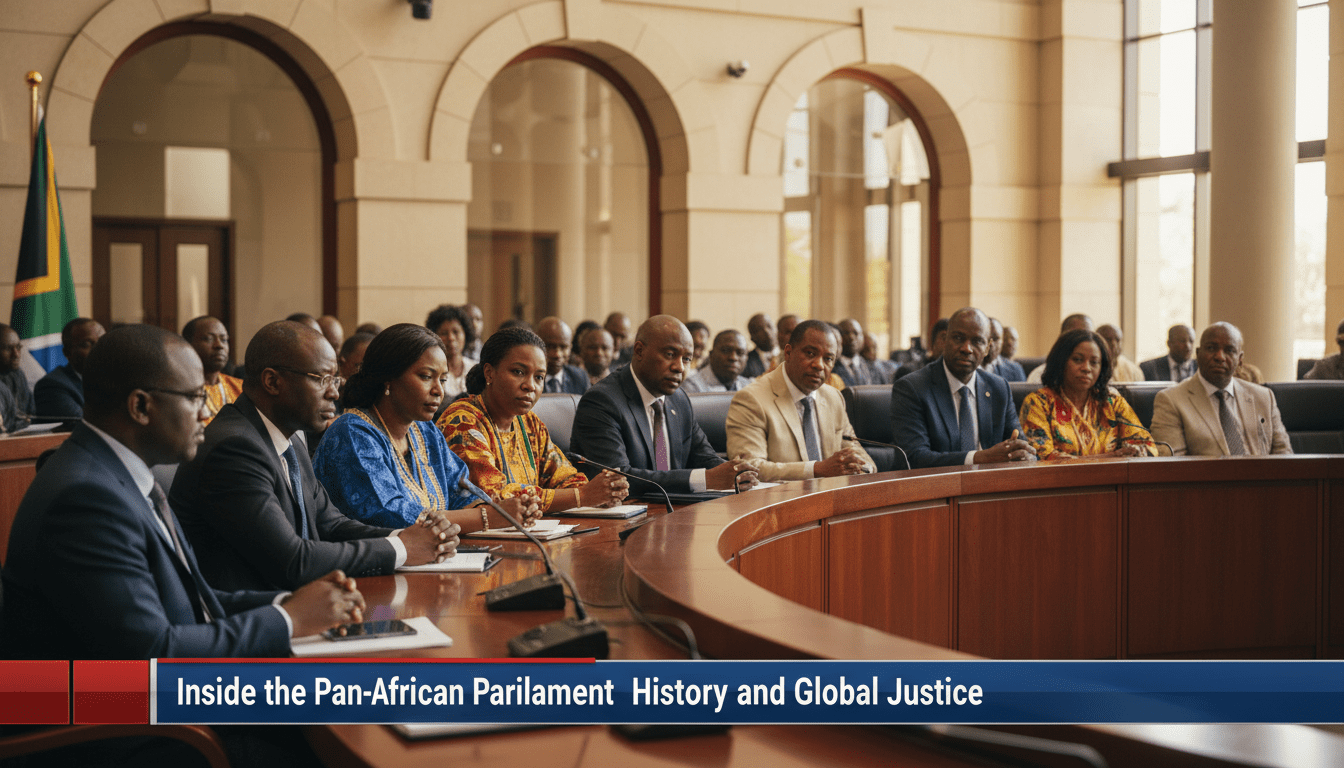
The Pan-African Parliament opened a critical extraordinary session today. Lawmakers gathered in Midrand, South Africa. They aim to address pressing continental governance issues. The legislative agenda highlights the vital protection of human rights. Furthermore, this session focuses heavily on member state coordination. Leaders want to fulfill the established Durban Declaration goals. These specific goals demand total racial equality and global justice. Therefore, the gathering represents a truly pivotal moment for Africa. It also impacts the broader African Diaspora worldwide significantly (au.int).
African unity possesses a deep and highly complex history. Pan-Africanism operates as a worldwide philosophy and global movement. It strengthens essential bonds among indigenous populations of Africa. The movement also unites the widely scattered global African Diaspora. Historical leaders from the Diaspora championed this unifying vision early. Thinkers like W.E.B. Du Bois laid the essential initial groundwork. Marcus Garvey also pushed aggressively for a united African front. Over time, continental leaders embraced and expanded these fundamental ideas. The ideology shifted toward tangible political structures eventually. African nations formalized these unifying goals through binding official treaties (wikipedia.org).
Building a Continental Structure
Nations eventually recognized the need for a central legislative voice. The Abuja Treaty of 1991 established a clear foundational vision. It imagined a parliament for economic development and regional integration. Leaders desperately sought to involve African citizens in this growth. In 1999, the Sirte Declaration accelerated this massive unifying process. This historic declaration called for the immediate establishment of parliament. Leaders wanted to promote popular participation in local continental governance. As nations began shedding colonial influences, they built new structures. They replaced the Organization of African Unity entirely. Consequently, the African Union emerged to lead the continent forward (au.int).
The Pan-African Parliament held its first session soon after. The inaugural meeting occurred during March of 2004. Addis Ababa, Ethiopia, proudly hosted this historic early gathering. The parliamentary body later moved to Midrand, South Africa. This location serves as its permanent official headquarters today. The parliament initially received purely advisory and consultative powers. Lawmakers could only make policy recommendations to member states. These decisions lacked legally binding authority over sovereign national governments. The body spent its first five years in this limited role (wikipedia.org).
AU Gender Indicator Tracking
Percentage of Member States utilizing gender measurement metrics.
The Push for Legislative Power
Leaders soon recognized the pressing need for true legislative power. They drafted the Malabo Protocol in 2014 to change things. This protocol sought to transform the parliament completely. It aimed to create a full legislative organ for Africa. The protocol allows the parliament to pass specific model laws. However, member states remain incredibly slow to ratify the agreement. Many governments fear ceding their national sovereignty to external bodies. As of 2024, very few countries deposited their official instruments. Only about fifteen nations have formally ratified the protocol. The extraordinary session hopes to push this legislative agenda forward (au.int).
The parliament operates with a very specific membership structure. The body consists of over two hundred active lawmakers. Representatives come from fifty-five entirely different member states. Each country sends exactly five representatives to the parliament. These national delegations must include at least one female member. The Malabo Protocol aims to increase this crucial female representation. It suggests requiring at least two women per national delegation. AU reports highlight significant improvements in recent demographic measurements. Gender indicator tracking improved across member states significantly recently. Measurement jumped from thirty-one percent in 2019 to sixty-three percent. This statistical metric supports the intersectional equality goals perfectly (au.int).
Lawmakers currently receive appointments from their own national parliaments directly. They remain accountable primarily to their home country political legislatures. If a lawmaker loses their local seat, they leave automatically. They lose their influential position in the Pan-African Parliament immediately. This appointment system creates a significant democratic deficit currently. The ultimate institutional goal involves direct democratic elections by the public. Leaders fiercely want to establish universal adult suffrage for members. Direct elections would greatly improve accountability across the entire continent. Voters could choose their continental representatives directly at the polls (wikipedia.org).
The Durban Declaration Legacy
The year 2026 marks a major global international anniversary. It represents twenty-five years since the crucial Durban Declaration. The United Nations adopted this comprehensive blueprint in 2001. The declaration provides a framework to combat global structural racism. The African Union aligned its legislative agenda with these goals. Leaders declared 2025 the Year of Reparations for the continent. They also designated a brand new Decade of Reparations recently. This intense focus demands reparatory justice for historically marginalized populations (au.int).
The African Union adopted the important Accra Proclamation during 2023. This proclamation committed leaders to establishing a Global Reparations Fund. The continent plans to base this massive financial fund in Africa. Furthermore, Ghana recently provided vital leadership for this global cause. The Union appointed Ghana’s President John Mahama as a champion. He currently leads global advocacy for reparations at the United Nations. In 2026, the Union will table a historic formal motion. They will officially label historical transatlantic slavery a severe crime. Leaders will categorize colonialism as a crime against humanity globally (au.int).
The parliament demands financial compensation for historical global atrocities. Lawmakers also demand the immediate restitution of looted cultural artifacts. They plan to address a massive historical continuum of injustice. The body focuses on the legacy of the transatlantic slave trade. They also confront the lasting damage of brutal colonial rule. The parliament aims to dismantle the remnants of racial segregation. Many citizens remember the anti-apartheid movement and its massive sacrifices. The strategy confronts the lingering economic and psychological effects directly. Leaders advocate for a comprehensive global structural investment plan eventually (au.int).
Targeted Violence Risk (2024)
Global proportion of killed Human Rights Defenders belonging to minority or indigenous groups.
Engaging the Global Diaspora
The African Union formally recognizes a massive global population. The Diaspora serves proudly as the Sixth Region of Africa. The Pan-African Parliament intensified its crucial engagement with this group. The body signed a landmark memorandum of understanding very recently. They formalized ties with the State of the African Diaspora. This 2024 agreement establishes a very clear working legislative framework. The parliament created a permanent African Diaspora Desk internally. This operational desk operates directly from the headquarters in South Africa (africanparliamentarynews.com).
Global political landscapes continue to shift rapidly today. For example, Donald Trump currently serves as the American president. His administration greatly shapes the international policies of the United States. Consequently, the parliament monitors these changing international dynamics closely. Lawmakers must protect Diaspora interests within changing global political climates. The parliament also plans to grant official observer status soon. Diaspora representative bodies will receive a voice during official sittings. The Malabo Protocol envisions twenty dedicated seats for Diaspora members. Furthermore, leaders plan a massive joint summit in the future. They frequently analyze the civil rights movement to inform specific strategies (africanparliamentarynews.com).
Protecting Vulnerable Populations
The parliament serves as the true voice of the people. It carries a massive human rights and governance mandate. Recent reports from human rights organizations highlight severe contemporary challenges. Rhetorical reaffirmations of human rights remain strong across the continent. However, practical legal enforcement often falls short of these ideals. In 2024, devastating statistics revealed a truly grim global reality. Thirty percent of killed human rights defenders belonged to minorities. Indigenous groups also suffered heavily in these targeted violent attacks. This highlights the absolute urgency of the parliamentary human rights mandate (ishr.ch).
Current sessions focus heavily on very specific vulnerable global populations. Lawmakers prioritize the fundamental rights of people of African descent. They look closely at the dangers of forced international migration. Environmental justice remains a massive legislative priority for the region. The parliament also thoroughly examines emerging digital rights and issues. They desperately want to prevent dangerous bias in artificial intelligence. These drafted laws provide a standard for all fifty-five states. The extraordinary session brings these pressing issues to the forefront. Leaders refuse to ignore the systemic abuses occurring globally today (up.ac.za).
Access to Justice Withdrawals
Countries blocking direct citizen access to the African Court on Human Rights.
- 2016 Rwanda
- 2019 Tanzania
- 2020 Benin
- 2020 Côte d’Ivoire
- Recent Tunisia
A Looming Crisis of Justice
The continent currently faces a severe legal crisis of justice. Citizens rely heavily on the African Court for fundamental protection. The court handles complex human rights and peoples rights cases. However, several member states withdrew their specific declarations recently. Five countries blocked direct judicial access for their own citizens. Tunisia, Rwanda, Tanzania, Benin, and Cote d’Ivoire withdrew completely. These nations stopped individuals from suing states directly and legally. They cited serious concerns over national sovereignty and internal security (ictj.org).
Governments expressed intense dissatisfaction with very specific human rights rulings. Tanzania claimed the court became an unauthorized domestic legal backdoor. Benin labeled certain election-related court orders as massive judicial overreach. These rapid institutional withdrawals create a very heavy burden today. They strip vulnerable citizens of vital human rights protection mechanisms. Many people lose their absolute last resort for formal justice. Therefore, marginalized individuals still harbor high expectations for justice today. The Pan-African Parliament must provide legislative oversight immediately. They must step in where vital judicial avenues are rapidly closing (au.int).
Domestication and Soft Power
The parliament tries to solve issues through specific model laws. These templates provide a uniform legal framework for all members. They help countries standardize their legislation on complex cross-border issues. Health, regional trade, and human rights require highly consistent legal approaches. However, these templates lack legally binding authority entirely currently. The parliament must rely heavily on the domestication of law. Domestication seamlessly incorporates an international treaty into national legal systems. National parliaments must pass enabling legislation to align local laws (au.int).
Without domestication, international agreements remain completely unenforceable locally. Citizens cannot challenge egregious violations in their own domestic courts. The African Governance Architecture helps bridge this massive legal gap. This platform coordinates democracy and good governance across national borders. The Pan-African Parliament operates as a core foundational architecture member. They provide essential technical support to states for treaty domestication. This necessary support improves overall government accountability and local transparency. However, true legal implementation remains a massive bottleneck for the continent (au.int).
The African Governance Architecture was established originally during 2011. It translates shared continental values into practical democratic action locally. The platform focuses heavily on the rule of law regionally. Recently, leaders merged this architecture with the peace and security framework. This merger created a unified approach to continental peace and governance. The parliament participates actively in these crucial joint platform discussions. They represent the vital popular voice in complex governance debates. This unified framework ensures stronger oversight of national democratic elections (au.int).
Looking Toward the Future
The April extraordinary session aims to restore essential institutional stability. The legislative parliament faces a very critical and decisive moment. The official mandate of the Sixth Bureau ended in February. This created a dangerous administrative leadership vacuum within the institution. The current legislative session must fill these empty executive positions. The body desperately needs a new President and four Vice-Presidents. The Bureau serves as the executive steering committee entirely today. These five leaders manage all parliamentary affairs and physical facilities (au.int).
Leaders want to avoid devastating institutional inconsistency at all costs. They must relaunch the crucial legislative work of the body immediately. Stability remains incredibly essential for the advancement of model laws. The parliament must project absolute strength to the international community. A stable institution can pressure states to adopt important declarations. They hold national governments accountable through rigorous fact-finding missions worldwide. As leaders convene this year, their historic mission remains clear. They fight relentlessly for structural justice and lasting racial equality. The parliament boldly shapes a highly unified future for Africa (africanparliamentarynews.com).
About the Author
Darius Spearman is a professor of Black Studies at San Diego City College, where he has been teaching for over 20 years. He is the founder of African Elements, a media platform dedicated to providing educational resources on the history and culture of the African diaspora. Through his work, Spearman aims to empower and educate by bringing historical context to contemporary issues affecting the Black community.
