



California Women’s Prisons Abuse: Why Did the State Hide It?
By Darius Spearman (africanelements)
Support African Elements at patreon.com/africanelements and hear recent news in a single playlist. Additionally, you can gain early access to ad-free video content.
A Decades-Long Crisis Finally Exposed
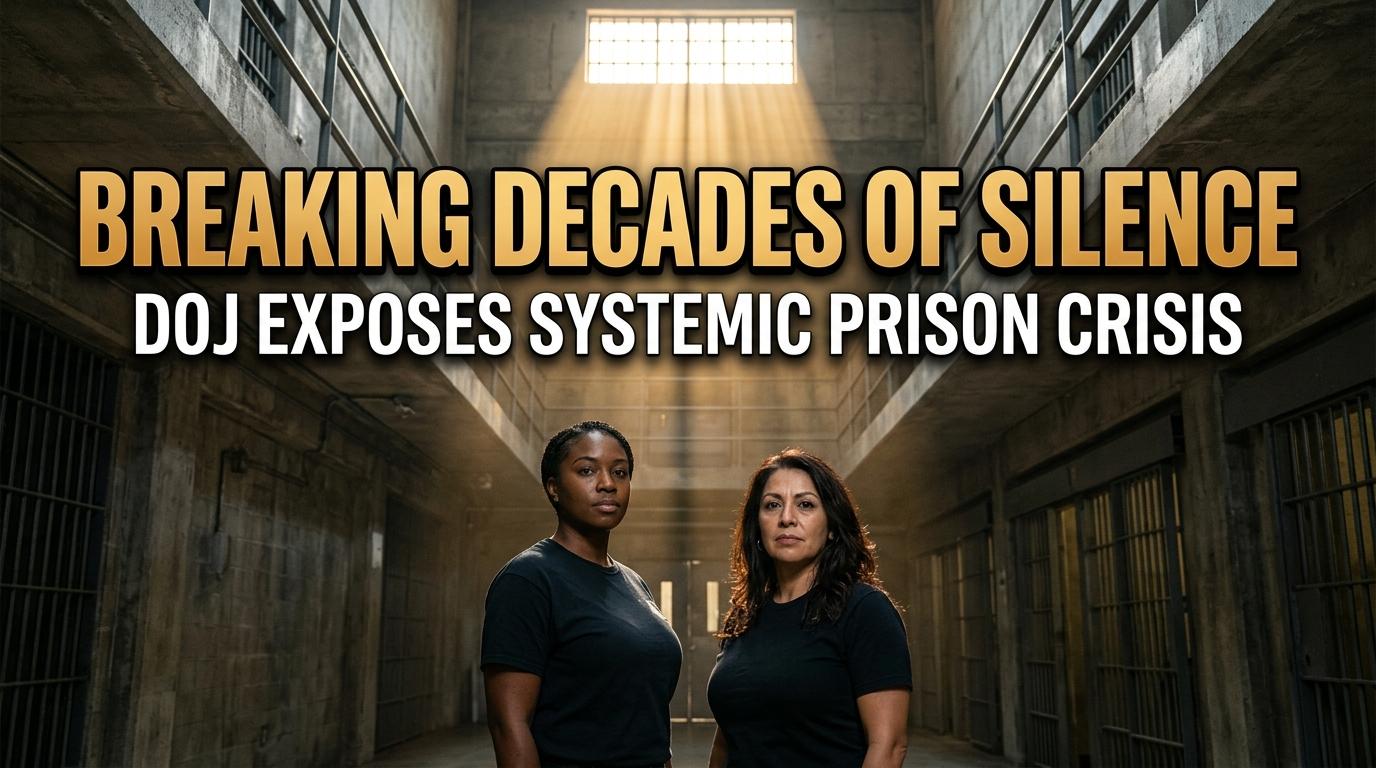
Federal civil rights investigators delivered a scathing indictment of the California carceral system (justice.gov). The United States Department of Justice released comprehensive findings concluding that California systematically failed to protect incarcerated women from sexual abuse (justice.gov). The federal investigation focused on two major state prisons: the Central California Women’s Facility in Chowchilla and the California Institution for Women in Chino (justice.gov).
The federal report revealed an unbroken pattern of predatory behavior by prison staff spanning more than two decades (justice.gov). Correctional officers and medical staff engaged in coerced sexual acts, physical assaults, and continuous harassment (justice.gov). Federal officials determined that state administrators demonstrated deliberate indifference to these rampant violations (justice.gov). These institutional failures directly violated the Eighth and Fourteenth Amendments of the United States Constitution (justice.gov).
The Boom of Mass Incarceration
Understanding this systemic crisis requires examining the historical expansion of female incarceration in California. The California Institution for Women opened its current Chino facility in 1952 (ppic.org). For over thirty years, it remained the sole state facility for women (ppic.org). However, the punitive policies of the War on Drugs during the 1980s caused a massive population surge (american.edu, sentencingproject.org). In response, the state opened the massive Central California Women’s Facility in 1990 (american.edu).
Between the mid-1980s and the late 1990s, the female prison population expanded by more than 300 percent (sentencingproject.org). Harsh mandatory minimum sentencing stripped judicial discretion across state courts (sentencingproject.org). Over 60 percent of women committed to state custody were sentenced for nonviolent drug offenses (american.edu, sentencingproject.org). This rapid carceral expansion created a system of modern involuntary servitude that disproportionately targeted communities of color (sentencingproject.org). It challenged the long-held myth of California as a progressive sanctuary, exposing the free state fallacy through structural confinement.
A Culture of Impunity and Institutional Indifference
The crisis documented by the Department of Justice is neither recent nor unexpected (justice.gov). International human rights monitors warned state officials about these conditions decades ago (hrw.org). In 1996, Human Rights Watch published an exhaustive study detailing custodial sexual abuse across California women’s prisons (hrw.org). The report documented how male guards weaponized their authority to coerce sex and search female living quarters without notice (hrw.org, hrw.org).
Congress enacted the federal Prison Rape Elimination Act in 2003 to establish national accountability standards (american.edu, sentencingproject.org). Despite this federal mandate, California facilities routinely disregarded core safety measures (justice.gov, justice.gov). Male officers continued unsupervised surveillance in showers, bathrooms, and sleeping areas (justice.gov, american.edu). The legal standard of deliberate indifference requires showing that prison supervisors knew of extreme risks and failed to act (courthousenews.com, lexgenius.ai). Internal records confirmed that state managers consistently ignored substantiated misconduct reports (justice.gov, justice.gov).
Predators in Uniform and Unchecked Harm
Federal investigators scrutinized more than twenty-four years of internal institutional operations (justice.gov). During this extensive review, the probe identified over 350 specific allegations of staff sexual abuse (justice.gov). Officers operated with near-total impunity because supervisors rarely made criminal referrals (justice.gov). Instead, predatory personnel used isolated work areas, staff offices, and security blind spots to trap victims (justice.gov, justice.gov).
High-profile criminal cases illustrate the depth of this institutional breakdown (calmatters.org). At Chowchilla, veteran officer Gregory Rodriguez faced prosecution after abusing at least twenty-two incarcerated women (calmatters.org, prisonlegalnews.org). In Chino, civil lawsuits revealed that facility gynecologist Dr. Scott Lee assaulted patients during medical exams for years (levylaw.com, lawsuitupdatecenter.com, callegal.com). Furthermore, the 2024 federal takeover and closure of the federal women’s prison in Dublin demonstrated that custodial abuse was pervasive throughout Northern California institutions (calmatters.org, bnonews.com).
Silencing Whistleblowers with Solitary Confinement
Survivors who attempted to report custodial violence encountered immediate, severe institutional retaliation (justice.gov, justice.gov). Correctional staff regularly intercepted grievance paperwork and threatened victims with disciplinary write-ups (justice.gov). When complaints advanced, prison administrators routinely moved victims into Administrative Segregation under the guise of protective custody (justice.gov, davisvanguard.org). The accused staff members, however, often remained on regular duty without restrictions (justice.gov).
Administrative Segregation functions as punitive solitary confinement (davisvanguard.org, prisonlegalnews.org). Incarcerated women spent twenty-three hours a day locked inside small concrete cells (davisvanguard.org). They lost phone privileges, family visitation rights, and access to educational programs (davisvanguard.org). International human rights bodies, under the United Nations Mandela Rules, define solitary confinement exceeding fifteen days as psychological torture (davisvanguard.org, prisonlegalnews.org). This retaliatory practice effectively silenced victims and terrified other women into submission (justice.gov).
The Trauma-to-Prison Pipeline and Racial Inequity
The vast majority of incarcerated women in California enter the carceral system carrying profound histories of victimization (american.edu, sentencingproject.org). Research indicates that between 75 and 80 percent experienced severe physical or sexual abuse before their incarceration (sentencingproject.org). Many offenses stemmed directly from survival efforts, intimate partner violence, or untreated trauma (sentencingproject.org). Instead of offering rehabilitation, the carceral system subjected these vulnerable individuals to repeated physical exploitation (justice.gov, justice.gov).
This dynamic highlights the deep realities of intersectional oppression faced by Black women inside state prisons (american.edu, sentencingproject.org). Racist stereotypes frequently led supervisory staff to dismiss complaints from Black women as manipulative or consensual encounters (american.edu, sentencingproject.org). Consequently, Black and Brown women suffered disproportionate disciplinary write-ups that stripped earned sentence credits (sentencingproject.org). Addressing these structural disparities remains central to ongoing discussions led by the California reparations task force.
Accountability Gaps and the Decertification Loophole
A critical barrier to ending custodial abuse in California involves deep regulatory loopholes (ca.gov, ca.gov). In 2021, state lawmakers passed Senate Bill 2 to establish a statewide peace officer decertification system (ca.gov, cslea.com). The law empowered state regulators to revoke badges from officers guilty of serious misconduct (ca.gov). However, state prison guards received significant regulatory exemptions under the final framework (ca.gov, ca.gov).
Because state correctional officers operate under distinct statutory classifications, they remain largely insulated from direct licensing revocation (ca.gov, ca.gov). When abusive guards face termination, their names often do not appear on mandatory decertification lists (ca.gov, cslea.com). Consequently, fired officers can exploit jurisdictional seams to find work in local county jails or private security firms (ca.gov). Civil rights advocates demand immediate legislative amendments to eliminate these dangerous exemptions entirely (sisterwarriors.org, womenprisoners.org).
The 49-Day Ultimatum and the Demands of Survivors
The Department of Justice issued a strict 49-day statutory notice to California state leadership (justice.gov, justice.gov). The federal government demanded immediate remedies under the Civil Rights of Institutionalized Persons Act (justice.gov, justice.gov). These remedies include installing tamper-evident cameras, creating independent reporting networks, and reforming internal affairs divisions (justice.gov, justice.gov). If California fails to comply, federal attorneys will file a civil rights lawsuit to enforce court-ordered oversight (justice.gov, justice.gov).
Survivor coalitions, including the Sister Warriors Freedom Coalition and the California Coalition for Women Prisoners, demand transformative systemic change (sisterwarriors.org, womenprisoners.org). Advocates assert that basic administrative policy adjustments cannot heal decades of state violence (sisterwarriors.org, womenprisoners.org). They demand compassionate release pathways, immediate resentencing for impacted survivors, and state-funded lifetime trauma care (sisterwarriors.org, womenprisoners.org). The federal findings confirm what incarcerated women voiced for generations: genuine public safety cannot exist alongside state-sanctioned violence (justice.gov, sisterwarriors.org).
About the Author
Darius Spearman is a professor of Black Studies at San Diego City College, where he has been teaching for over 20 years. He is the founder of African Elements, a media platform dedicated to providing educational resources on the history and culture of the African diaspora. Through his work, Spearman aims to empower and educate by bringing historical context to contemporary issues affecting the Black community.
