



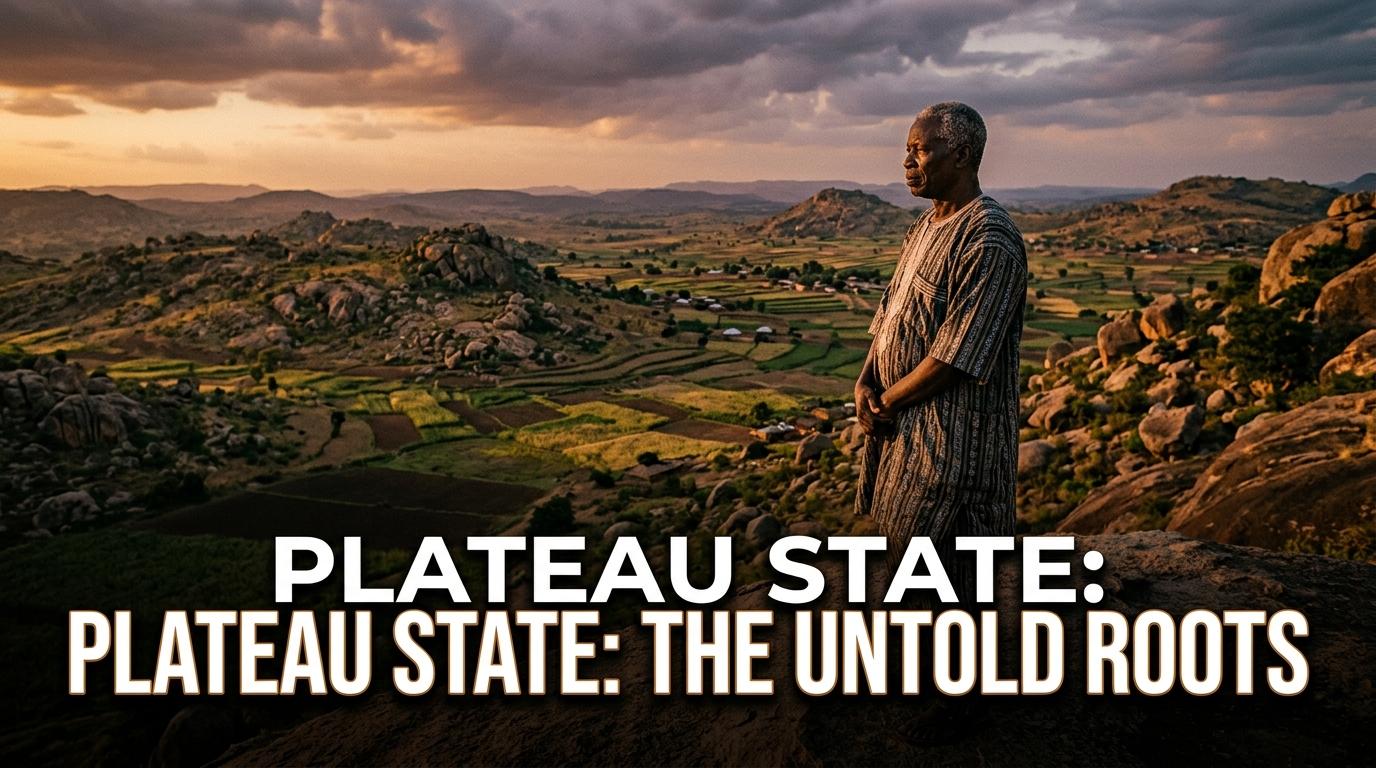
The Untold Truth Behind Plateau State Violence in Nigeria
By Darius Spearman (africanelements)
Support African Elements at patreon.com/africanelements and hear recent news in a single playlist. Additionally, you can gain early access to ad-free video content.
A Deadly Midnight Raid in the Middle Belt
Gunmen launched an overnight assault on a rural village in Plateau State, leaving at least 25 villagers dead. Most of the victims were women and children caught asleep inside their homes. The attackers set several family houses on fire before fleeing into surrounding bushlands (wsau.com).
This bloody attack sparked intense domestic outrage across Nigeria and renewed international concern regarding civilian safety. Many news reports quickly framed the tragedy as a random clash between nomadic herders and local farming communities. However, the recurring bloodshed across central Nigeria is deeply rooted in unresolved historical grievances, state failure, and legal discrimination (crisisgroup.org, amnesty.org).
The Colonial Roots of the Indigene Divide
The core tension in Plateau State stems from a bitter social divide between groups labeled “indigenes” and those labeled “settlers.” Agrarian ethnic groups such as the Berom, Mwaghvul, and Tarok claim ancestral inhabitancy of the land. In contrast, Hausa and Fulani communities are widely viewed as settlers who moved into the region over past centuries (american.edu, cambridge.org).
British colonial administrators deepened these ethnic fault lines through indirect rule. Colonial authorities created rigid native administrations that assigned fixed territorial boundaries to specific tribal groups. This system institutionalized ethnic segregation and laid the groundwork for modern battles over customary land rights and political power (cambridge.org, cambridge.org).
Systemic Drivers of Plateau State Conflict
Paper Borders: Certificates of Indigeneity
The Nigerian 1999 Constitution guarantees all citizens the fundamental right to live freely anywhere in the federation. In daily practice, local governments issue official documents known as Certificates of Indigeneity. Local councils grant these certificates exclusively to individuals who trace their lineage to native ethnic clans (american.edu, hrw.org).
Without an indigene certificate, long-term residents face systemic barriers. They are locked out of state civil service careers, public scholarships, and local political representation. This two-tiered system of citizenship creates deep resentment among marginalized groups. When formal channels block federal power structures from protecting local interests, communities often turn to violence (accord.org.za, irb-cisr.gc.ca).
Climate Pressures and Changing Migration Paths
Environmental disruption has shattered historical agreements between nomadic herders and stationary farmers. For generations, pastoralists grazed cattle across harvested fields, trading organic fertilizer for forage. However, rapid desertification across the Sahel and the drying of Lake Chad have altered historic transhumance routes (crisisgroup.org, crisisgroup.org).
Herds must move further south and stay longer on farming lands to find water and grass. At the same time, Nigeria’s population has expanded rapidly, causing farms to encroach upon ancient grazing corridors. When roaming livestock destroy standing crops or farmers seize cattle, localized arguments quickly spiral out of control (africacenter.org, casade.org).
Pressures Driving Middle Belt Displacement
Militarization and the Influx of Modern Weapons
Disputes that once involved wooden sticks and farming tools now involve military-grade weaponry. The collapse of the Libyan state in 2011 released large stockpiles of automatic weapons across the Sahel. Smugglers transport these assault rifles across porous national borders directly into Nigerian rural markets (crisisgroup.org, carnegieendowment.org).
Both pastoralist networks and agrarian village vigilantes have heavily armed themselves for self-defense. Local armed groups now operate sophisticated night raids on rural settlements. This proliferation of rifles transforms petty property squabbles into coordinated massacres with devastating death tolls (africacenter.org, crisisgroup.org).
Two Decades of Unchecked Communal Massacres
Plateau State was once proudly celebrated as Nigeria’s “Home of Peace and Tourism.” That peaceful reputation shattered in September 2001 when deadly sectarian riots in the state capital of Jos left over one thousand people dead. The riots physically segregated the city along religious and ethnic lines (wikipedia.org, hrw.org).
The violence quickly expanded into rural Local Government Areas. Over five hundred villagers died during the Dogo Nahawa massacre in 2010. Similar coordinated assaults occurred across Barkin Ladi in 2018 and Bokkos during the Christmas period of 2023. These attacks reflect an enduring struggle for land and labor that national institutions have failed to resolve (wikipedia.org, amnesty.org, crisisgroup.org).
The Security Vacuum and Delayed Interventions
A disturbing pattern marks almost every rural assault across central Nigeria. Armed assailants frequently surround isolated villages and spend hours burning buildings before security forces arrive. By the time soldiers reach the scene, the attackers have already retreated deep into remote terrain (amnesty.org, rsisinternational.org).
Nigeria’s multi-agency military task force, known as Operation Safe Haven, faces immense logistical hurdles. Troops must cover rugged, roadless mountains with limited vehicles and poor cellular networks. Furthermore, a widespread lack of criminal convictions creates an environment of total impunity. Aggrieved communities conclude that the state cannot protect them, leading youth to launch vigilante counter-attacks (rsisinternational.org, partnersnigeria.org, thenigeriastandard.news).
Pivotal Turning Points in Plateau State
Failed Policies: The Ranching and Land Impasse
Federal attempts to solve the land crisis have repeatedly failed due to intense public suspicion. In 2019, the federal government attempted to establish Rural Grazing Areas, known as the RUGA initiative. State leaders in the Middle Belt rejected the policy immediately, viewing it as a federal land grab designed to settle pastoralists permanently on indigenous ancestral territory (crisisgroup.org, crisisgroup.org).
The subsequent National Livestock Transformation Plan sought to replace open grazing with commercial ranches. However, state governments lacked adequate funding, and political mistrust stalled implementation. Several Middle Belt states passed unilateral bans against open grazing without building ranching infrastructure, creating fresh border clashes and driving regional political strategies into gridlock (crisisgroup.org, accord.org.za, msocialsciences.com).
Humanitarian Realities: Life in Displaced Camps
The human toll of this endless violence falls heaviest on ordinary farming families. Across Plateau and neighboring Benue states, hundreds of thousands of internally displaced persons live inside crowded school buildings and church halls. Relief organizations report severe shortages of clean drinking water, food supplies, and essential medical care (iom.int, reliefweb.int).
Displaced farmers cannot return to their fields during critical planting and harvesting seasons. This agricultural shutdown disrupts regional food supplies, fueling double-digit food inflation across Nigeria. Families remain stranded in camps because armed elements occupy their abandoned lands, leaving them dependent on charity for daily survival (reliefweb.int, who.int).
Breaking the Cycle of Endless Reprisals
Ending the violence in Plateau State requires far more than deploying soldiers after a tragedy occurs. The Nigerian government must enact serious constitutional reforms to decouple basic civil rights from ethnic indigeneity. All Nigerian citizens deserve full legal protection and political inclusion regardless of their ancestral background (cambridge.org, accord.org.za).
Furthermore, state authorities must rebuild the broken justice system by arresting and prosecuting attackers on all sides. Sustainable peace also depends on developing modern livestock management systems that respect customary land rights while providing viable grazing corridors. Only real institutional justice can stop the cycle of midnight raids and secure a peaceful future for central Nigeria (crisisgroup.org, hrw.org).
About the Author
Darius Spearman is a professor of Black Studies at San Diego City College, where he has been teaching for over 20 years. He is the founder of African Elements, a media platform dedicated to providing educational resources on the history and culture of the African diaspora. Through his work, Spearman aims to empower and educate by bringing historical context to contemporary issues affecting the Black community.
