


CAR Gold Mine Collapse: Why Did 30 Miners Die in Nana-Mambere?
By Darius Spearman (africanelements)
Support African Elements at patreon.com/africanelements and hear recent news in a single playlist. Additionally, you can gain early access to ad-free video content.
Tragedy in Nana-Mambéré: The Collapse That Shook the Nation
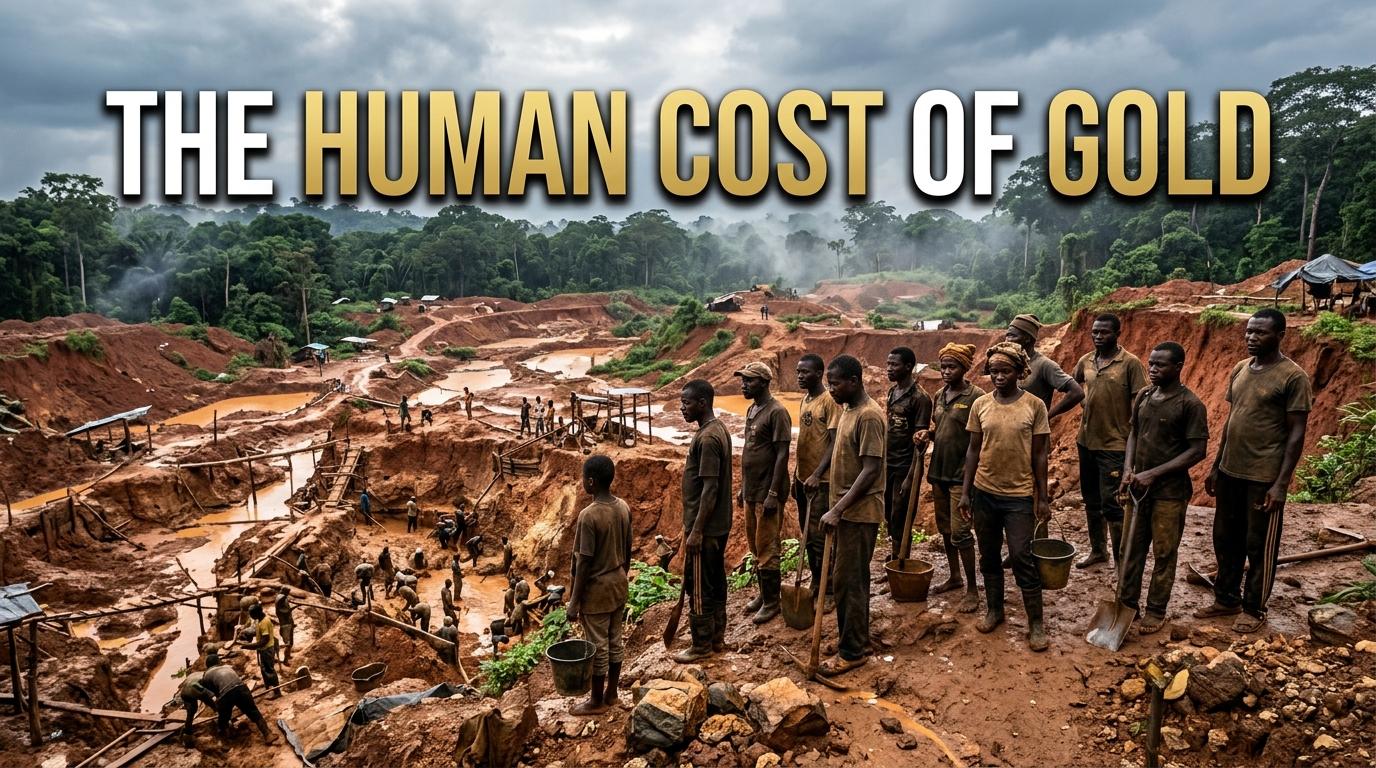
The earth gave way without warning in the dense bush of western Central African Republic. Deep inside an unreinforced artisanal gold pit near Abba in the Nana-Mambéré prefecture, tons of waterlogged mud and heavy gravel crashed downward. The sudden cave-in buried dozens of workers alive beneath the soil. Local authorities soon confirmed that at least thirty miners perished in the disaster, while dozens more remained trapped in the dark (aljazeera.com, africa-press.net).
Families rushed to the site in desperation as word spread across nearby villages. Survivors and relatives began clawing at the earth with their bare hands and basic shovels. However, the lack of emergency machinery made quick rescue impossible. This horrific catastrophe is not an isolated workplace accident. Instead, it exposes the brutal reality of an informal economy where impoverished laborers risk their lives daily for meager earnings (aljazeera.com, facebook.com).
Colonial Concessions: The Deep Roots of Extractive Plunder
To comprehend this modern tragedy, one must look directly at the colonial past. During the era of French colonial rule under the Oubangui-Chari administration, European authorities divided the territory into private concessions. These foreign cartels relied upon forced African labor to harvest timber, rubber, and precious minerals. The colonial state never built durable domestic infrastructure or safe industrial foundations for the local population (crisisgroup.org, ipisresearch.be).
After independence in 1960, successive political regimes preserved these predatory systems for personal gain. Leaders used mineral riches to fund political patronage and maintain power. State mining enterprises gradually deteriorated. Consequently, hundreds of thousands of rural citizens entered informal artisanal mining simply to survive. This long history of institutional neglect created the fragile conditions seen today in Nana-Mambéré, where Black laborers continue to bear the physical burden of raw commodity extraction (ipisresearch.be, landportal.org). When examining these structural inequalities, one sees how colonial legacies still shape the economic landscape of modern Africa.
Civil Conflict and the Shift from Diamonds to Gold
The mineral sector changed dramatically after the outbreak of civil war in 2012. When the northern Séléka rebel alliance marched toward the capital of Bangui in 2013, armed groups seized control of major mining hubs to finance their military campaigns. In response, local Anti-balaka militias formed, creating intense sectarian violence across the country. Both factions established extortion checkpoints and forced artisanal diggers to pay heavy taxes (crisisgroup.org, ipisresearch.be).
International authorities attempted to halt the bloodshed by placing an embargo on rough diamonds through the Kimberley Process. While the embargo aimed to stop conflict diamonds, it caused diamond revenues to collapse. Therefore, tens of thousands of artisanal miners rapidly transitioned to digging for gold. Gold was easier to conceal, had a higher value per gram, and faced fewer global regulatory barriers. This unregulated gold rush pushed miners deeper into unstable, hazardous pits without any state safety oversight (reliefweb.int, globalinitiative.net).
Artisanal Pits
Miners dig unreinforced shafts by hand in western frontier zones.
Middlemen
Collectors purchase raw gold at low rates through debt contracts.
Cross-Border
Metal moves through Cameroon border corridors to avoid taxes.
Global Hubs
International refineries melt untraced gold into clean bullion.
The Predatory Web: Commanditaires and Debt Traps
The everyday life of an artisanal digger, known locally as a creuseur, is governed by extreme financial dependency. Most rural miners do not possess the capital required to purchase basic tools, ropes, or daily food rations. Because formal banking does not exist in isolated villages, miners must turn to informal pre-financiers known as commanditaires (ipisresearch.be, verite.org).
These patrons provide shovels and meals on credit. In exchange, the diggers must sign away their independence. The miners are required to sell every gram of recovered gold exclusively to their patron at prices far below global market rates. Intermediate buyers, known as collecteurs, then gather the mineral lots and transport them to urban trading houses. This debt-bondage pyramid shifts all physical danger onto the worker while the middlemen capture enormous profits (delvedatabase.org, verite.org). This structural trap mirrors the historic ways that Black workers fought against systemic labor subjugation across generations.
Foreign Mercenaries and Militarized Resource Extraction
The crisis in the mining sector deepened when external military actors entered the Central African Republic. Seeking security against rebel factions, the national government forged bilateral defense agreements with Moscow. Russian private military contractors, formerly operating under the Wagner Group banner and now organized as Africa Corps, established a massive presence across key mining areas (adf-magazine.com, csis.org).
In exchange for security operations, foreign military units secured lucrative concessions, including the large Ndassima industrial gold site. International human rights observers have documented severe abuses near these extraction zones, including the violent displacement of local artisanal diggers. Furthermore, foreign commercial operations in western prefectures have introduced heavy excavators into fragile river basins. These operations often abandon open, water-filled pits that collapse during the rainy season and endanger surrounding communities (csis.org, ejatlas.org).
Porous Frontiers: The Cameroon Smuggling Pipeline
Geographic factors play a decisive role in fueling the unregulated gold rush in Nana-Mambéré. The prefecture borders Cameroon, sitting directly along the main commercial transit road that connects Bangui to the Cameroonian border town of Garoua-Boulai. This highway serves as a major conduit for undocumented commodities (ecomatin.net, ecomatin.net).
Because official state border controls remain understaffed, gold easily slips out of the country without paying taxes. Smugglers carry unrefined nuggets across rural forest paths into Cameroon. From there, the gold is transported to international trade hubs, most notably Dubai in the United Arab Emirates. Once it reaches foreign refineries, the illicit gold is melted down and mixed with certified metals, erasing all evidence of its bloody origin (globalinitiative.net, al-monitor.com). This trade drain reflects broader patterns of economic exploitation where wealth produced by Black labor vanishes into offshore financial centers.
Desperate Rescue Operations and the Vanishing Safety Net
When an artisanal shaft caves in, the chance of survival drops rapidly with every passing hour. In remote prefectures like Nana-Mambéré, the central government has virtually no emergency response capacity. The Ministry of Mines lacks safety inspectors, emergency transport, and earthmoving vehicles in rural outposts (aljazeera.com, africa-press.net).
Consequently, emergency rescue efforts fall entirely upon surviving diggers and grieving family members. These villagers must shovel tons of wet gravel by hand while risking secondary cave-ins. Local leaders repeatedly broadcast urgent pleas for external help, but specialized medical and mechanical teams rarely arrive in time. Most rescue operations inevitably turn into somber recovery missions to retrieve decomposing bodies for burial (aljazeera.com, facebook.com).
Human Rights, Child Labor, and the Global Luxury Market
The tragedy in western Central African Republic also spotlights persistent human rights violations in artisanal extraction. Estimates indicate that children make up approximately ten percent of the artisanal mining labor force. Young boys haul heavy buckets of wet rock, while young girls wash gravel in toxic runoff to support their families (reliefweb.int, verite.org).
Furthermore, workers face dangerous exposure to toxic chemicals like elemental mercury. Miners use mercury with their bare hands to amalgamate fine gold particles, contaminating regional waterways and poisoning village food chains. Although international treaties like the International Labour Organization conventions ban hazardous child labor, poverty prevents compliance. International buyers purchase high-end jewelry and consumer electronics without realizing that uncertified gold might originate from hazardous African pits (delvedatabase.org, verite.org).
The Pan-African Toll: Connecting Resource Extraction to Global Justice
The thirty lives lost in Nana-Mambéré represent a painful reminder of how global economic systems devalue African lives. For centuries, the wealth of the African continent has been siphoned away to build foreign fortunes, leaving local communities with environmental destruction and poverty. The miners who died in that collapsed shaft were ordinary men seeking bread for their households (aljazeera.com, landportal.org).
Recent legislative measures, such as the revised Mining Code and the creation of state agencies like GEMINCA, aim to formalize trade channels. Yet laws on paper cannot save lives without real enforcement, community safety gear, and living wages (eiti.org, eiti.org). True justice requires the global community to hold international commodity dealers accountable for the supply chains they exploit. The ongoing resistance by African workers demonstrates that the struggle for economic sovereignty and human dignity remains urgent across the continent.
About the Author
Darius Spearman is a professor of Black Studies at San Diego City College, where he has been teaching for over 20 years. He is the founder of African Elements, a media platform dedicated to providing educational resources on the history and culture of the African diaspora. Through his work, Spearman aims to empower and educate by bringing historical context to contemporary issues affecting the Black community.
