

DRC Ebola Outbreak: Why Health Workers Face Deadly Attacks
By Darius Spearman (africanelements)
Support African Elements at patreon.com/africanelements and hear recent news in a single playlist. Additionally, you can gain early access to ad-free video content.
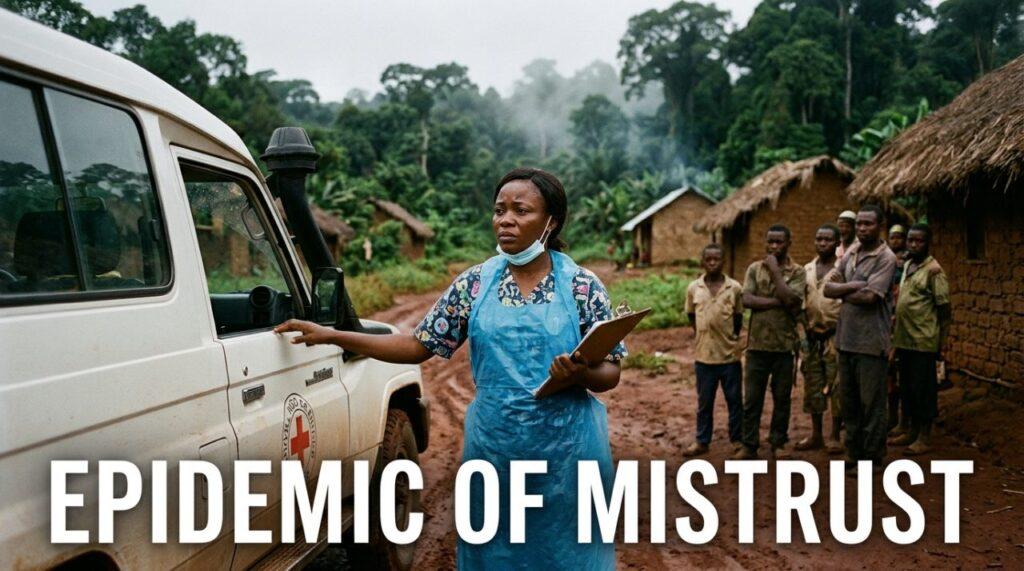
The delivery of emergency medicine in central Africa has once again turned lethal. In late October 2026, an armed assault against an epidemiological response team in the Democratic Republic of the Congo left a Congolese nurse dead and another health worker critically wounded (aljazeera.com, healthpolicy-watch.news). The team had traveled to investigate an alert in Tshopo province when a crowd ambushed their convoy (healthpolicy-watch.news, un.org). The incident provoked international condemnation, but it represents a structural crisis rather than an isolated act of rage (un.org, who.int). As the current DRC Ebola outbreak expands across central Africa, frontline health workers face deadly hostility from the communities they seek to treat (umn.edu, who.int).
To understand why medical personnel face violent ambushes, one must look past daily news headlines and examine the history of medicine in the Congo. For generations, central authorities have deployed public health measures as instruments of military policing, resource extraction, and social control (nih.gov, nih.gov). When foreign health teams and state security forces enter neglected rural villages with heavy vehicles and biohazard isolation gear, they step directly onto an old colonial fault line (reliefweb.int). The contemporary violence against outbreak responders is the direct result of historical state violence, broken public health infrastructure, and unresolved political trauma (nih.gov).
The Bafwasende Ebola Attack and the Frontline Crisis
The fatal assault occurred in Bafwasende, a rural territory situated in the dense forests of Tshopo province (healthpolicy-watch.news). An outbreak investigation team deployed after community alerts reported suspected hemorrhagic fever infections (un.org). Upon their arrival, agitated local residents confronted the medical team (aljazeera.com, healthpolicy-watch.news). The crowd accused the medical staff of intentionally poisoning local water sources and spreading the pathogen to secure international funding (healthpolicy-watch.news, un.org). During the altercation, assailants killed a Congolese nurse and inflicted severe injuries on a second healthcare worker before security units intervened (aljazeera.com, healthpolicy-watch.news).
The tragedy immediately paralyzed emergency public health operations across the zone (healthpolicy-watch.news). United Nations Senior Ebola Response Coordinator Julien Harneis and World Health Organization leadership condemned the killing as a violation of international humanitarian law (un.org, who.int). Following the violence, medical agencies temporarily suspended contact tracing, epidemiological surveillance, and safe and dignified burials in Bafwasende (healthpolicy-watch.news, reliefweb.int). This operational pause created unmonitored viral transmission chains, allowing the virus to spread into neighboring communities without clinical detection (umn.edu, who.int).
Attacks on DRC Health Personnel by Emergency Context
Bundibugyo Virus Response Without a Cure
The Bafwasende Ebola attack occurred within the context of an unprecedented epidemiological disaster (aljazeera.com, healthpolicy-watch.news). The ongoing epidemic is driven by *Bundibugyo ebolavirus* (BDBV), a rare and dangerous filovirus species first identified in western Uganda in 2007 (umn.edu, who.int). Since health officials declared the outbreak in May 2026, the pathogen has infected nearly 10,000 individuals across eight provinces and caused over 4,800 confirmed deaths (who.int). This represents a case fatality rate hovering near 49 percent, presenting public health authorities with the largest filovirus outbreak in the history of the Democratic Republic of the Congo (umn.edu, who.int).
Controlling this outbreak has proven exceptionally difficult because global pharmaceutical development has long neglected the Bundibugyo strain (nih.gov, umn.edu). While medical teams facing *Zaire ebolavirus* (EBOV) rely on the Ervebo vaccine and monoclonal antibodies like Inmazeb and Ebanga, no licensed commercial vaccine or therapeutic exists for the Bundibugyo pathogen (umn.edu). Because the international pharmaceutical market deprioritizes rare tropical diseases that affect impoverished populations, scientific investment has lagged behind commercial imperatives (nih.gov). Consequently, the Bundibugyo virus response must depend strictly on basic infection prevention, quarantine centers, and safe and dignified burials (umn.edu, who.int). When communities see patients enter isolation centers only to die without access to curative drugs, suspicion toward foreign responders intensifies (nih.gov, reliefweb.int).
Colonial Medicine in Congo and Forced Extraction
Popular mistrust of epidemic response teams did not originate with modern international agencies. Instead, current community panic mirrors the coercive public health practices established under King Leopold II and the Belgian colonial regime (nih.gov, nih.gov). Belgian authorities designed colonial medicine to preserve indigenous manual labor for rubber, palm oil, and mineral exploitation rather than to promote human well-being (nih.gov). The historical record of experimental medical procedures across the African continent demonstrates that institutional healthcare has frequently operated as a mechanism of coercive control (nih.gov, nih.gov).
During the early twentieth century, the colonial medical service (*Service de l’Hygiène*) combated massive outbreaks of African trypanosomiasis, known colloquially as sleeping sickness (nih.gov). Mobile medical units escorted by armed colonial troops swept through rural villages across the Congo basin (nih.gov, nih.gov). Doctors subjected entire populations to mandatory neck palpations and painful spinal punctures without patient consent (nih.gov). Those who fled these procedures faced immediate flogging with the *chicotte*, a heavy raw-hide whip, or prolonged imprisonment in colonial labor camps (nih.gov).
Furthermore, colonial physicians treated sleeping sickness by administering experimental, highly toxic arsenical drugs such as Atoxyl and Tryparsamide (nih.gov). These compounds frequently caused severe chemical toxicity, permanent blindness through optic nerve destruction, and sudden cardiovascular collapse (nih.gov). Communities observed that individuals taken into quarantine camps frequently died or returned permanently blinded, fostering a durable belief that European medicine was predatory (nih.gov, nih.gov). Colonial administrators also enforced militarized *cordons sanitaires* and built segregated isolation stations (*lazarettos*) that severed sick individuals from their families (nih.gov). These historical traumas created generational memories that directly inform modern resistance to isolation wards and biological specimen collection during epidemics (nih.gov).
Key Filovirus Outbreak Fatality Rates
Ebola Response Mistrust and the Political Economy of Aid
Modern public health interventions operate within a political economy that frequently alienates local residents (nih.gov, reliefweb.int). In regions like eastern Congo, citizens have endured thirty years of systemic state abandonment, civil war, and displacement (reliefweb.int, reliefweb.int). Primary health centers routinely lack basic antimalarial drugs, surgical gloves, clean water, and childhood vaccines (nih.gov, reliefweb.int). Yet, whenever an Ebola transmission chain emerges, foreign agencies arrive with multi-million-dollar budgets, fleets of air-conditioned vehicles, and specialized biological gear (nih.gov). Residents question why substantial global resources appear exclusively for a lethal viral pathogen while everyday illnesses that kill children daily receive virtually no funding (nih.gov).
This stark resource imbalance generates fertile ground for what Congolese communities refer to as *”le business d’Ebola”* (nih.gov). Emergency humanitarian interventions introduce massive capital inflows into impoverished areas, creating high-paying administrative jobs, vehicle rental contracts, and lucrative security details (nih.gov). When local populations observe political elites and external contractors profiting from emergency funding, they suspect that the health crisis is intentionally prolonged for financial gain (nih.gov). These dynamics reflect wider patterns of economic exploitation across Africa, where external interventions benefit administrative bureaucracies while working communities remain deeply impoverished (nih.gov, reliefweb.int).
These economic tensions are compounded when state authorities politicize epidemics (nih.gov). A notable precedent occurred in December 2018, when Kinshasa’s national electoral commission canceled voting during the presidential election for 1.2 million citizens in Beni and Butembo, citing Ebola transmission risks (nih.gov). Because these cities were opposition strongholds, residents viewed the cancellation as a deliberate maneuver to suppress their political voice (nih.gov). Consequently, communities began to perceive the Ebola response apparatus not as a medical mission, but as an arm of the central government designed to disenfranchise the population (nih.gov).
Attacks on Health Workers in Protracted Conflict Zones
The deadly ambush in Bafwasende follows a long, documented pattern of violence in the eastern provinces (aljazeera.com, healthpolicy-watch.news). The tenth Ebola epidemic, which struck North Kivu and Ituri between 2018 and 2020, marked the first time an international viral response occurred inside an active combat theater (nih.gov, who.int). Over those two years, armed groups and community factions carried out more than 400 separate attacks on health facilities and personnel (who.int, who.int). In April 2019, armed combatants assassinated Dr. Richard Mouzoko, a Cameroonian epidemiologist working for the World Health Organization, while he led a coordination meeting at Butembo University Hospital (nih.gov, who.int). Earlier that same year, coordinated arson attacks destroyed Médecins Sans Frontières treatment facilities in Katwa and Butembo, forcing aid workers to evacuate (nih.gov).
In response to growing insecurity, international agencies and the Congolese government deployed armed national military units (FARDC) and police to protect medical facilities and escort burial teams (nih.gov, reliefweb.int). However, this militarized approach worsened community relations (nih.gov). When public health workers move with armed soldiers who have histories of civilian extortion and violence, medical personnel lose their neutrality (nih.gov, reliefweb.int). Instead of finding protection, healthcare teams are viewed as extensions of state violence, much like how policies of militarized state containment transform social issues into security confrontations (nih.gov).
| Outbreak Milestone | Location | Key Security Incident | Operational Outcome |
|---|---|---|---|
| February 2019 | Katwa & Butembo | Arson attacks burn MSF treatment centers | Suspension of medical operations; international staff evacuation (nih.gov) |
| April 2019 | Butembo Hospital | Assassination of WHO Epidemiologist Dr. Richard Mouzoko | Temporary halt of urban surveillance; heightened armed security (nih.gov, who.int) |
| November 2019 | Biakato & Mangina | Coordinated night raids on responder residential camps | Four health workers killed; emergency operational pullout (nih.gov) |
| October 2026 | Bafwasende | Ambush on surveillance team over water-poisoning rumors | Nurse killed, health worker injured; surveillance halted (aljazeera.com, healthpolicy-watch.news) |
Violence Against Healthcare Workers and the Path Forward
Attacks on healthcare personnel cause immediate disruptions that extend beyond physical casualties (healthpolicy-watch.news, who.int). When health teams evacuate, local surveillance mechanisms collapse (healthpolicy-watch.news). Contact tracing stops, allowing infected persons to move freely through transit corridors and commercial centers (who.int). In rural environments where formal medical infrastructure is sparse, frightened healthcare workers often abandon local clinics entirely (reliefweb.int). Patients infected with the virus then turn to informal, unregulated traditional dispensaries, triggering severe nosocomial transmission chains that accelerate regional spread (nih.gov, who.int).
A primary catalyst for community clashes remains the handling of funeral rites (nih.gov). Cultural traditions in northeastern Congo mandate that family members wash, touch, and dress the bodies of deceased relatives before interment (nih.gov). Because deceased Ebola patients carry extremely high viral loads on their skin and body fluids, safe and dignified burial teams must isolate and disinfect the corpses using specialized chemical solutions and sealed body bags (nih.gov, reliefweb.int). When armed security teams bar families from traditional mourning rituals, grief turns into rage, and burial teams face physical resistance (nih.gov, reliefweb.int).
Documented Drivers of Response Resistance
Resolving this crisis requires global health organizations to fundamentally restructure their operational models (nih.gov, reliefweb.int). Top-down biomedical interventions that rely on armed escorts perpetuate defensive community reactions (nih.gov). Instead, health agencies must embed public health leadership within local Congolese civic structures (nih.gov, reliefweb.int). Sustainable epidemic response demands the direct integration of village elders, women leaders, and local religious networks into case detection and burial protocols (nih.gov).
- Decoupling Health from State Armed Forces: Removing soldiers and police escorts from medical and burial convoys restores public confidence in humanitarian neutrality (nih.gov).
- Modified Funerary Rituals: Allowing families to safely view the deceased and participate in non-contact cultural ceremonies prevents clashes at burial sites (nih.gov).
- Horizontal Healthcare Investment: Allocating outbreak funding to strengthen baseline clinical care, clean water networks, and treat endemic malaria resolves community grievances over resource disparities (nih.gov, reliefweb.int).
The tragic loss of life in Bafwasende demonstrates that epidemic containment cannot succeed through technical interventions alone (aljazeera.com, healthpolicy-watch.news). As long as global health interventions ignore the legacy of colonial exploitation and contemporary economic marginalization, medical teams will remain vulnerable to retaliatory violence (nih.gov). Containing future outbreaks requires rebuilding public trust, dismantling militarized containment strategies, and investing in sustainable, community-led public health institutions (nih.gov, reliefweb.int).
About the Author
Darius Spearman is a professor of Black Studies at San Diego City College, where he has been teaching for over 20 years. He is the founder of African Elements, a media platform dedicated to providing educational resources on the history and culture of the African diaspora. Through his work, Spearman aims to empower and educate by bringing historical context to contemporary issues affecting the Black community.
