

Keisha Lance Bottoms: First Black Woman Governor in US History
By Darius Spearman (africanelements)
Support African Elements at patreon.com/africanelements and hear recent news in a single playlist. Additionally, you can gain early access to ad-free video content.
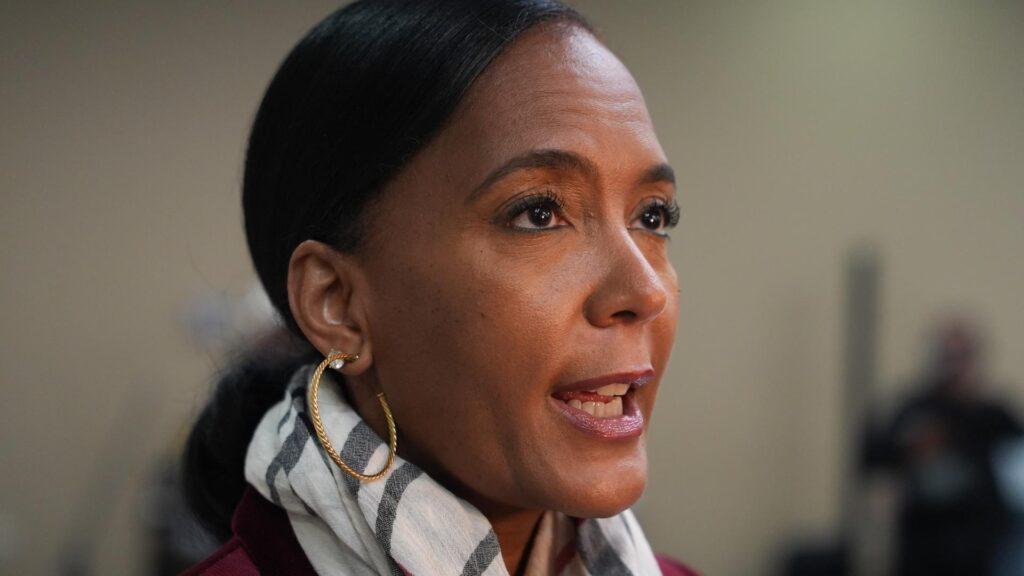
On November 3, 2026, the state of Georgia reached a watershed moment in American democratic governance. Former Atlanta Mayor Keisha Lance Bottoms secured election to Georgia’s highest executive office, defeating Republican businessman Rick Jackson in a high-turnout contest. In achieving this victory, Bottoms shattered an executive barrier that stood unbroken across 238 years of Georgia statehood and 250 years of United States history (forbes.com, multistate.us). She became the first Black woman elected governor of any state in the nation, the first woman to hold the executive office in Georgia, and the first Democrat to win the governor’s mansion in the state since 1998 (forbes.com, ballotpedia.org).
This political breakthrough did not occur in isolation. It represented the culmination of a century-long struggle by African Americans against systemic disenfranchisement, rural political monopolies, and structural voter suppression across the South. Understanding this achievement requires examining the history behind the headlines, tracing a direct line from Reconstruction through the civil rights movement to the contemporary electoral transformation of metropolitan Atlanta.
Georgia Gubernatorial Election Results: A Turning Point in the South
The Georgia gubernatorial election results marked an electoral realignment in the Deep South. With two-term Republican Governor Brian Kemp term-limited, the 2026 Georgia governor race became an open contest that drew unprecedented national investment. Bottoms faced Republican nominee Rick Jackson, a healthcare staffing executive who defeated Lieutenant Governor Burt Jones in the primary and spent more than two hundred million dollars of his personal wealth during the general election campaign (forbes.com, multistate.us). Bottoms countered this historic financial expenditure through broad-based grassroots fundraising, institutional backing, and targeted national support (forbes.com).
When the Associated Press called the race, Bottoms had earned 2,268,462 votes, representing 54.3 percent of ballots cast. Jackson received 1,908,261 votes, or 45.7 percent, creating an 8.6 percentage point margin of victory (wsbtv.com, fox5atlanta.com). Bottoms assembled this coalition by expanding margins across metropolitan Atlanta, sweeping Fulton, DeKalb, Gwinnett, Cobb, Douglas, and Henry counties, while remaining competitive in regional urban centers such as Savannah, Columbus, and Augusta (fox5atlanta.com). Her campaign combined civil rights advocacy with working-class economic measures, including proposals to repeal municipal grocery taxes, increase the state minimum wage to fifteen dollars per hour, and address systemic healthcare inequities through full Medicaid expansion (forbes.com, aljazeera.com).
2026 Georgia Gubernatorial Election Vote Share
First Black Woman Governor: Lineage and Legacy
The elevation of Bottoms as the first Black woman governor carries profound symbolic and familial resonance. Bottoms is a fifth-generation Georgian whose lineage reflects the broader trajectory of Black life in the American South. Her great-great-grandmother was held in bondage on a plantation in Crawfordville, Georgia, prior to emancipation (atlantadailyworld.com, blac.media). Two generations later, her grandfather left rural Georgia for Atlanta during the Jim Crow era, where legal segregation forced him to enter downtown commercial establishments through service doors (atlantadailyworld.com, blavity.com).
This lineage of multigenerational resilience informed her civic trajectory. Her father, Major Lance, achieved national prominence during the 1960s as a soul and rhythm-and-blues recording artist before facing legal and economic hardships that affected their family life (blac.media, blavity.com). Bottoms pursued legal training at Georgia State University College of Law, entered public service on the Atlanta City Council in 2009, and won election as Atlanta’s sixtieth mayor in 2017 (fox5atlanta.com). In her victory address in downtown Atlanta, she stated that her presence on the inaugural stage was made possible by ancestors who persevered through enslavement, segregation, and economic exclusion (atlantadailyworld.com).
Reconstruction, Municipal Power, and the Atlanta Civil Rights Legacy
The structural barriers that delayed Black executive leadership in Georgia trace back to the Reconstruction era. Following the passage of the Reconstruction Acts, Georgia voters elected thirty-three Black lawmakers to the state legislature in 1868. White conservative legislators immediately expelled these officials, commonly remembered as the Original 33, claiming the state constitution permitted Black citizens to vote but denied them the right to hold office (theguardian.com, answers.com). Federal intervention briefly restored these lawmakers to their seats, but the withdrawal of federal protection in 1877 ushered in decades of white supremacist control codified by the 1877 state constitution.
To eliminate Black political participation, Georgia instituted a comprehensive system of Jim Crow voter suppression. The white primary, established in 1898, restricted Democratic primary voting to white citizens in a state where Democratic nomination guaranteed general election victory (answers.com). The United States Supreme Court struck down this practice in Smith v. Allwright (1944) and King v. Chapman (1946). In response, Georgia officials maintained strict poll taxes, arbitrary literacy tests, and the County Unit System (1917–1962). This system allocated disproportionate legislative authority to rural white counties while diluting the voting power of growing urban Black populations until the Supreme Court invalidated it in Gray v. Sanders (1963) (answers.com, georgetown.edu).
Because statewide offices remained inaccessible, African Americans built institutional power through the Atlanta civil rights legacy. Atlanta served as the headquarters for the Southern Christian Leadership Conference and the Student Nonviolent Coordinating Committee, led by organizers like the Reverend Dr. Martin Luther King Jr. and John Lewis (theguardian.com). This organizational base transformed Atlanta mayoral politics. In 1973, Maynard Jackson won election as Atlanta’s first Black mayor, using executive authority to expand municipal contracts for Black-owned businesses, which catalyzed commercial enterprise and established a managerial class (theguardian.com, emory.edu). Shirley Franklin expanded this precedent in 2001 as the first Black woman mayor of a major Southern city, creating the institutional foundation from which Bottoms launched her own career (theguardian.com, genderontheballot.org).
Black Governors in US History: The Struggle for Statewide Office
Statewide governorships have long represented the most rigid glass ceiling for African American politicians. Across two and a half centuries and more than 2,400 gubernatorial elections nationwide, Black candidates faced systemic resistance in statewide races where candidates could not rely on majority-minority districts (19thnews.org, jointcenter.org). Prior to 2026, only three Black individuals had ever been elected governor by general popular vote: L. Douglas Wilder of Virginia in 1989, Deval Patrick of Massachusetts in 2006, and Wes Moore of Maryland in 2022 (genderontheballot.org, jointcenter.org). Two others ascended through succession: P.B.S. Pinchback in Louisiana during Reconstruction (1872) and David Paterson in New York (2008) (genderontheballot.org).
The scarcity was absolute for Black women. While Black women have served as municipal executives, federal judges, and members of Congress, executive authority over state governments remained inaccessible for over two centuries (genderontheballot.org, 19thnews.org). The 2026 midterm election permanently altered this dynamic. In addition to Bottoms’ triumph in Georgia, the 2026 elections expanded Black executive representation across the nation. A record five Black governors will serve concurrently starting in 2027: Keisha Lance Bottoms in Georgia, incumbent Wes Moore in Maryland, Byron Donalds in Florida, Aaron Ford in Nevada, and David Crowley in Wisconsin (thehill.com, jointcenter.org). This single election expanded executive representation beyond the total number of Black governors elected in all prior American history.
Black Governors in US History (1776–2027)
Stacey Abrams Voter Turnout Legacy and Grassroots Power
The strategic foundation for Bottoms’ victory was built largely through the Stacey Abrams voter turnout legacy. In 2018, Abrams made history as the first Black woman to secure a major party nomination for governor in the United States (19thnews.org). Although Abrams narrowly lost that contest to Brian Kemp by approximately 54,700 votes, her campaign rejected traditional political assumptions that statewide victory in Georgia required moderating appeals to capture rural conservative voters (theguardian.com, 19thnews.org). Instead, Abrams demonstrated that expanding registration among unregistered communities of color could fundamentally reshape the electorate.
Through grassroots organizations like the New Georgia Project and Fair Fight Action, organizers registered hundreds of thousands of new voters between 2014 and 2020 (theguardian.com, brennancenter.org). African Americans comprise roughly thirty-three percent of Georgia’s voting-age population, representing one of the highest concentrations of Black voters in the country (forbes.com, ballotpedia.org). This organizational infrastructure enabled the federal victories of 2020 and 2021, sending two Democrats to the United States Senate (theguardian.com, pbs.org). Bottoms inherited, relied upon, and mobilized this durable apparatus, proving that grassroots organizing could overcome deep financial disadvantages in statewide executive elections.
Georgia Voting Rights SB 202: Modern Hurdles at the Ballot Box
Mobilizing this electorate required overcoming systemic legal barriers. In 2013, the United States Supreme Court dismantled the core enforcement mechanism of the Voting Rights Act of 1965 in Shelby County v. Holder, invalidating the Section 4 coverage formula that required jurisdictions with histories of racial discrimination to preclear voting changes with the Department of Justice (electionlawblog.org, brennancenter.org). Unchecked by federal oversight, Georgia closed hundreds of voting precincts, disproportionately affecting Black and low-income neighborhoods where lines routinely extended for several hours (brennancenter.org, allvotingislocal.org).
Following record minority turnout in 2020, the state legislature passed the Election Integrity Act of 2021, widely known as Georgia voting rights SB 202 (democracydocket.com, pbs.org). The law imposed strict barriers on mail voting by capping drop boxes at one per 100,000 active voters, eliminating twenty-four-hour outdoor access, and confining boxes inside government buildings during business hours (electionlawblog.org, allvotingislocal.org). In Fulton, DeKalb, Cobb, and Gwinnett counties, drop box availability dropped by more than seventy percent (allvotingislocal.org). SB 202 also made it a misdemeanor for non-poll workers to distribute water or food to voters waiting in line within 150 feet of a polling site, and disqualified out-of-precinct provisional ballots cast before 5:00 p.m. on Election Day (electionlawblog.org, lwv.org). Bottoms’ campaign responded by financing voter education programs and organizing precinct transportation networks to counteract these restrictions.
Metro Atlanta Drop Box Access (Pre- vs. Post-SB 202)
Atlanta Mayoral Politics, 2020 Realities, and Executive Action
While Bottoms built a winning statewide coalition, her municipal record presented complex challenges among progressive Black activists. During the racial justice uprisings of 2020 following the murder of George Floyd, Bottoms received national media attention for urging demonstrators to disperse, stating from the municipal podium that destructive unrest harmed the city’s civil rights legacy (theguardian.com, washingtonpost.com). Tension deepened weeks later when an Atlanta police officer shot and killed Rayshard Brooks (washingtonpost.com). Bottoms accepted the resignation of Police Chief Erika Shields and established administrative reform commissions, but resisted progressive demands to withhold funds from the Atlanta Police Department, while supporting plans for a regional public safety training center that generated persistent community opposition (washingtonpost.com, ajc.com, 11alive.com).
To unite the Democratic base in 2026, Bottoms addressed these tensions directly, centering her campaign on structural labor protections and economic justice for working families (forbes.com, opb.org). Governing Georgia will present immediate institutional hurdles. Although she captured the governorship, Republicans retained control of both chambers of the Georgia General Assembly (multistate.us). Georgia state law restricts municipalities from raising local minimum wages (O.C.G.A. § 34-4-3.1), and statutory policy changes require legislative approval (capitol-beat.org).
Nevertheless, the executive office grants substantial administrative power. Bottoms can implement wage requirements and workplace protections for state employees and vendors through executive orders. Through the Department of Community Health, her administration can submit revised federal waiver applications under the Affordable Care Act to dismantle administrative barriers that limited enrollment under existing state health programs (capitol-beat.org, aljazeera.com). Furthermore, under the Georgia Constitution, the governor sets the state’s official revenue estimate and exercises line-item veto authority, providing budgetary leverage over legislative priorities. Keisha Lance Bottoms assumed office carrying the weight of history, transforming executive representation in the American South.
About the Author
Darius Spearman is a professor of Black Studies at San Diego City College, where he has been teaching for over 20 years. He is the founder of African Elements, a media platform dedicated to providing educational resources on the history and culture of the African diaspora. Through his work, Spearman aims to empower and educate by bringing historical context to contemporary issues affecting the Black community.
