

Ethiopia Tigray Conflict: Why the Health System Is Collapsing
By Darius Spearman (africanelements)
Support African Elements at patreon.com/africanelements and hear recent news in a single playlist. Additionally, you can gain early access to ad-free video content.
The World Health Organization recently issued an alarming assessment regarding northern Ethiopia (who.int). Fresh military clashes and repeated drone strikes are dismantling regional medical services (who.int). Public health leaders caution that renewed violence has broken the fragile peace established in late 2022 (un.org, who.int). The wider Ethiopia Tigray Conflict now threatens to pull millions of people back into catastrophe (reliefweb.int).
World Health Organization Director-General Tedros Adhanom Ghebreyesus condemned recent air raids across Tigray and neighboring provinces (who.int). Airstrikes struck civilian gatherings, including a displacement camp in the Amhara region and a food distribution site in Rama (who.int). At the same time, regional economic analysts warn that instability threatens national financial recovery and intensifies starvation (credendo.com, reliefweb.int). Understanding these dangerous events requires examining the long history behind modern headlines.
Roots of the Tigray War: Historical Centralization and Resentment
The origins of the northern crisis trace back across decades of political struggle over central authority (wikipedia.org). Following the fall of the military Derg regime in 1991, the Tigray People’s Liberation Front became the dominant power (wikipedia.org). The coalition constructed an ethnic federalist model that recognized regional self-determination (wikipedia.org). This federal arrangement attempted to balance regional identities with unified economic development (wikipedia.org). Long before modern borders emerged, pre-colonial African statecraft balanced diverse regional communities through negotiated autonomy. However, ethnic tensions persisted beneath the surface (wikipedia.org).
Mass popular demonstrations erupted in 2016 among the Oromo and Amhara communities (wikipedia.org). These protests challenged thirty years of disproportionate political and security dominance by the Tigray People’s Liberation Front (wikipedia.org). The governing coalition selected Abiy Ahmed as Prime Minister in 2018 to resolve national unrest (wikipedia.org). Abiy immediately pursued an aggressive agenda to centralize federal power in Addis Ababa (thesoufancenter.org, wikipedia.org). He merged regional coalition partners into a single national organization called the Prosperity Party (wikipedia.org).
Tigrayan political leaders refused to join the newly formed Prosperity Party, viewing it as an unconstitutional rollback of regional self-rule (wikipedia.org). Prime Minister Abiy Ahmed Tigray policies also involved signing a rapid peace accord with Eritrea (wikipedia.org). That agreement alienated regional authorities while consolidating an alliance against northern regional leadership (thesoufancenter.org, wikipedia.org). When the central government postponed national elections during the pandemic, Tigray conducted regional votes independently (wikipedia.org). Federal authorities declared those regional ballots illegal, setting the nation on a course toward open military confrontation (wikipedia.org).
Destruction of Tigray Healthcare: The Structural Toll of Siege
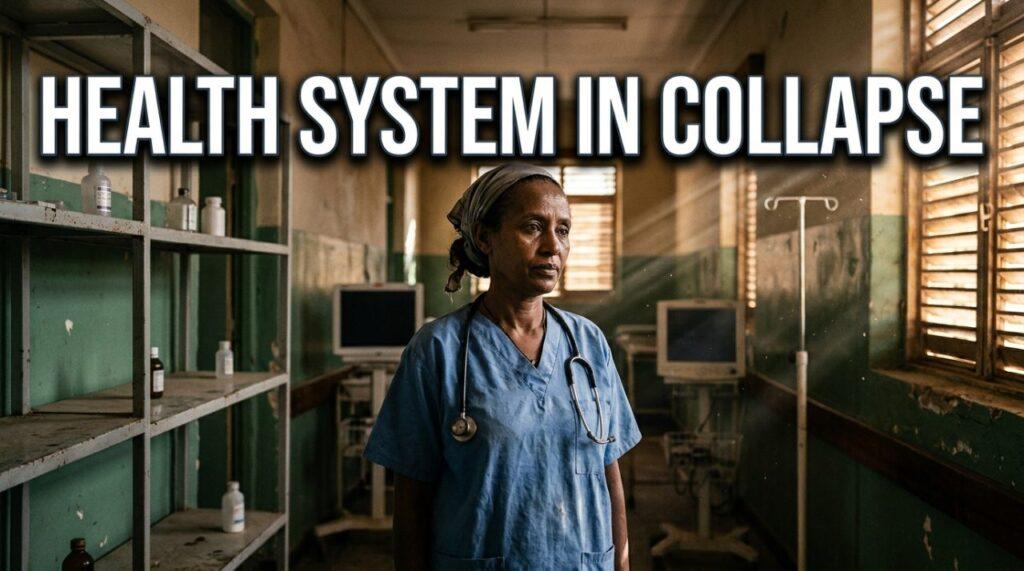
The initial phase of the Ethiopia civil war update began in November 2020 and devastated regional social infrastructure (nih.gov, wikipedia.org). Federal armed forces, allied Eritrean divisions, and regional militias quickly surrounded the northern territory (thesoufancenter.org, wikipedia.org). During two years of continuous warfare, military forces systematically attacked civilian health networks (phr.org, doctorswithoutborders.org). Combatants looted clinics, removed life-saving diagnostic devices, and destroyed clean water delivery systems (phr.org, doctorswithoutborders.org). Doctors struggled without basic anesthesia, antibiotics, and clean bandages (phr.org, globalhealthnow.org).
Academic evaluations published in major medical journals reveal the extreme physical toll inflicted on civilian hospitals (nih.gov, nih.gov). Total economic destruction to the health system exceeded 3.78 billion dollars (nih.gov). More than eighty percent of public clinics, rural health centers, and hospitals suffered vandalism or structural damage (nih.gov, nih.gov). The war reduced active health facilities from over one thousand units down to a tiny fraction of functional clinics (nih.gov). Medical facilities could no longer provide insulin, cancer medications, or basic emergency pediatric treatments (phr.org, globalhealthnow.org).
Destruction of Tigray Healthcare Network
The blockade of fuel, commercial banking, and humanitarian cargo prevented basic hospital operations for months (phr.org, doctorswithoutborders.org). Health professionals went without salaries, food, and basic sterile medical equipment (nih.gov, phr.org). Countless civilians died away from battlefields because preventable illnesses became untreatable conditions (nih.gov). Much like the systemic failures of American post-war reconstruction efforts, promises to rebuild basic civilian safety nets remained unfulfilled. The systematic Destruction of Tigray Healthcare left regional clinics incapable of absorbing new military violence (nih.gov, who.int).
The Flawed 2022 Pretoria Peace Agreement: Omissions and Impunity
Diplomats gathered in South Africa in November 2022 to end the destructive two-year siege (addisstandard.com, wikipedia.org). The African Union mediated the historic cessation of hostilities between the federal government and regional representatives (wikipedia.org). The accord produced an immediate silencing of heavy artillery along regional trench lines (wikipedia.org). Banking operations slowly resumed, telecommunications returned to cities, and commercial flights connected Mekelle to Addis Ababa (wikipedia.org). However, the settlement contained fundamental structural flaws that made permanent stability impossible (thesoufancenter.org, toaep.org).
Crucially, the accord failed to establish binding international enforcement mechanisms or independent monitoring structures (civicus.org, toaep.org). The African Union Monitoring, Verification, and Compliance Mechanism lacked adequate personnel, operational resources, and independent movement rights (civicus.org, globalr2p.org). Observers could not freely enter contested areas without state security approval (civicus.org). Furthermore, the agreement completely omitted Eritrea, leaving foreign troops positioned inside northern borders (thesoufancenter.org, globalr2p.org). Regional boundaries in contested areas like Western Tigray remained totally unresolved (addisstandard.com, thesoufancenter.org).
Transitional justice was also subordinated to domestic political processes under Article 10 of the accord (toaep.org). The agreement created no independent international tribunal to investigate war crimes or attacks on clinics (phr.org, toaep.org). Because accountability remained within the domestic legal system, military units operated without fear of external legal penalties (phr.org, toaep.org). The text also lacked specific prohibitions against aerial bombardments or drone strikes on civilian infrastructure (phr.org, who.int). Consequently, the 2022 Pretoria Peace Agreement functioned as a temporary ceasefire rather than a durable resolution (thesoufancenter.org, responsiblestatecraft.org).
Amhara Fano Militia Insurgency: Realignment and Armed Resistance
A profound military realignment emerged directly from the flaws of the Pretoria negotiations (addisstandard.com, thesoufancenter.org). Between 2020 and 2022, Amhara regional forces and local Fano paramilitaries fought alongside federal troops (thesoufancenter.org, wikipedia.org). These allied units secured control over Western Tigray, which Amhara leaders claimed as historic territory (thesoufancenter.org). However, regional Amhara representatives were excluded from the negotiating table in South Africa (addisstandard.com, thesoufancenter.org). Amhara factions feared that the federal state would return these lands to Tigrayan administration (addisstandard.com, thesoufancenter.org).
Tensions reached a breaking point in April 2023 when the central government announced a controversial security decree (addisstandard.com, thesoufancenter.org). Federal authorities ordered the immediate dissolution of regional special forces across all provinces (addisstandard.com, thesoufancenter.org). Amhara communities viewed this mandate as an existential security threat designed to leave them defenseless (addisstandard.com, thesoufancenter.org). The decree ignited the widespread Amhara Fano Militia Insurgency across northern Ethiopia (addisstandard.com, thesoufancenter.org). Armed fighters seized regional towns, ambushed military convoys, and resisted federal authority across rural districts (addisstandard.com, thesoufancenter.org).
Collapse of Essential Health Services
This escalating confrontation created unprecedented political alignments across the country (thesoufancenter.org, responsiblestatecraft.org). Confronted by sustained military pressure from federal forces, former battlefield enemies began communicating (thesoufancenter.org, responsiblestatecraft.org). Elements within the TPLF, Fano militias, and the Oromo Liberation Army formed tactical operational agreements (thesoufancenter.org, responsiblestatecraft.org). Grouped under pacts like the Alliance for Survival, these factions united against the federal administration (thesoufancenter.org, responsiblestatecraft.org). History reveals that conflicting nationalisms often forge temporary partnerships when facing an assertive central state. This realignment shattered security across the northern territory (thesoufancenter.org, responsiblestatecraft.org).
WHO Ethiopia Health Crisis: Renewed Strikes and Healthcare Collapse
Federal military responses have increasingly relied on unmanned aerial vehicles and long-range airstrikes (who.int, responsiblestatecraft.org). Drone strikes across northern population centers have produced severe civilian casualties (who.int). International health monitors confirmed devastating strikes hitting displaced families residing inside the Jaari 2 camp (who.int). Another aerial attack struck community members gathered around a food assistance depot in Rama (who.int). These continuous bombardments spread fear among rural villagers and disrupt medical access (phr.org, who.int).
The resulting influx of trauma patients has pushed major referral centers beyond operational endurance (phr.org, who.int). Ayder Comprehensive Specialized Hospital in Mekelle reports severe shortages of basic surgical materials (phr.org, who.int). Surgeons are forced to clean blast wounds without adequate sterile saline or pain control (phr.org, globalhealthnow.org). Electrical blackouts shut down refrigeration units holding blood supplies and essential childhood vaccines (nih.gov, phr.org). Medical directors describe the ongoing WHO Ethiopia Health Crisis as an unmanageable humanitarian emergency (who.int).
Paramilitary groups and regular armed forces also continue to target medical staff and transport vehicles (phr.org). A recent report by Physicians for Human Rights shows that ambulances are routinely seized by armed units (phr.org). Soldiers use civilian medical vehicles to move military supplies across insecure corridors (phr.org). Nurses and doctors face harassment, arbitrary detention, and threats while treating wounded non-combatants (phr.org). Neutral civilian healthcare has been completely stripped of its legal protections (phr.org, who.int).
Ethiopia Famine and Aid Crisis: Macroeconomic Shocks and Starvation
Renewed armed clashes also threaten national macroeconomic stability and household food security (credendo.com, reliefweb.int). The Ethiopian government recently enacted major currency reforms to obtain credit from the International Monetary Fund (credendo.com). Officials sought to restructure sovereign loans under global financial mechanisms (credendo.com). However, spiraling military spending and emergency arms imports drain foreign currency reserves (credendo.com). This fiscal pressure mirrors the broader rising debt crisis affecting many African economies today (credendo.com). Inflation rapidly increases the price of grain, cooking fuel, and basic transportation (credendo.com, reliefweb.int).
Commercial transport routes running from the seaport of Djibouti through Afar and Amhara suffer frequent interruptions (credendo.com). Clashes close highway checkpoints and halt cargo trucks carrying agricultural fertilizer and food relief (credendo.com, reliefweb.int). In Tigray, regional airports have faced temporary closures due to nearby military operations (credendo.com, who.int). Farmers cannot plant crops or harvest grain because artillery fire and drone surveillance make fieldwork hazardous (reliefweb.int, globalcitizen.org). Erratic weather and locust swarms have worsened the agricultural deficit (reliefweb.int).
Humanitarian and Economic Impact
More than thirteen million people across Tigray, Amhara, and Afar urgently require emergency food shipments (reliefweb.int, globalcitizen.org). Humanitarian agencies face constant fuel limits and movement restrictions when trying to deliver emergency supplies (reliefweb.int, globalcitizen.org). When air warfare strikes commercial storage facilities and bread lines, food distribution stops entirely (who.int). The expanding Ethiopia Famine and Aid Crisis is not an unavoidable natural accident (globalcitizen.org). It is the direct consequence of unaddressed political grievances and persistent military blockades (reliefweb.int, globalcitizen.org).
WHO Ethiopia Health Crisis: Conclusion: The Peril of Incomplete Peace Accords
The unraveling situation in northern Ethiopia provides a sobering lesson on the nature of armed conflict resolution (thesoufancenter.org, responsiblestatecraft.org). Ceasefire agreements that avoid territorial boundaries, genuine accountability, and democratic consensus produce fragile operational pauses (thesoufancenter.org, toaep.org). The Pretoria settlement temporarily stopped open artillery barrages while leaving foundational disputes unresolved (addisstandard.com, toaep.org). International partners prioritized diplomatic declarations over verified demilitarization and clinical reconstruction (civicus.org, toaep.org).
Because clinics were never repaired and doctors never received stable support, the health network could not survive renewed fighting (nih.gov, who.int). As regional alliances shift and drone strikes expand, civilians bear the physical cost of systemic political failure (thesoufancenter.org, who.int). Without genuine constitutional dialogue, transparent accountability for wartime abuses, and physical protection for clinics, peace will remain distant (phr.org, toaep.org). The ongoing crisis demonstrates that ignoring the historical causes of conflict ensures that violence will return (thesoufancenter.org, responsiblestatecraft.org).
About the Author
Darius Spearman is a professor of Black Studies at San Diego City College, where he has been teaching for over 20 years. He is the founder of African Elements, a media platform dedicated to providing educational resources on the history and culture of the African diaspora. Through his work, Spearman aims to empower and educate by bringing historical context to contemporary issues affecting the Black community.
