

Hakeem Jeffries Speaker Vote: Inside the Progressive Dissent
By Darius Spearman (africanelements)
Support African Elements at patreon.com/africanelements and hear recent news in a single playlist. Additionally, you can gain early access to ad-free video content.
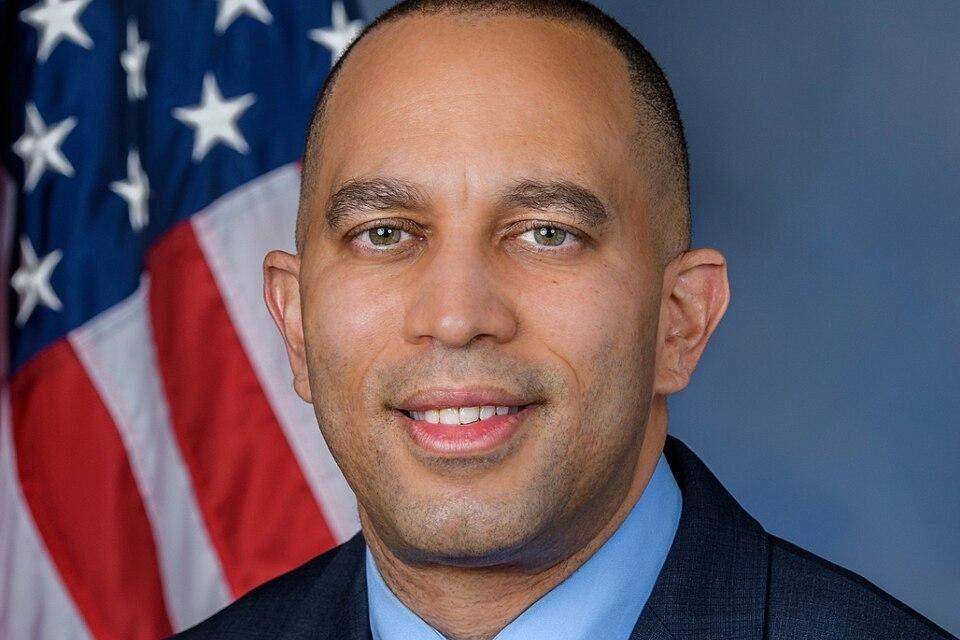
On November 18, 2026, members of the House Democratic Caucus gathered behind closed doors on Capitol Hill to determine the future leadership of the legislative branch. Following a national election cycle that restored their party to the majority for the upcoming 120th Congress, representatives cast their secret ballots (rollcall.com, cnn.com). The outcome affirmed representative Hakeem Jeffries of New York as the party nominee for Speaker of the House by a margin of 251 to 11 (democracynow.org, cbsnews.com).
The nomination places Jeffries on the threshold of a historic achievement. When the full House of Representatives convenes in January 2027, he is positioned to become the leader of the legislative body. Yet, the eleven negative votes cast within his own caucus revealed clear philosophical tensions. A coalition of newly elected lawmakers publicly broke ranks, demonstrating that the internal debates defining modern party governance remain active and unresolved (democracynow.org, democracynow.org).
The House Democratic Caucus Vote and Party Organization
The closed-door balloting concluded with decisive numbers in favor of the current leadership team. In addition to nominating Jeffries for the speakership, the caucus selected representative Katherine Clark of Massachusetts as Majority Leader, making her the first woman from either party to hold that specific role (rollcall.com, apnews.com). Representative Pete Aguilar of California was elected Majority Whip, marking the first time a Latino lawmaker will manage daily floor operations and vote counts for the majority party (rollcall.com, cnn.com).
With Democrats projected to control at least 257 seats in the incoming House, the caucus leadership holds a comfortable buffer over the 218 floor votes needed during the official roll call in January (coloradopolitics.com, courthousenews.com). Jeffries faced no formal challenger on the ballot. His 95.8 percent caucus victory signaled solid consolidation among moderate and institutional Democrats, who view party unity as the primary defense against conservative legislative efforts (ground.news, rollcall.com).
Nevertheless, internal opposition emerged immediately from the progressive wing. Seven incoming lawmakers issued a joint statement to explain why they cast dissenting ballots against the party leader (democracynow.org). They argued that leadership must offer concrete floor commitments rather than symbolic gestures on fundamental legislative issues. This friction illustrates how the mechanical selection of party leaders often exposes long-standing arguments over political priorities (commondreams.org, democracynow.org).
House Democratic Caucus Vote (November 2026)
First African American House Speaker and the Long Legislative Path
The pending elevation of Hakeem Jeffries marks the conclusion of a centuries-long struggle for African American representation inside federal institutions. The United States House of Representatives convened for the first time in 1789, but Black Americans remained completely excluded from its halls until after the Civil War (cbcfinc.org, wikipedia.org). In 1870, Joseph Rainey of South Carolina made history as the first African American seated in the chamber, beginning a short era where formerly enslaved people exercised direct legislative power (wikipedia.org).
That initial period of Black political advancement proved fragile. Following the withdrawal of federal troops in 1877, white political elites instituted state constitutions designed to strip voting access from Black citizens. By 1901, representative George Henry White of North Carolina left office, remarking that while Black Americans had been forced out of Congress, they would eventually return (wikipedia.org). The historical reality of how Reconstruction failed to protect Black citizens created a sixty-year void during which no Southern Black lawmaker served in Congress.
Modern representation relies directly on legal protections established during the Civil Rights movement, particularly the Voting Rights Act of 1965 (cbcfinc.org). When the Supreme Court eliminated federal preclearance requirements in the 2013 decision Shelby County v. Holder, civil rights advocates turned to court litigation under Section 2 of that statute to protect legislative districts. Legal victories in cases such as Allen v. Milligan in Alabama and Robinson v. Landry in Louisiana ordered the creation of additional Black-opportunity congressional districts (apnews.com). Those rulings enabled the election of representatives like Shomari Figures in Alabama and Cleo Fields in Louisiana, securing the very seats that delivered the House majority back to Democrats in 2026 (washingtonpost.com, apnews.com).
Black House Representation Milestones (1870–2026)
Congressional Black Caucus History and Institutional Power
Jeffries often traces his political lineage directly to representative Shirley Chisholm, who in 1968 became the first Black woman elected to Congress, representing the Brooklyn neighborhoods where he grew up (cbcfinc.org). In 1971, Chisholm joined twelve other Black representatives to establish the Congressional Black Caucus (CBC), creating an organization intended to serve as the conscience of Congress (cbcfinc.org, wikipedia.org). The founding members recognized that individual lawmakers held little sway without collective bargaining inside the party structure.
For more than half a century, the strategy of the CBC focused on accumulating seniority, securing committee gavels, and protecting federal programs from deep reductions (cbcfinc.org). In 2007, representative Jim Clyburn of South Carolina climbed to the rank of Majority Whip, demonstrating how discipline inside the institution could deliver national influence. When senior party leaders stepped aside in late 2022, Jeffries took over the Minority Leader position, cementing a generational transition that balanced party discipline with legislative seniority (cnn.com, apnews.com).
This institutional strategy has historically created tension with grassroots social movements. While younger organizers often prioritize immediate structural overhauls, CBC leaders have consistently emphasized pragmatism and building broad electoral coalitions (cbcfinc.org). Jeffries often describes his philosophy as that of an unapologetic, pragmatic, progressive capitalist (ground.news, rollcall.com). That stance prioritizes private-sector growth paired with targeted public investments, an approach rooted in traditional debates regarding dynamics within Black politics and economic mobility.
Democratic Party Ideological Divide Across Decades
The philosophical division evident in the November 2026 leadership election represents an ongoing debate over the identity of the Democratic Party. During the 1980s and 1990s, moderate strategists formed the Democratic Leadership Council (DLC) to move the party away from traditional New Deal spending policies. Under the Third Way model popularized by Bill Clinton, the party favored market solutions, balanced budgets, and bipartisan compromise, arguing that national elections could only be won from the center (wikipedia.org).
That consensus faced severe challenges after the 2008 financial crisis and the subsequent presidential campaigns of Senator Bernie Sanders in 2016 and 2020. Grassroots voters embraced democratic socialism and called for universal social benefits that eliminated private profit from essential services (commondreams.org). The 2018 midterm elections brought the arrival of The Squad, demonstrating that progressive primary challengers backed by Justice Democrats and the Democratic Socialists of America could defeat veteran incumbents (wikipedia.org).
The conflict intensified dramatically during the 2024 primary elections, when outside spending reshaped key congressional races. Pro-Israel organizations, led by the American Israel Public Affairs Committee (AIPAC) and its affiliated super PAC, the United Democracy Project (UDP), poured unprecedented sums into primary contests (adimpact.com). In New York, the super PAC expended nearly fifteen million dollars to defeat incumbent representative Jamaal Bowman, making it the most expensive House primary in history (adimpact.com). In Missouri, UDP directed more than eight million dollars to unseat representative Cori Bush (adimpact.com).
These primary defeats created significant bitterness between grassroots activists and party leaders. Although Jeffries formally endorsed Bowman and Bush under standard caucus incumbent-protection practices, left-wing organizers criticized party leadership for failing to condemn outside corporate money (commondreams.org, adimpact.com). Establishment figures maintained that the primary outcomes simply reflected constituent dissatisfaction with confrontational rhetoric, while progressives saw the spending as an effort to silence working-class voices. These debates continue to influence questions concerning voting and institutional representation across the nation.
UDP Super PAC Spending in Key 2024 Primaries
Progressive Democrats Dissent and the New Congressional Bloc
The eleven negative votes recorded during the secret caucus ballot were not merely an expression of personal discontent. Instead, they signaled the arrival of an organized left flank within the incoming majority. Shortly after the vote concluded, seven incoming representatives released a detailed public statement outlining their refusal to back Jeffries (democracynow.org, democracynow.org). These lawmakers argued that leadership had repeatedly sidelined core policy priorities that energized everyday voters during the campaign season.
The seven members issuing the statement included Darializa Avila Chevalier of New York, Adam Hamawy of New Jersey, Frederick Haynes of Texas, Melat Kiros of Colorado, Donavan McKinney of Michigan, Chris Rabb of Pennsylvania, and Claire Valdez of New York (democracynow.org). Haynes missed the physical roll call due to a sudden illness but confirmed his public endorsement of the statement (democracynow.org). Additionally, representative-elect Don Leonard of Ohio confirmed his own negative ballot, demanding explicit floor votes to curb corporate influence in elections and end unconditional foreign weapons shipments (democracynow.org, democracynow.org).
“Whether on Medicare for All, stopping ICE terror, getting money out of politics, or ending the genocide in Gaza, our constituents sent us to Congress with a mandate on these issues.”
Source: democracynow.org
Several of the dissenting members hold close ties to the Democratic Socialists of America and grassroots community organizations (democracynow.org). Their decision to voice opposition before the formal January floor vote distinguishes their strategy from traditional internal bargaining. By naming specific policy demands in public, these incoming lawmakers established a baseline for legislative accountability that will challenge leadership throughout the 120th Congress (coloradopolitics.com, commondreams.org).
House Progressive Policy Mandates and Legislative Friction
The joint statement highlighted four distinct policy demands that represent structural disputes within the Democratic coalition. Each flashpoint carries a complex legislative history that shapes modern party disagreements.
The first major demand centers on universal healthcare. The push for national health insurance has existed since President Harry Truman first proposed it in 1945, leading eventually to the creation of Medicare and Medicaid under Lyndon B. Johnson in 1965 (wikipedia.org). When the Affordable Care Act passed in 2010, party leaders dropped a public option to secure moderate support (wikipedia.org). Progressive representatives, led by Pramila Jayapal and Debbie Dingell, continue to push the Medicare for All Act to create a single-payer public system (house.gov, commondreams.org). While Jeffries authored an extensive health plan ahead of the 2026 elections expanding Medicare benefits to include vision and dental coverage, he intentionally excluded single-payer healthcare from the official caucus platform (rollcall.com, house.gov).
Immigration enforcement forms the second point of contention. Established in 2003 under the Homeland Security Act, the Immigration and Customs Enforcement (ICE) agency expanded federal detention capabilities significantly (wikipedia.org). The progressive left has repeatedly demanded an end to expedited deportations and detention contracts, characterizing enforcement operations as harmful to immigrant families (democracynow.org). Conversely, moderate members organized under the New Democrat Coalition, which holds over 140 seats in the incoming House, view aggressive calls to eliminate ICE as politically damaging in competitive districts (coloradopolitics.com, rollcall.com).
The third policy dispute focuses on foreign policy, specifically regarding the ongoing devastation in Gaza and unconditional military assistance to Israel (timesofisrael.com, democracynow.org). Since 1967, federal policy has guaranteed multi-billion-dollar annual aid agreements to Israel (timesofisrael.com). Left-wing lawmakers insist that weapons transfers violate federal statutes, such as the Foreign Assistance Act and Leahy Laws, which prohibit military aid to forces engaged in gross human rights violations (democracynow.org, democracynow.org). Dissenting members demanded enforceable floor votes on conditioning foreign aid, confronting establishment party figures who have long maintained strong ties to traditional diplomatic alliances (timesofisrael.com, democracynow.org).
Finally, campaign finance reform remains a persistent grievance. The 2010 Supreme Court ruling in Citizens United v. FEC allowed corporations and wealthy individuals to spend unlimited sums through independent political action committees (wikipedia.org). Incoming progressives insist that the party leadership support a constitutional amendment to ban super PAC spending, arguing that corporate money distorts public priorities (democracynow.org, commondreams.org). These structural questions concerning national political power highlight the ongoing struggle over whether the party serves corporate donors or working-class voters.
| Policy Domain | Progressive Stance | Caucus Leadership Stance |
|---|---|---|
| Healthcare | Single-Payer Medicare for All | ACA Expansion & Targeted Benefits |
| Immigration | Dismantle ICE Enforcement | Border Security & Legal Pathways |
| Foreign Aid | Embargo on Offensive Arms | Maintain Traditional Strategic Aid |
| Campaign Cash | Constitutional Amendment on PACs | Disclose Act & Incumbent Defense |
As January approaches, Hakeem Jeffries possesses more than enough votes to win the Speaker’s gavel on the House floor. Unlike recent Republican speakers who governed with razor-thin majorities, Jeffries commands a substantial margin of victory that insulates his position from small procedural rebellions (coloradopolitics.com, courthousenews.com). Nevertheless, the 251 to 11 nominating vote serves as a clear indicator of the road ahead. Managing an expanded Democratic majority will require balancing the institutional weight of the moderate center against an energetic progressive movement determined to reshape federal policy.
About the Author
Darius Spearman is a professor of Black Studies at San Diego City College, where he has been teaching for over 20 years. He is the founder of African Elements, a media platform dedicated to providing educational resources on the history and culture of the African diaspora. Through his work, Spearman aims to empower and educate by bringing historical context to contemporary issues affecting the Black community.
