


Pretextual Traffic Stops: How Police Target Young Black Men
By Darius Spearman (africanelements)
Support African Elements at patreon.com/africanelements and hear recent news in a single playlist. Additionally, you can gain early access to ad-free video content.
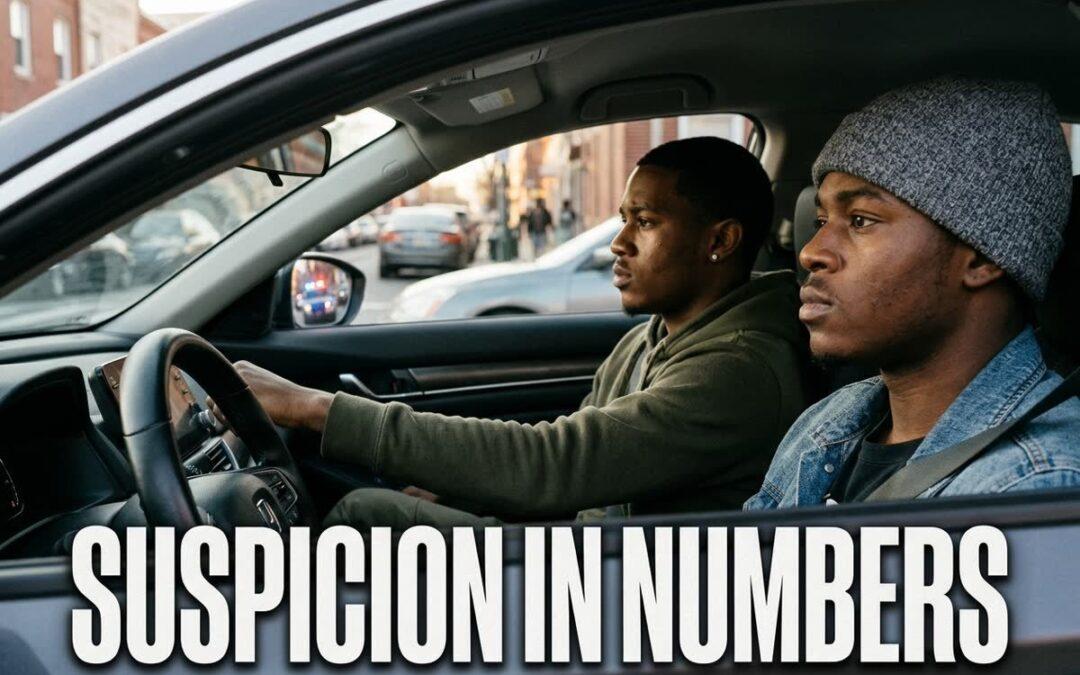
A rigorous criminological study from Villanova University revealed a troubling reality on American roadways. Criminology professor Lance Hannon and researcher Molly Biddle analyzed more than 41,000 traffic stops conducted by the Philadelphia Police Department (jbhe.com, researchgate.net). Their findings demonstrated that when two or more young Black men travel together in a car, they are five times more likely to be pulled over by law enforcement than pairs or groups of young white men (jbhe.com). The research documents how routine travel transforms into an immediate trigger for state surveillance (researchgate.net).
This encounter rate does not stem from reckless driving or equipment failures. Instead, the disparity reaches its highest level during daytime hours when officers can clearly identify the race and age of vehicle occupants before initiating a stop (jbhe.com, researchgate.net). The investigation highlights the persistence of pretextual traffic stops across urban centers. While the study offers fresh empirical data, the underlying practice has a long history. The patterns observed on Philadelphia streets represent the modern continuation of historical mobility controls that have regulated Black freedom of movement for centuries.
Driving While Black History: Spatial Control and Racial Surveillance
The phrase “Driving While Black” describes the continuous police surveillance of Black motorists who navigate public roadways (wikipedia.org, stanford.edu). This practice operates as a modern extension of antebellum spatial control. During the era of chattel slavery, white authorities required enslaved people to carry written travel passes whenever they moved outside plantation boundaries (wikipedia.org). Antebellum slave patrols monitored public paths, accosted Black travelers, and enforced strict curfews to maintain economic and social control (wikipedia.org, siu.edu).
Following the Civil War, Southern municipalities established Black Codes and sweeping vagrancy laws to restrict newly emancipated citizens (wikipedia.org). These statutes categorized the peaceful assembly of Black men without white supervision as criminal idleness. Southern courts funneled thousands of Black men into the convict leasing system, replacing plantation bondage with forced labor for private corporations. The visual congregation of Black men was treated as an inherent threat to the social order, justifying arbitrary detention by local authorities (siu.edu).
The automobile offered Black Americans physical mobility during the twentieth century, yet it also generated new forms of regulation (wikipedia.org). Thousands of “sundown towns” across the United States prohibited Black people from remaining within city borders after dark (wikipedia.org). Black travelers relied on publications like The Negro Motorist Green Book to identify safe lodging, restaurants, and fuel stations away from hostile local police (wikipedia.org). The contemporary motor vehicle stop continues this long containment process, demonstrating how the elusive meaning of constitutional freedom remains contested along American roads.
Whren v United States Precedent: Legalizing Discretionary Police Stops
The legal framework permitting pretextual traffic enforcement took shape through decisive federal court rulings. For decades, the Fourth Amendment required officers to possess probable cause before conducting an investigative seizure (wikipedia.org, richmond.edu). The United States Supreme Court altered this standard in the 1968 decision Terry v. Ohio (wikipedia.org). In that case, the Court permitted officers to stop and frisk individuals based on a lower standard known as reasonable suspicion (wikipedia.org). This procedural shift authorized proactive street policing, enabling officers to detain pedestrians based on subjective evaluations of perceived danger (siu.edu, richmond.edu).
Twenty-eight years later, the Supreme Court removed federal constitutional barriers to vehicle profiling in Whren v. United States (wikipedia.org, richmond.edu). In 1996, plainclothes officers in Washington, D.C., stopped two young Black men in an SUV after observing the vehicle pause at an intersection for twenty seconds and execute a turn without a signal (wikipedia.org). The unanimous decision established that any objective motor vehicle violation gives an officer constitutional authority to stop a car (wikipedia.org, richmond.edu). The actual intent or racial bias of the officer remains entirely irrelevant under Fourth Amendment analysis (richmond.edu, georgetown.edu).
“Subjective intentions play no role in ordinary, probable-cause Fourth Amendment analysis.”
— Supreme Court of the United States, Source: (wikipedia.org)
The Whren ruling insulated pretextual traffic stops from constitutional scrutiny (richmond.edu). Officers who suspect criminal activity without articulable facts can wait for a vehicle to commit a minor technical infraction, such as a cracked taillight or an unsignaled lane adjustment (krlawphila.com, richmond.edu). Once the vehicle stops, officers use several legal mechanisms to escalate the detention. Officers frequently request “consent” to search the car (georgetown.edu). Motorists rarely recognize that they retain the constitutional right to decline consent, a reality established in Schneckloth v. Bustamonte (georgetown.edu). Furthermore, officers cite subjective justifications, such as smelling marijuana or noting “furtive movements,” to bypass warrant rules entirely (krlawphila.com, phillydefenders.org).
Traffic Stop Rate Multipliers by Cohort
Stop and Frisk Racial Disparities: Moving From Sidewalks to Highways
Philadelphia serves as a focal point for proactive policing studies due to its history of civil rights litigation. During the late 2000s, municipal leaders instituted aggressive street enforcement to curb violent crime (aclu.org, aclupa.org). In 2009 alone, Philadelphia police officers performed 253,333 pedestrian frisks (aclu.org). Black residents accounted for 72.2 percent of those stops, even though Black people constituted approximately 44 percent of the city population (aclu.org, aclupa.org). Despite this volume, 91.6 percent of those detentions produced no arrest, and fewer than one percent uncovered a firearm (aclu.org, aclupa.org).
In response to these conditions, the ACLU of Pennsylvania filed the federal class-action lawsuit Bailey v. City of Philadelphia in 2010 (aclupa.org, aclupa.org). The litigation resulted in a 2011 consent decree that mandated independent monitoring of pedestrian stops (aclupa.org). Federal oversight forced the department to reduce unconstitutional sidewalk frisks over several years (aclupa.org). However, the pressure on sidewalk detentions produced an institutional shift in police behavior rather than a complete elimination of racial profiling (aclupa.org, amazonaws.com).
Discretionary enforcement migrated directly from the sidewalks onto the roadways (aclupa.org, amazonaws.com). Patrol officers began deploying traffic stops to conduct criminal investigations (amazonaws.com). Between late 2018 and late 2019, vehicle stops across Philadelphia expanded past 309,000 annually (aclupa.org, amazonaws.com). Black motorists made up 72 percent of those drivers, maintaining the demographic patterns seen during the stop-and-frisk surge (aclupa.org, amazonaws.com). Just as observed on the sidewalks, the recovery of weapons or illegal contraband during vehicle searches remained near one percent (amazonaws.com). The roadway became the primary domain for discretionary stops.
Black Share of Philadelphia Police Stops
The Villanova Traffic Stop Study: Suspicion in Numbers Explained
The academic study led by Lance Hannon and Molly Biddle, titled Suspicion in Numbers: Pretextual Traffic Stops of Young Black Men Traveling Together, analyzes this modern enforcement landscape (researchgate.net, crimrxiv.com). The researchers examined 41,633 discretionary motor vehicle stops recorded between 2021 and 2024 (researchgate.net, crimrxiv.com). To evaluate non-violent traffic enforcement rather than major criminal apprehensions, the authors restricted the sample to young men between ages 18 and 29 and excluded incidents that culminated in an arrest (jbhe.com, researchgate.net).
Their statistical analysis identified a distinct racial penalty tied to passenger presence (jbhe.com, researchgate.net). While lone Black drivers faced elevated stop rates compared to lone white drivers, adding young Black male passengers multiplied police intervention substantially (jbhe.com, researchgate.net). Groups of young Black men faced a stop rate five times higher than comparable groups of young white men (jbhe.com). In contrast, white drivers experienced no statistical increase in police attention when accompanied by additional white passengers (researchgate.net).
The authors describe this dynamic as an inversion of the common principle that there is “safety in numbers” (researchgate.net). In civilian settings, traveling with peers provides mutual safety and shared accountability (researchgate.net). For young Black men encountering law enforcement, numbers trigger institutional alarm (researchgate.net). Deeply ingrained racial stereotypes associate groups of Black male youth with gang activity, organized disorder, or weapon possession (researchgate.net, siu.edu). When an officer sees multiple young Black men inside a car, those assumptions lower the threshold required to initiate a stop (researchgate.net).
This dynamic recalls historical struggles where Black youth formed organized collectives, such as when community self-defense organizations monitored local police to protect residents from arbitrary state harassment. In modern traffic policing, simply traveling together with friends creates an assumption of collective criminality that law enforcement treats as probable cause for roadside scrutiny (researchgate.net).
The Veil of Darkness Method: Proving Daylight Visual Profiling
Skeptics of racial profiling studies often assert that stop disparities stem from differences in driving behavior, equipment maintenance, or vehicle travel frequency across demographics (stanford.edu). To test those assertions, Hannon and Biddle applied the “veil of darkness” statistical methodology (researchgate.net, stanford.edu). Economists and criminologists developed this method to determine whether visibility dictates the racial makeup of vehicle stops (stanford.edu, researchgate.net).
The veil of darkness design analyzes driving patterns during the twilight commuting window, specifically between 6:00 PM and 8:00 PM (stanford.edu, researchgate.net). Because daylight saving time changes the timing of sunset, identical commuting hours occur in broad daylight during parts of the year and in complete darkness during others (stanford.edu, researchgate.net). Because overall traffic volume and underlying driving behavior remain constant at 7:00 PM throughout the year, any change in who gets pulled over reflects an officer’s ability to see inside the car before initiating the stop (researchgate.net, stanford.edu).
Daylight Effect on Black Vehicle Stops
The data demonstrated that when the inter-twilight window occurred in full sunlight, the stop rate for vehicles containing multiple young Black men spiked to its highest point (jbhe.com, researchgate.net). When night fell during that exact same commuting window, the probability of Black drivers being pulled over dropped significantly (researchgate.net). Because nightfall obscures demographic features without altering mechanical vehicle defects, this statistical shift confirms that officers use daylight visibility to target drivers based on race and age (researchgate.net, researchgate.net).
Philadelphia Driving Equality Act: Reform Limits and Ongoing Realities
The findings published by Villanova are notable because Philadelphia enacted municipal legislation designed to eliminate this problem (krlawphila.com, phila.gov). In late 2021, the Philadelphia City Council passed the Driving Equality Act, introduced by Councilmember Isaiah Thomas (krlawphila.com, phila.gov). Effective March 3, 2022, Philadelphia became the first major municipality in the country to prohibit officers from stopping cars exclusively for eight low-level infractions (krlawphila.com, phila.gov):
- Vehicle registrations expired by fewer than sixty days (phila.gov).
- Temporary registration paper tags relocated to rear windows (phila.gov).
- Unfastened, loose, or hanging license plate brackets (phila.gov).
- Single broken headlights or damaged taillights (phila.gov).
- Air fresheners or items hanging from rearview mirrors (phila.gov).
- Minor bumper cracks or superficial vehicle body damage (phila.gov).
- Expired state vehicle safety inspection stickers (phila.gov).
- Expired state vehicle emissions registration tags (phila.gov).
The statute was designed to remove the legal pretext authorized by Whren, reducing negative interactions between civilians and armed officers (krlawphila.com, phillyvoice.com). In the first year of enforcement, low-level stops declined, reducing total stop volume by roughly 3.8 percent (phillyvoice.com). Yet comprehensive data compiled by the Defender Association of Philadelphia revealed that profound disparities persist across the city (phillydefenders.org, phillydefenders.org).
Between October 2025 and September 2026, Philadelphia officers carried out 182,412 vehicle stops, maintaining an average of over 15,000 stops each month (phillydefenders.org). Black drivers continued to account for the majority of these encounters, representing more than 60 percent of all motorists stopped (phillydefenders.org, whyy.org). Furthermore, roadside searches directed at these drivers rarely uncovered illegal activity. Intrusive vehicle searches conducted during this timeframe failed to recover weapons or contraband 89.5 percent of the time (phillydefenders.org). The persistent racial disparity proves that removing a small list of equipment infractions does not restrict the wide discretionary authority officers retain under remaining motor vehicle statutes (phillydefenders.org, phillydefenders.org).
The Villanova study underscores why legislative adjustments often struggle against systemic police practices (researchgate.net). When officers retain authority to stop motorists for minor driving behaviors, such as rolling through stop signs or failing to signal well in advance of a turn, daylight allows racial bias to influence enforcement decisions (researchgate.net, phillydefenders.org). For young Black men in Philadelphia, the shared experience of riding together remains governed by institutional surveillance, linking contemporary traffic stops to historical patterns of racial regulation (researchgate.net, wikipedia.org).
About the Author
Darius Spearman is a professor of Black Studies at San Diego City College, where he has been teaching for over 20 years. He is the founder of African Elements, a media platform dedicated to providing educational resources on the history and culture of the African diaspora. Through his work, Spearman aims to empower and educate by bringing historical context to contemporary issues affecting the Black community.
