



The Dark Reality of Lethal Injection Protocol Failures
By Darius Spearman (africanelements)
Support African Elements at patreon.com/africanelements and hear recent news in a single playlist. Additionally, you can gain early access to ad-free video content.
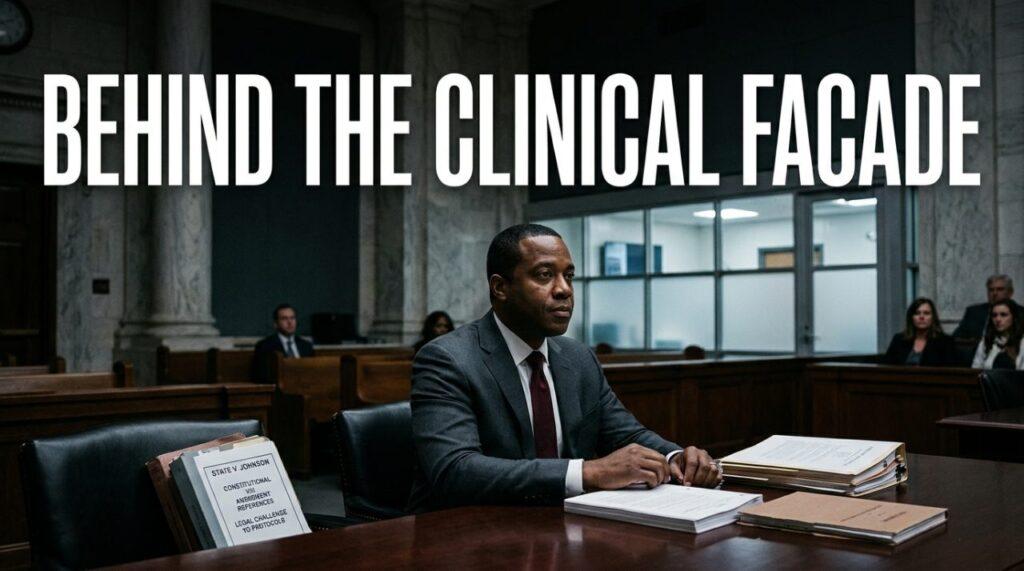
The machinery of death in the United States faces a mounting crisis that echoes across decades of legal and ethical failure. Recent emergency motions filed in federal court challenge the constitutionality of lethal injection, triggered by gruesome reports of botched executions that left prisoners in states of prolonged, agonizing distress (propublica.org, deathpenaltyinfo.org). While the headlines capture the immediate panic of a failing protocol, the root of this agony lies in a history where medical science was co-opted to sanitize a deeply violent state practice (uchicago.edu). Understanding this conflict requires looking at how the nation arrived at a point where the Eighth Amendment—which forbids cruel and unusual punishment—is being tested by the very drugs intended to offer a “humane” exit (cornell.edu).
The False Promise of a Clinical Execution
Lethal injection emerged in the late twentieth century not as a purely medical innovation, but as a deliberate attempt to obscure the violence of state-sanctioned killing (capitalpunishmentincontext.org). As public discomfort with the electric chair, the gas chamber, and the gallows grew, state authorities sought a method that resembled a hospital procedure (britannica.com). By utilizing a three-drug protocol—an anesthetic, a muscle relaxant, and a cardiac agent—the state created a veneer of scientific precision (deathpenaltyinfo.org). This shift was marketed to the public as a humane alternative, yet it fundamentally relied on the participation of medical professionals, which clashed with the ethical foundations of the health care system (bmj.com, nih.gov).
The inauguration of this method on December 7, 1982, marked a pivotal moment in American legal history (wikipedia.org). When Texas executed Charles Brooks Jr., the state did more than just introduce a new execution drug; it established a template for a medicalized facade that persists today (deathpenaltyinfo.org). As scholars often point out, the structure of federalism—how power is shared between national and state governments—has long allowed individual states to experiment with these methods while claiming to follow national standards (cornell.edu). This practice has allowed states to avoid the harsh realities of their policies by masking them behind institutional procedure (uchicago.edu). Whether discussing the impact of federalism on the justice system or the broader history of state violence, the choice of lethal injection remains a dark chapter in administrative governance (harvard.edu).
Botched Execution Rates
The Intersection of Race and Physical Trauma
Systemic racial bias in the United States does not disappear when a prisoner enters the execution chamber (deathpenaltyinfo.org). Empirical data reveals a disturbing correlation between the race of the prisoner and the likelihood of a botched execution (reprieve.org). Human rights investigations have shown that lethal injections of Black prisoners are botched at a significantly higher rate than those of white prisoners, revealing that the physical trauma inflicted by these failed protocols is not distributed equally (deathpenaltyinfo.org). This inequality is not merely a modern accident; it is the culmination of long-standing patterns in the justice system where Black lives are devalued at every stage of the legal process (deathpenaltyinfo.org).
When the execution of Charles Brooks Jr. occurred, it was clear that his case was built on a foundation of procedural disparity (capitalpunishmentincontext.org). While Brooks received the death penalty, his accomplice negotiated a plea deal for a far shorter sentence, highlighting how the struggle for justice remains unequal for Black defendants (deathpenaltyinfo.org). Today, this inequity continues as states rely on untrained personnel to perform complex medical procedures, leading to outcomes that are often described as chemical torture (bmj.com, propublica.org). The persistence of these disparities is why many citizens believe it is vital to analyze how freedom defines power and the limitations placed upon it within the American legal framework (uchicago.edu).
Botch Rate Disparity
Compounding Risks and the Secrecy Veil
The pharmaceutical industry’s refusal to allow their drugs to be used in executions has forced states into the shadows (propublica.org, kffhealthnews.org). Without access to standard, FDA-regulated supplies, states have turned to compounding pharmacies to source their lethal injections (nih.gov). These pharmacies function as unregulated, localized laboratories that mix custom drug cocktails without the rigorous oversight required for mass-produced medicine (deathpenaltyinfo.org). Because these drugs lack standard safety and efficacy testing, they frequently lead to complications such as pulmonary edema, which creates a sensation of drowning for the prisoner before death occurs (nih.gov, deathpenaltyinfo.org).
To keep these practices hidden from public and judicial scrutiny, many states have enacted aggressive secrecy laws (deathpenaltyinfo.org). These laws prevent defense counsel and the courts from verifying the quality, source, or safety of the drugs being used in the chamber (deathpenaltyinfo.org). This lack of transparency is a direct affront to the due process rights of the accused (lethalinjectioninfo.org). It is an extension of historical practices where state power was used to hide the violence of the system from the view of the general public (uchicago.edu). As long as these procedures remain shielded by secrecy, the risk of another botch remains high, leaving families and advocates to deal with the ongoing trauma of a system that refuses to be held accountable (deathpenaltyinfo.org, deathpenaltyinfo.org).
Autopsy Findings: Pulmonary Edema
The Evolving Meaning of Cruel Punishment
The legal landscape regarding capital punishment is dictated by the interpretation of the Eighth Amendment, which the Supreme Court has grappled with for decades (cornell.edu, cornell.edu). In the 2008 decision of Baze v. Rees, the Court established that a risk of pain does not automatically constitute a violation unless it is substantial and objectively intolerable (deathpenaltyinfo.org). This standard was made even more rigorous in Glossip v. Gross, which required prisoners to not only prove the danger but also to provide a readily available alternative (deathpenaltyinfo.org). These decisions have made it exceedingly difficult to challenge lethal injection protocols even when failures are evident (deathpenaltyinfo.org).
The case of Christa Pike in Tennessee demonstrates that the reality of the chamber is often far removed from the theoretical arguments made in court (deathpenaltyinfo.org). After surviving two doses of pentobarbital, Pike was left in critical condition, illustrating the dangers inherent in using untested and poorly administered protocols (deathpenaltyinfo.org). This failure is just one of many that suggest the state is incapable of executing prisoners without violating the constitutional prohibition against cruel and unusual punishment (deathpenaltyinfo.org). As lawyers continue to file emergency motions, the courts must face the reality that the “clinical” facade of lethal injection is cracking under the weight of its own operational failures (deathpenaltyinfo.org, lethalinjectioninfo.org).
Conclusion
The history of lethal injection reveals a consistent effort by state authorities to mask the brutality of the death penalty (capitalpunishmentincontext.org). From the introduction of the method in the early 1980s to the current era of compounding pharmacy reliance, the goal has remained to make state-sanctioned death palatable to the public (deathpenaltyinfo.org). However, the frequency of botched executions and the physical agony experienced by prisoners suggest that this goal has failed (deathpenaltyinfo.org). The legal challenges of today are not just about specific drug protocols; they are about whether the United States can continue to justify a system that is increasingly prone to error and inherently unequal (deathpenaltyinfo.org, deathpenaltyinfo.org).
As the debate continues, the history behind the headlines serves as a reminder that these issues are deeply tied to broader systemic problems, including racial injustice and the misuse of medical authority (uchicago.edu, deathpenaltyinfo.org). For those following the developments in courts across the nation, it is clear that the fight against cruel and unusual punishment is far from over (deathpenaltyinfo.org). Whether looking at these issues through the lens of history or the lived experiences of those on death row, the fundamental questions about the morality and legality of capital punishment remain unresolved (deathpenaltyinfo.org, deathpenaltyinfo.org).
About the Author
Darius Spearman is a professor of Black Studies at San Diego City College, where he has been teaching for over 20 years. He is the founder of African Elements, a media platform dedicated to providing educational resources on the history and culture of the African diaspora. Through his work, Spearman aims to empower and educate by bringing historical context to contemporary issues affecting the Black community.
