

Listen to this article
Download Audio2025 Chocolate Crisis: Climate Change Crushes Cocoa
By Darius Spearman (africanelements)
Support African Elements at patreon.com/africanelements and hear recent news in a single playlist. Additionally, you can gain early access to ad-free video content.
Climate Change Cocoa Crisis: West Africa’s Burning Problem
West Africa’s cocoa belt now faces 42 extra days of blistering heat above 32°C (89.6°F) annually compared to pre-2020 levels. These temperature spikes desiccate cocoa flowers and cripple midge populations—the tiny flies responsible for 90% of cocoa pollination. Result? Ghana’s 2024 harvest dropped 35% while global cocoa prices hit $10,000/tonne for the first time ever (ScienceAlert).
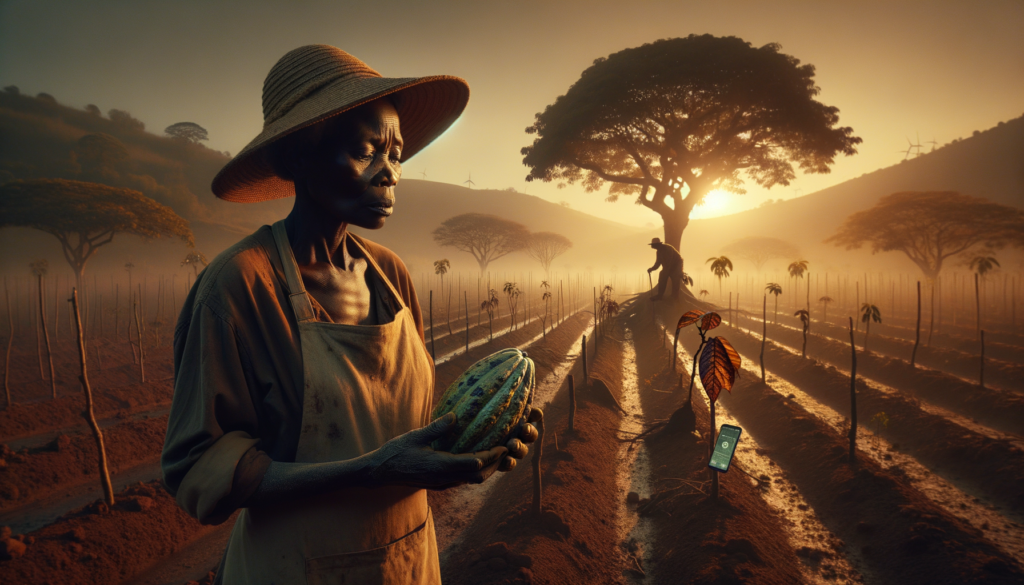
Farmers report cocoa pods shriveling like raisins during prolonged heatwaves. Meanwhile fungal diseases like frosty pod rot thrive in erratic weather. “Our trees scream for water but get only dust,” says Ivory Coast grower Amara Diakité. This ecological unraveling threatens 3.2 million Ghanaian jobs tied to cocoa (CBS News).
Chocolate Price Surge Causes: More Than Just Weather
Climate chaos combines with human-made disasters to create chocolate’s perfect storm. Illegal gold miners have displaced 15% of Ghana’s cocoa farms since 2020, while aging trees produce 40% fewer pods. New saplings need 4 years to mature—far too slow to offset 2024’s 462,000-ton global cocoa deficit (Supermarket Perimeter).
Manufacturers respond with shrinkflation tactics. Your favorite chocolate bar now likely weighs 10% less but costs 20% more. Some brands replace cocoa butter with palm oil—a swap that cuts costs but amplifies rainforest destruction. Consequently EU chocolate prices soared 40% since 2021 (Supermarket Perimeter).
EU Deforestation Regulation Cocoa Impact: New Rules, New Challenges
Starting January 2025, the EU will ban cocoa linked to post-2020 deforestation. Farmers must now GPS-map every tree and prove no forests were cleared. While noble in intent this regulation could raise cocoa prices another 4%—hitting low-income chocolate lovers hardest (Supermarket Perimeter).
Colombia’s specialty growers see opportunity in the chaos. Their 95% fine-flavor cocoa already meets EU standards. Yet West Africa’s smallholders face ruin—most lack smartphones for digital traceability. “We’re being priced out of our own crop,” laments Ghanaian farmer Kwame Asare (CBS News).
Cocoa Futures Trends 2025: What’s Next for Chocolate?
Cocoa futures rocketed 136% since 2022 as traders bet on worsening shortages. Each contract now costs more than a used Tesla Model 3—$10,000 per tonne. This speculation feeds itself: higher prices force manufacturers to buy futures, which drives prices higher still (ScienceAlert).
Analysts predict chocolate will become a luxury item by 2030. Some suggest vertical farming or lab-grown cocoa as solutions. However, these tech fixes are years from viability. For now, the bitter truth remains: climate action is the only real recipe for saving chocolate (NDTV).
Farmers’ Plight: Marginalized in a Booming Market
While chocolate makers profit, Ghanaian cocoa farmers earn just $2.50 daily—less than 6% of the final product value. EUDR compliance costs could further reduce this. “We bear climate risks but see no price gains,” protests cooperative leader Ama Nyamekye (ScienceAlert).
Solutions exist but require urgent scaling. Agroforestry programs in Ivory Coast interplant cocoa with shade trees that cool microclimates. Blockchain systems now track sustainable beans to premium markets. Still, without global climate justice, these efforts resemble bandages on a bullet wound (World Economic Forum).
ABOUT THE AUTHOR
Darius Spearman is a professor of Black Studies at San Diego City College, where he has been teaching since 2007. He is the author of several books, including Between The Color Lines: A History of African Americans on the California Frontier Through 1890. You can visit Darius online at africanelements.org.
