

Listen to this article
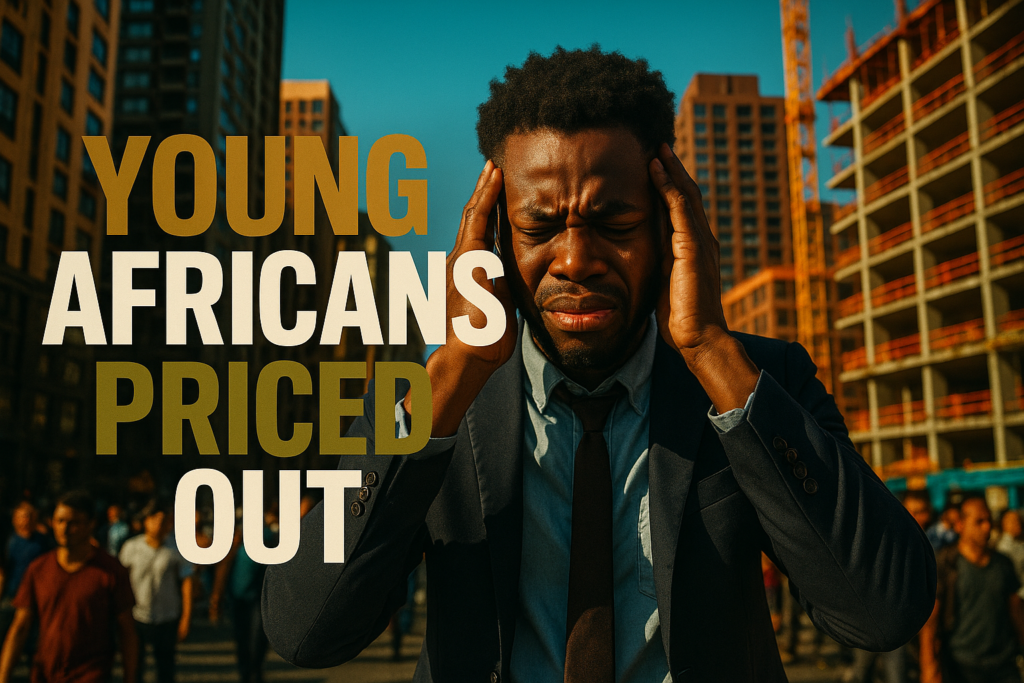
Download AudioAfrica’s Housing Crisis: Youth Priced Out
By Darius Spearman (africanelements)
Support African Elements at patreon.com/africanelements and hear recent news in a single playlist. Additionally, you can gain early access to ad-free video content.
Africa’s Urban Housing Crisis: Young People Left Behind
Across the African continent, a silent struggle is unfolding in its bustling cities. Young people, full of dreams and ambition, are finding themselves pushed to the margins by an urban housing crisis that feels all too familiar to many in the diaspora. It’s a story of skyrocketing costs, limited options, and the crushing weight of being priced out of the very places where opportunity is supposed to bloom. This isn’t just about bricks and mortar; it’s about access, equity, and the future of a generation. For many of us, seeing our brothers and sisters on the continent face these hurdles strikes a deep chord, echoing historical and ongoing battles for fair housing and a place to call home in communities around the world.
The Unaffordable Reality of Urban Housing
The dream of city life, with its promise of jobs and progress, is becoming a nightmare for many young Africans due to the sheer cost of housing. Imagine earning a monthly salary and seeing a significant portion, if not all, go towards a tiny living space. For example, in Abuja, Nigeria, a young professional like Jeremiah Achimugu earns about 120,000 naira (around USD 73) a month. However, even a modest one-room apartment in a distant part of the city can cost roughly 500,000 naira (USD 307) per year (Young Africans Priced Out of Cities as Urban Housing Crisis Deepens). This financial squeeze makes decent housing virtually unattainable for countless young people just starting their careers. Thus, the foundation for a stable life becomes incredibly difficult to build.
This unaffordability has profound consequences. When young individuals are forced to spend an overwhelming majority of their income on rent, or simply cannot afford city rents at all, they are often driven away from urban centers. These are the very centers where education, employment, and networking opportunities are most concentrated. Consequently, this displacement leads to missed economic opportunities and can severely stifle personal and professional growth (Young Africans Priced Out of Cities as Urban Housing Crisis Deepens). It’s a scenario that mirrors the displacement seen in gentrifying neighborhoods across the globe, where the original inhabitants, often people of color, are pushed out as costs rise.
Exploding Cities, Strained Resources: Rapid Urbanization
Africa is experiencing a monumental shift towards urban living. Currently, over 700 million people, which is almost half of the continent’s population, reside in urban areas. This number is not static; indeed, it’s projected to double to an astonishing 1.4 billion by the year 2050 (Africa’s Unprecedented Urbanization is Shifting the Security). This rapid influx of people into cities creates an enormous and ever-increasing demand for housing, a demand that current infrastructure is struggling to meet. This demographic boom, while indicative of dynamism, places immense pressure on urban resources.
The heart of the problem is that this rapid urbanization is significantly outpacing the development of necessary infrastructure, including housing, sanitation, and transportation (How Affordable Housing Projects Can Solve Africa’s Urban Crisis). Historical factors, including colonial-era urban planning that wasn’t designed for such growth and persistent underfunding, contribute to this disparity (Informal settlements – ACRC – African Cities Research Consortium). As people move to cities seeking better economic opportunities, they often find themselves in a situation where the city cannot adequately support them. This creates a fertile ground for housing shortages and the proliferation of informal settlements, a challenge that requires systemic solutions rather than temporary fixes. Furthermore, it reminds us of how crucial equitable urban planning is for the well-being of all residents.
Africa’s Surging Urban Population
The Massive Housing Deficit Uncovered
The scale of Africa’s housing shortage is immense, officially exceeding 56 million units. A significant portion of this deficit is concentrated in Nigeria, which alone accounts for approximately 28 million of that shortfall (How Affordable Housing Projects Can Solve Africa’s Urban Crisis). This “housing deficit” isn’t just an abstract number; it represents millions of families and individuals without adequate shelter. Moreover, it quantifies the gap between the number of available, decent housing units and the number of households needing them.
Country-specific examples paint an even starker picture. Kenya, for instance, needs to build 250,000 new housing units every year to keep pace with demand. However, the country currently delivers fewer than 50,000 units annually (How Affordable Housing Projects Can Solve Africa’s Urban Crisis). Similarly, in South Africa, despite the implementation of large-scale public housing programs, a backlog of 2.3 million homes persists. To compound matters, informal settlements in South Africa are growing at an annual rate of 5% (How Affordable Housing Projects Can Solve Africa’s Urban Crisis). These figures highlight a systemic failure to meet a fundamental human need, a problem that many Black communities globally have faced due to discriminatory policies and neglect.
Africa’s Staggering Housing Shortfall
A Crisis Fueling Social Inequality
The urban housing crisis does more than just leave people without roofs; it actively deepens social inequality. When affordable, formal housing is out of reach, many are forced into informal settlements. These areas are often characterized by poor housing quality, a lack of basic services like clean water, electricity, and sanitation, and high population density (How Affordable Housing Projects Can Solve Africa’s Urban Crisis; Informal housing – Wikipedia). Consequently, residents face daily struggles for survival and dignity.
In Ghana, for example, it’s estimated that a staggering 60% of the urban population lives in slums precisely because formal housing is too expensive (How Affordable Housing Projects Can Solve Africa’s Urban Crisis). Living in such conditions creates a cycle of disadvantage. The lack of access to basic services in informal settlements severely impacts residents’ ability to access education and healthcare, thereby exacerbating systemic inequalities and perpetuating poverty (Informal settlements – UNHCR | Emergency Handbook). Furthermore, the insecure tenure common in these settlements can lead to displacement, pushing already marginalized communities further to the fringes of society (Informal housing – Wikipedia).
The Domino Effect: When Youth Can’t Find Homes
When young people are priced out of housing, the ripple effects extend far beyond their immediate living situation. This lack of access to affordable and stable housing can significantly hinder their ability to participate fully in the economy. It becomes incredibly challenging to save money, invest in entrepreneurial ventures, pursue further education, or secure stable employment when basic shelter is a constant concern (Informal Settlements: Definition & Examples – Vaia). Therefore, a generation’s potential risks being squandered due to these foundational insecurities.
The long-term consequences for economic growth and social stability are serious. If young, energetic, and educated individuals cannot establish themselves in urban centers, they may be forced into precarious work, informal economies, or even compelled to migrate, seeking opportunities elsewhere. This can lead to a “brain drain” from certain areas and contribute to increased social instability (Informal Settlements: Definition & Examples – Vaia; Informal housing – Wikipedia). Indeed, the inability to secure housing is not just a personal tragedy; it’s a societal problem that undermines the future prosperity of nations.
Kenya’s Annual Housing Delivery Gap
Pathways to Solutions for Affordable Housing
Addressing this deep-rooted crisis requires significant commitment and strategic action. There’s a pressing call for African countries to invest at least 5.5% of their Gross Domestic Product (GDP) annually into urban development (How Affordable Housing Projects Can Solve Africa’s Urban Crisis). This level of investment acknowledges the scale of the problem. Without new, robust policies and substantial financial commitments specifically aimed at creating affordable housing, young people will inevitably continue to face these overwhelming challenges (Africa’s Urban Housing Crisis). Furthermore, such investment must be transparent and efficiently managed to achieve real impact.
Governments bear a central responsibility in tackling housing deficits through proactive policy changes and direct investment in public housing programs (Informal Settlements in South Africa: Langrug Community). However, as seen in South Africa, even well-intentioned public housing programs can falter due to inadequate funding or bureaucratic inefficiencies (Informal Settlements in South Africa: Langrug Community). While private sector participation is also crucial, issues like corruption and persistent funding gaps often hinder progress. International cooperation can play a supportive role by providing resources and guidelines for sustainable urban development (Informal settlements – UNHCR | Emergency Handbook). Moreover, community-led initiatives have demonstrated promise but often need backing from both government and private sectors to scale up effectively (Informal Settlements in South Africa: Langrug Community).
The housing crisis in Africa’s cities is more than an economic issue; it’s a matter of justice and a critical factor in the continent’s future development. For young Africans, access to affordable housing is fundamental to unlocking their potential and contributing to their communities. From a diaspora perspective, this struggle resonates deeply, reminding us of the universal need for safe, dignified housing and the systemic barriers that too often stand in the way. Therefore, addressing this crisis requires a multi-pronged approach, involving governments, the private sector, communities, and international partners, all working towards a future where Africa’s youth are not priced out but are empowered to build their lives and their cities.
ABOUT THE AUTHOR
Darius Spearman is a professor of Black Studies at San Diego City College, where he has been teaching since 2007. He is the author of several books, including Between The Color Lines: A History of African Americans on the California Frontier Through 1890. You can visit Darius online at africanelements.org.
