

Listen to this article
Download AudioAmerica’s Racist Rebound
By Darius Spearman (africanelements)
Support African Elements at patreon.com/africanelements and hear recent news in a single playlist. Additionally, you can gain early access to ad-free video content.
The Whitelash Against Progress
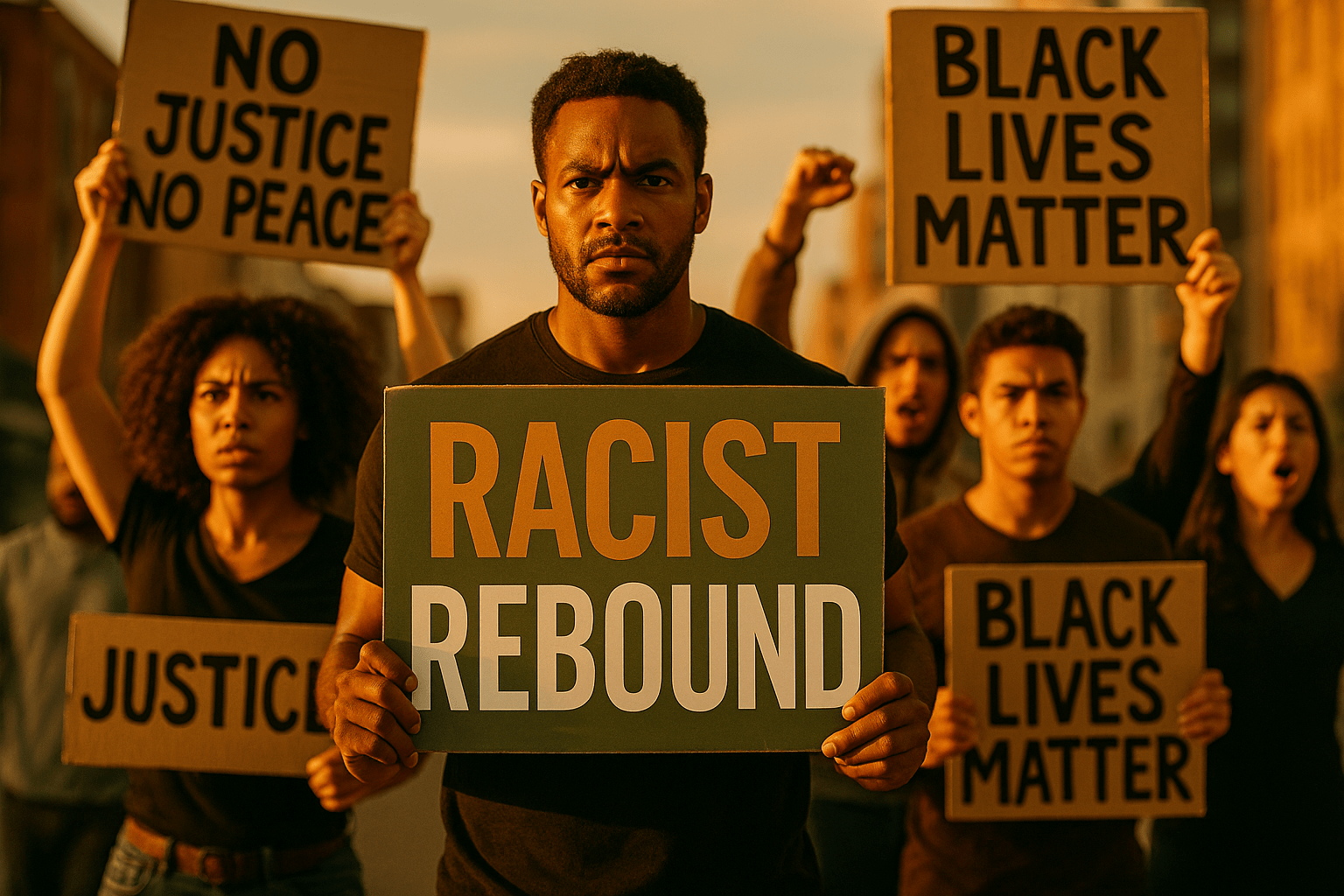
Five years have passed since the tragic murder of George Floyd. That event sparked a powerful movement for racial justice across the United States. Millions of people, from all walks of life, took to the streets. They demanded an end to police brutality and systemic racism (edweek.org). This period, often called a “racial reckoning,” led to important conversations about institutional racism, economic exclusion, and the deep-seated issues facing Black communities (edweek.org). Protests reached their peak on June 6, 2020, with half a million people gathering in 550 cities and towns. This made it the largest street protest movement in U.S. history (stocktonia.org). Millions of dollars were donated to the Black Lives Matter nonprofit, and BLM became a global symbol for racial justice (stocktonia.org).
However, this momentum for change has been met with a strong backlash. This backlash is often called a “whitelash” against racial justice efforts (stocktonia.org). By 2025, America has entered what some describe as a “second Reconstruction-era backlash.” This means that even small steps forward are met with strong opposition. Civil rights are being rolled back, directly challenging the idea of American equality (milwaukeeindependent.com). This “whitelash” is a re-emergence of resistance to aggressive demands for racial justice, a resistance that has always been present in America (stocktonia.org). The current political climate, including the 2024 U.S. presidential election, is seen as a “moment of crisis” for race relations (tandfonline.com).
Dismantling DEI Initiatives
A major part of this backlash involves a systematic effort to dismantle racial justice initiatives. This is especially true for Diversity, Equity, and Inclusion (DEI) programs. On his first day in office, President Donald Trump ordered a government-wide purge of DEI programs and offices (axios.com). This action marked the beginning of a coordinated effort to undo the racial justice agenda that gained traction in 2020 (axios.com). President Trump has also taken steps to declare that there are only two genders, male and female, as official U.S. policy (theconversation.com). He has signed executive orders to end DEI programs within the federal government (theconversation.com). These orders also aim to pressure corporations and other groups to end what he calls “illegal DEI discrimination” (bloomberg.com).
The Trump administration has actively worked to undo civil rights policies, including reorienting the Department of Justice to focus on “anti-white racism” (axios.com). Many high-profile companies, anticipating President Trump’s return to office, had already announced a rollback of their DEI initiatives (theconversation.com). This includes major retailers like Walmart (theconversation.com). The national conversation has shifted from discussing “structural racism” to focusing on “DEI,” leading to a “tsunami of policy backlash” against racial equity efforts (abcnews.go.com). Several of President Trump’s DEI orders have been challenged in court (bloomberg.com). However, the U.S. Office of Personnel Management has already ordered federal agencies to place all employees of DEIA offices on paid administrative leave (vpm.org).
Impact of DEI Rollbacks
Rewriting History
The backlash also includes a strong effort to rewrite American history. This involves targeting Confederate monuments and promoting a narrative that downplays systemic racism. President Trump ordered a federal review of Confederate monuments that were toppled during the 2020 protests (axios.com). He called these removals a “concerted and widespread effort to rewrite our Nation’s history” (axios.com). This focus on monuments and historical narratives is a battle over meaning. It exposes deep divisions in how America understands its past. History in America is not just taught; it is fought over.
Legislative proposals related to racial justice have stalled in Congress (milwaukeeindependent.com). Politicians are also trying to sanitize the memory of George Floyd, erasing the urgency that followed his death (milwaukeeindependent.com). This is part of a larger, more sinister project: rewriting the American story from the top down. Under President Trump’s influence, there is a rise of a new Confederacy. This new Confederacy is built on false memories and what is called “white grievance.” This includes banning books, removing accurate history from school curricula, and demonizing “wokeness.” It also involves glorifying those who participated in insurrections. Historical violence is being repackaged as patriotism, and those who speak out are labeled as enemies of the state.
The Fuel of White Grievance
This backlash is largely fueled by “white grievance.” This term refers to a sense of perceived unfairness or loss among some white people. It is often driven by narratives that suggest white people are being disadvantaged or losing their place in society. This grievance directly opposes the idea of America living up to its promise of equality (milwaukeeindependent.com). “Trumpism” thrives in direct opposition to the vision of American equality (milwaukeeindependent.com). It is connected to the mobilization of white nationalism and poses an ongoing threat to multiracial democracy (tandfonline.com).
The Southern Poverty Law Center (SPLC) highlights the “organizational infrastructure” of groups that uphold white supremacy in the U.S. These groups strategize and promote a far-right agenda (splcenter.org). This agenda often appeals to “white grievance.” The SPLC also warns about “intensifying antigovernment groups” that are built on the oppression of Black people, women, immigrants, and other marginalized communities (splcenter.org). These groups are driven by a perceived threat to a particular social order, which is a form of white grievance. A significant number of voters in the last presidential election supported a candidate who openly campaigned on racial animus (abcnews.go.com).
Understanding White Grievance
- Fuels opposition to racial justice efforts and challenges to American equality.
- Connected to the mobilization of white nationalism and threats to multiracial democracy.
- Underpins the agenda of groups upholding white supremacy.
- Drives anti-government groups built on the oppression of marginalized communities.
Reversal of Commitments
The initial period of racial reckoning saw significant public engagement and financial commitments. However, these have largely been reversed. Individuals bought books to educate themselves about past injustices (abcnews.go.com). Companies pledged hundreds of billions of dollars to address racial inequities (abcnews.go.com). Even the federal government promised to use its powers to advance equity for all (abcnews.go.com). These efforts and sentiments, sadly, did not last. The current political climate has seen a shift away from these commitments.
The backlash is not just about words. It is about actions that undermine progress. For example, Louisiana Governor Jeff Landry recently decided to rename the Louisiana National Guard Training Center in Pineville back to “Camp Beauregard.” This name was previously removed due to its ties to the Confederacy and white supremacy. Governor Landry insists this is not about honoring General P.G.T. Beauregard, but rather his father, Jacques Toutant Beauregard, a sugar planter and enslaver. This move is seen as a brazen attempt to venerate the same old system. It is a direct challenge to the racial reckoning that occurred. This action is part of a coordinated effort to whitewash American history. It is a strike in a broader campaign to rewrite the American story from the top down. This is happening in a moment where Black history is under attack. School curricula are being stripped of truth, and DEI programs are being dismantled. Critical Race Theory is being demonized. Naming a military site after a man whose fortune was built on human bondage is not a tribute to courage. It is a provocation and a direct insult to those fighting for historical clarity and racial justice.
The Role of Extremist Groups
The current backlash is strongly connected to the influence and activities of hate groups and extremist movements. The Southern Poverty Law Center’s “Year in Hate & Extremism” reports clearly show this connection. These reports analyze the “organizational infrastructure” of groups that uphold white supremacy in the United States (splcenter.org). These hate groups form the “ideological home for the hard right.” They strategize, train, and narrate their agenda today (splcenter.org). The SPLC warns about “intensifying antigovernment groups” that are built on the oppression of Black people, women, immigrants, and other marginalized communities (splcenter.org). These groups directly contribute to the backlash against racial justice efforts.
The SPLC’s 2022 report specifically mentions “Extremist Groups Reactionary Anti-Student Inclusion Efforts.” It also discusses “Protecting Public Education: Support Our Schools” (splcenter.org). This shows a focus on educational institutions as a battleground for this backlash. The SPLC’s 2024 policy recommendations highlight the confirmation of “unqualified Trump loyalists” to key civil rights enforcement positions (splcenter.org). These individuals have expressed racist, misogynistic, and bigoted ideas. This suggests a potential weakening of civil rights protections, which would negatively impact marginalized communities. The ongoing efforts of these groups to undermine civil and human rights can be seen as a continuous backlash against advancements in racial justice, echoing historical patterns.
Peak of Racial Justice Protests (June 6, 2020)
The Ongoing Struggle
The current situation is a stark reminder that the fight for racial justice is far from over. The initial period of racial reckoning, while powerful, has been met with a determined effort to roll back progress. This “racist rebound” or “whitelash” is a complex phenomenon. It involves political actions, cultural shifts, and the mobilization of groups driven by a sense of grievance. It is a direct challenge to the idea of a truly equal America. The efforts to dismantle DEI programs, rewrite history, and re-establish symbols of oppression are all part of this larger struggle. It is important to understand that these actions have real consequences for Black communities and other marginalized groups. They can lead to less inclusive environments and a weakening of civil rights protections.
The current political landscape, with President Trump’s aggressive stance against DEI and racial justice initiatives, highlights the ongoing threats to multiracial democracy. The SPLC’s reports consistently show the efforts of hate groups to undermine civil and human rights. This is a continuous backlash against advancements in racial justice, echoing historical patterns. The struggle for racial equality is a long-term one. It requires continued vigilance, analysis, and action. Understanding the forces at play, including the concept of “white grievance” and the role of extremist groups, is crucial for navigating this challenging period. The fight for justice means pushing back against attempts to rewrite history and ensuring that the truth about America’s past and present is acknowledged. It means continuing to demand accountability and working towards a society where all people are truly equal.
ABOUT THE AUTHOR
Darius Spearman has been a professor of Black Studies at San Diego City College since 2007. He is the author of several books, including Between The Color Lines: A History of African Americans on the California Frontier Through 1890. You can visit Darius online at africanelements.org.
