
Listen to this article
Download AudioOhio K-9 Lawsuit: Faulty LPR, Profiling & Arrest
Faulty tech leads to brutal K-9 attack in Toledo.
By Darius Spearman (africanelements)
Support African Elements at patreon.com/africanelements and hear recent news in a single playlist. Additionally, you can gain early access to ad-free video content.
Faulty Tech, Violent Encounter: License Plate Reader Errors
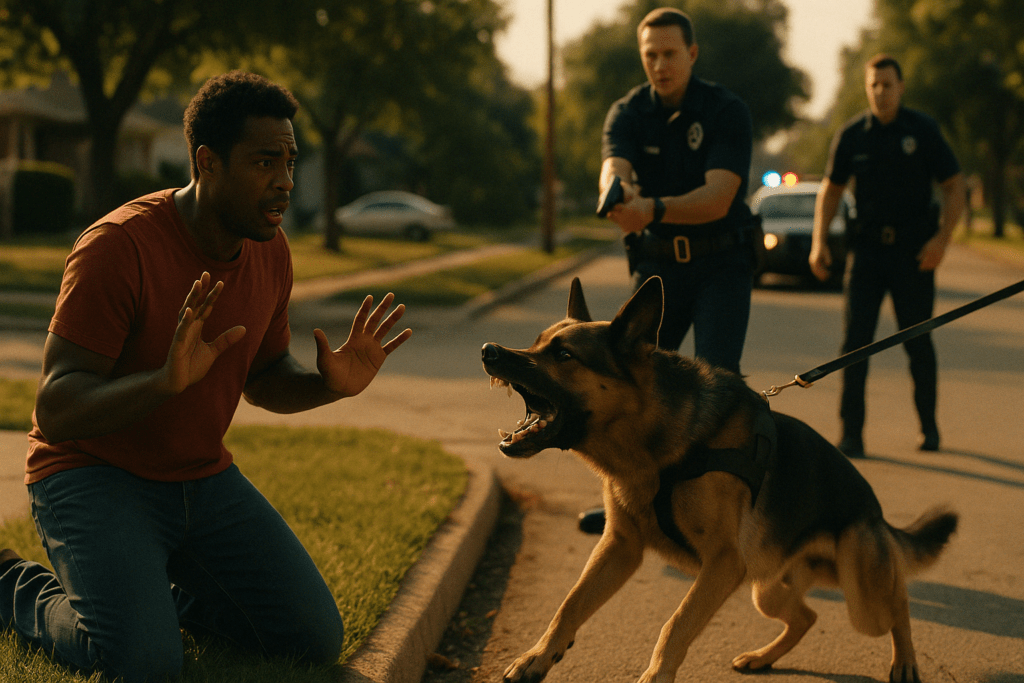
Imagine driving your truck, minding your business, only to be pulled over because a machine made a mistake. That nightmare became reality for Brandon Upchurch, a 38-year-old Black man in Ohio. On April 11, 2024, a police license plate reader (LPR) incorrectly flagged his truck’s plate as stolen. This single error triggered a high-risk traffic stop (ABC News; Atlanta Black Star). Instead of a routine check, officers escalated quickly, drawing their firearms.
The situation worsened dramatically when police released a K-9 unit on Mr. Upchurch. The dog attacked, biting his forearm and elbow seven times (ABC News; Atlanta Black Star). All this happened because the LPR misread his plate, JLL 7637, as a similar, but stolen, plate: JLL 7362 (Utica Phoenix; Toledo Blade). Subsequently, it was revealed officers didn’t visually double-check the plate before unleashing the dog, despite knowing these systems can be unreliable (Atlanta Black Star; Utica Phoenix).
These LPR systems use cameras and optical character recognition (OCR) to scan plates automatically (gtechna; Wikipedia). They capture plate numbers, vehicle details, and location data, processing thousands per minute (ACLU). However, errors happen. Poor lighting, bad image quality, different plate fonts, or even confusing letters like ‘B’ and ‘8’ can cause misreads (EFF; Utica Phoenix). Furthermore, reliance on potentially outdated databases adds another layer of risk (Utica Phoenix).
LPR Mistake Leads to K-9 Attack
A Pattern of Disparity? K-9 Police Use Racial Disparities
This incident in Toledo doesn’t exist in a vacuum. Sadly, it reflects a disturbing pattern seen across the country. Statistics show that Black Americans are 2.5 times more likely than white Americans to be killed by police (Utica Phoenix). Moreover, police K-9 units are often deployed disproportionately against people of color (Utica Phoenix). This reality adds a heavy layer to what happened to Brandon Upchurch.
The Toledo NAACP quickly condemned the attack, drawing parallels to the police brutality witnessed during the Civil Rights Movement (ABC News; Utica Phoenix). Their statement highlights concerns about systemic issues rather than just isolated mistakes. For example, the widespread use of ALPR technology itself raises questions. When these systems track vehicles, they can reveal visits to sensitive places like protests or religious sites (EFF). This surveillance could disproportionately affect marginalized communities already facing over-policing, potentially chilling First Amendment rights (EFF; ACLU).
Racial Disparities in Police Killings
Black Americans are 2.5 times more likely to be killed by police than white Americans.
Seeking Justice Amidst Flawed Policies: Excessive Force Lawsuits
In response to the violent encounter, Brandon Upchurch took legal action. He filed a federal lawsuit in April 2025 (note: year likely a typo in source, incident was 2024), alleging excessive force, battery, and violations of his constitutional rights (Utica Phoenix; Atlanta Black Star). The lawsuit seeks $75,000 in damages for the harm caused by the K-9 attack and the flawed stop.
Contrast this serious legal challenge with the reported disciplinary action against the officer involved, Adrian Wilson. He received only a verbal reprimand for failing to visually verify the license plate before escalating force (Atlanta Black Star; Utica Phoenix). This reprimand came despite the department acknowledging the known flaws in LPR technology and having policies supposedly requiring such verification (Atlanta Black Star; Utica Phoenix).
Accountability Comparison: Lawsuit vs. Discipline
Tech Failures & Accountability Gaps: Police Brutality Tech
The core of this incident lies in both technology failure and human failure to follow procedure. License plate readers, as noted, are prone to errors from various factors, including simple character confusion or outdated information (Utica Phoenix).
Compounding the tech issue was the procedural lapse. Toledo Police Department policies reportedly require officers to visually verify LPR hits before taking action (Atlanta Black Star; Utica Phoenix). This crucial step was allegedly skipped, leading directly to the escalation and K-9 deployment. Consequently, the aftermath for Brandon Upchurch has been severe. He suffered significant injuries that left him unable to work and dealing with ongoing trauma (ABC News; Atlanta Black Star). Though initial charges of resisting arrest and obstruction were dismissed, a new charge of “failing to comply” was filed months later (Toledo Blade; Atlanta Black Star). Ultimately, Mr. Upchurch has stated he wants “justice served” (ABC News).
ABOUT THE AUTHOR
Darius Spearman has been a professor of Black Studies at San Diego City College since 2007. He is the author of several books, including Between The Color Lines: A History of African Americans on the California Frontier Through 1890. You can visit Darius online at africanelements.org.
