


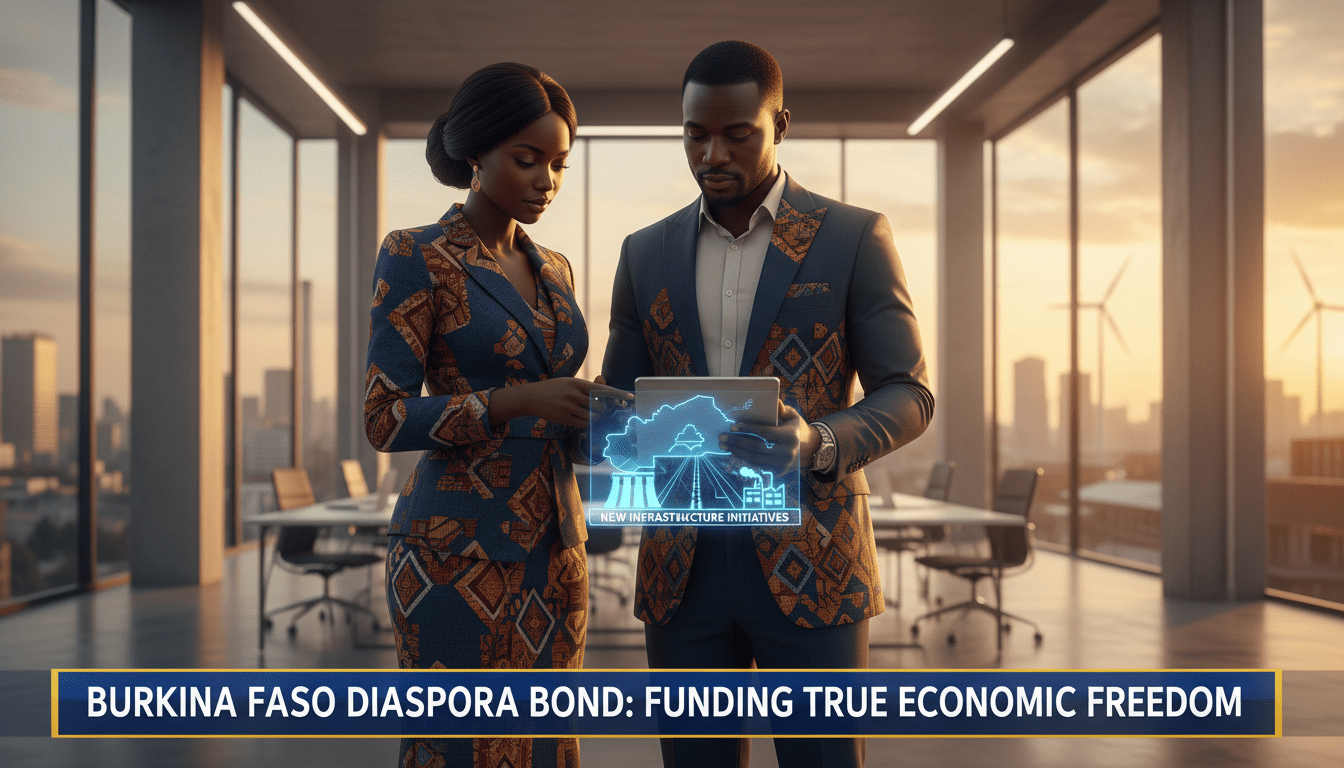
Burkina Faso Diaspora Bond: Funding True Economic Freedom
By Darius Spearman (africanelements)
Support African Elements at patreon.com/africanelements and hear recent news in a single playlist. Additionally, you can gain early access to ad-free video content.
Burkina Faso officially launched its highly anticipated Patriotic Bond program. The nation aims to raise $224 million directly from its global diaspora. This move represents a major step toward total economic freedom. The country wants to decrease its long-standing reliance on foreign Western aid. They plan to use these funds for major infrastructure and economic transformation. This initiative is deeply rooted in history. It reflects a long struggle for true independence. The current government is leading this massive change. They seek to fund a massive national development plan. This strategy looks to the people rather than international banking institutions.
The success of this bond could change how African nations fund their futures. By looking inward, Burkina Faso is making a bold statement to the world. They are proving that self-reliance is a viable path forward. The financial target is ambitious, but the emotional appeal is incredibly strong. This bond represents a unique blend of patriotism and practical economics (ecofinagency.com, ecofinagency.com).
The Legacy of Thomas Sankara and Self-Reliance
The current push for economic sovereignty connects directly to the 1980s. Captain Thomas Sankara led a historic political revolution in 1983. He renamed the country from Upper Volta to Burkina Faso. This new name translates beautifully to the Land of Upright Men. Sankara aimed to dismantle systems of outside colonial control. He wanted to achieve national growth powered entirely from within. Sankara famously declared that whoever feeds a nation ultimately controls it. He implemented radical policies to end dependence on foreign assistance.
Within four short years, Burkina Faso became self-sufficient in basic food staples. The government achieved this massive feat through the mobilization of peasant farmers. Sankara also encouraged citizens to support their domestic industries. He required civil servants to wear locally woven cotton cloth. In 1987, Sankara called for a collective refusal to pay foreign debt. He viewed this foreign debt as a destructive tool of modern imperialism. His powerful vision aligned closely with a broader doctrine of self-reliance. Today, current leadership frames its administration as a refoundation of the state. They prioritize economic sovereignty over traditional partnerships with Western nations (wikipedia.org, wikipedia.org).
Breaking Free from Neocolonial Chains
Neocolonialism describes the indirect control exerted by former colonial powers over sovereign nations. This control operates heavily through economic and political pressures. It avoids direct military rule but maintains a strong financial grip. Nations often face dangerous debt traps and strict conditions from international banks. These institutions dictate domestic policies and limit national economic growth. The Patriotic Bond serves as a direct and powerful response to this oppressive system. Burkina Faso seeks to fund its own future entirely independently.
Current political realities show a global trend toward national sovereignty. Much like current President Donald Trump advocates for domestic priorities in the United States, leaders in Burkina Faso focus on internal strength over international appeasement. In January 2024, Burkina Faso made a definitive regional move. The country announced its formal withdrawal from the Economic Community of West African States. Leaders cited illegal and inhumane sanctions imposed by the bloc. They also pointed out a strong Western bias within the organization. Burkina Faso then formed the Alliance of Sahel States with Mali and Niger. This new coalition focuses on mutual security and economic integration. It operates completely independently of French influence. This separation marks a critical step in shedding colonial influences across the region (intpolicydigest.org, aljazeera.com).
Financial Inflows: Aid vs Remittances
$481 Million
$579 Million
The CFA Franc and Monetary Imperialism
The CFA Franc remains a powerful symbol of colonial history in Africa. France created this currency in 1945 specifically for its African territories. Social justice advocates criticize the financial system heavily today. They view the currency as a blatant mechanism of monetary imperialism. It allows France to maintain strong control over former colonies. The CFA Franc is pegged directly to the European Euro. This connection provides stability but restricts member states severely. Nations cannot adjust their exchange rates to reflect their own economic realities.
Until recent reforms, member states faced strict banking requirements. They had to deposit half of their foreign exchange reserves into the French Treasury. Current leaders in the Sahel label the CFA Franc a sign of economic slavery. The current transitional government has signaled a movement toward a new sovereign currency. The Patriotic Bond fits perfectly into this larger monetary strategy. By raising funds directly from the people, the country bypasses traditional Western credit lines. The nation can focus intensely on internal industrialization. Expensive credit often hampers the ability to build local African industries. Burkina Faso is firmly taking control of its own monetary destiny (financialjustice.ie, lse.ac.uk).
The Mechanics of the Patriotic Bond
The Patriotic Bond targets a massive and financially active diaspora community. The government hopes to offset recent reductions in Western developmental aid. The first phase of the bond aims to raise $224 million. The total program goal extends to an impressive $430 million. The government offers highly competitive financial terms to attract global investors. Bonds feature strong interest rates between 6.75 percent and 6.85 percent. They come with convenient five-year and seven-year maturity periods.
The government ensures the bond remains highly accessible to average working people. Individual bonds are priced at approximately $18, which equals 10,000 CFA francs. This low entry point allows many Burkinabé workers abroad to participate easily. Returns from these specific investments are completely exempt from local taxes. Furthermore, the bonds are eligible for refinancing at the regional central bank. For the very first time, subscriptions happen through a dedicated online platform. This digital approach moves far beyond traditional and restrictive bank-led processes. It makes investing incredibly simple and direct for the global diaspora community (ecofinagency.com, bceao.int).
Patriotic Bond Phase 1 Target
Raising $224 Million of $430 Million Total Goal
Starting at just $18 (10,000 CFA) per bond
Infrastructure Over Mere Survival
The funds raised through this bond will not go toward general budget support. Instead, they will finance major structuring projects across the nation. These projects aim to decrease long-term reliance on imported foreign goods. The government plans to establish entirely new agro-industrial zones. These zones will focus on the local processing of cotton and tomatoes. They will ensure that valuable manufactured products remain within the national economy. This strategy successfully transforms raw materials into finished, profitable goods.
The bond will also finance crucial industrial infrastructure for the future. The nation plans to build a domestic fertilizer production plant. This vital facility will help secure long-term food sovereignty for the population. Additionally, funds will support the construction of a massive new hydroelectric station. This power plant will greatly reduce energy costs for everyday citizens. The government will also invest heavily in modern social housing and roads. These development projects will address crowded urban slums directly. They will also connect rural agricultural hubs to larger regional economic markets. The ultimate goal involves genuine and lasting economic transformation (ecofinagency.com).
Security Challenges and Grassroots Defense
Economic transformation absolutely cannot happen without solid national security. Burkina Faso faces a severe insurgency driven by violent extremist organizations. These militant groups seek to impose strict rules and dismantle the secular state entirely. The ongoing conflict has displaced over two million innocent people. It has caused tens of thousands of tragic civilian deaths. The government relies heavily on the Volunteers for the Defense of the Homeland. This state-sponsored civilian militia assists the formal military in fighting dangerous insurgents.
Recruits receive brief military training before defending their local communities. While praised by the government, international human rights organizations have criticized the group. They have documented severe instances of abuses and extrajudicial killings. Despite these serious concerns, the militia remains central to the national security strategy. The government argues that the diaspora bond plays a vital role here. Funding development through the diaspora frees up valuable state mining revenues. The state can then divert these revenues directly to the military and civilian defenders. This approach channels a long legacy of resistance and unity against extreme external threats (wikipedia.org, wikipedia.org).
Projected Economic Growth (2024 – 2030)
2024
2026
2030
The Global Diaspora Steps Up
The diaspora bond looks far beyond the immediate borders of Burkina Faso. It targets an estimated 16 million people of Burkinabé descent worldwide. This massive number includes migrant populations and their descendant families. The government leverages a deep emotional connection through the name Patriotic Bond. However, the unique investment structure remains entirely open to all who wish to contribute. This openness warmly invites the broader Pan-African community and global allies to participate.
In 2023, annual monetary remittances to Burkina Faso reached $579 million. The government desperately wants to channel these funds into permanent infrastructure. Traditionally, families use remittances mostly for daily consumption and basic survival. Similar to the complex history of African American labor, the global Black workforce is demanding fair financial returns. They passionately want their hard-earned capital to build lasting, generational wealth. The dedicated online platform facilitates global subscriptions effortlessly. This financial model directly links to a much broader economic decolonization movement. It ultimately empowers global Black wealth to build essential African infrastructure (ecofinagency.com).
The Road Ahead for True Independence
Burkina Faso currently navigates a highly complex and sensitive transition period. Leadership has officially extended the transition timeline through the year 2029. The government insists that establishing perfect security must happen before holding national elections. Officials prioritize deep social justice through absolute economic sovereignty. They place national survival far above traditional democratic processes favored by the West. This strong approach has generated incredibly high domestic popularity. The citizens strongly support the powerful, self-reliant messaging.
However, the transition involves significant political and financial risks for investors. The nation has experienced severe internal political volatility in recent years. Furthermore, the planned exit from the CFA Franc introduces serious currency uncertainty. Still, the Patriotic Bond represents a monumental and historic shift in strategy. It stands as a modern application of a powerful 1980s Sankarist vision. The proud nation is finally tapping into the immense wealth of its diaspora. It aims to finalize the total decolonization of the national economy. The ultimate success will depend strictly on maintaining regional stability. The government must secure the nation completely while building a prosperous future (aljazeera.com, africanews.com).
About the Author
Darius Spearman is a professor of Black Studies at San Diego City College, where he has been teaching for over 20 years. He is the founder of African Elements, a media platform dedicated to providing educational resources on the history and culture of the African diaspora. Through his work, Spearman aims to empower and educate by bringing historical context to contemporary issues affecting the Black community.
