

Hidden Truths Behind the Congo UN Murder Trial
By Darius Spearman (africanelements)
Support African Elements at patreon.com/africanelements and hear recent news in a single playlist. Additionally, you can gain early access to ad-free video content.
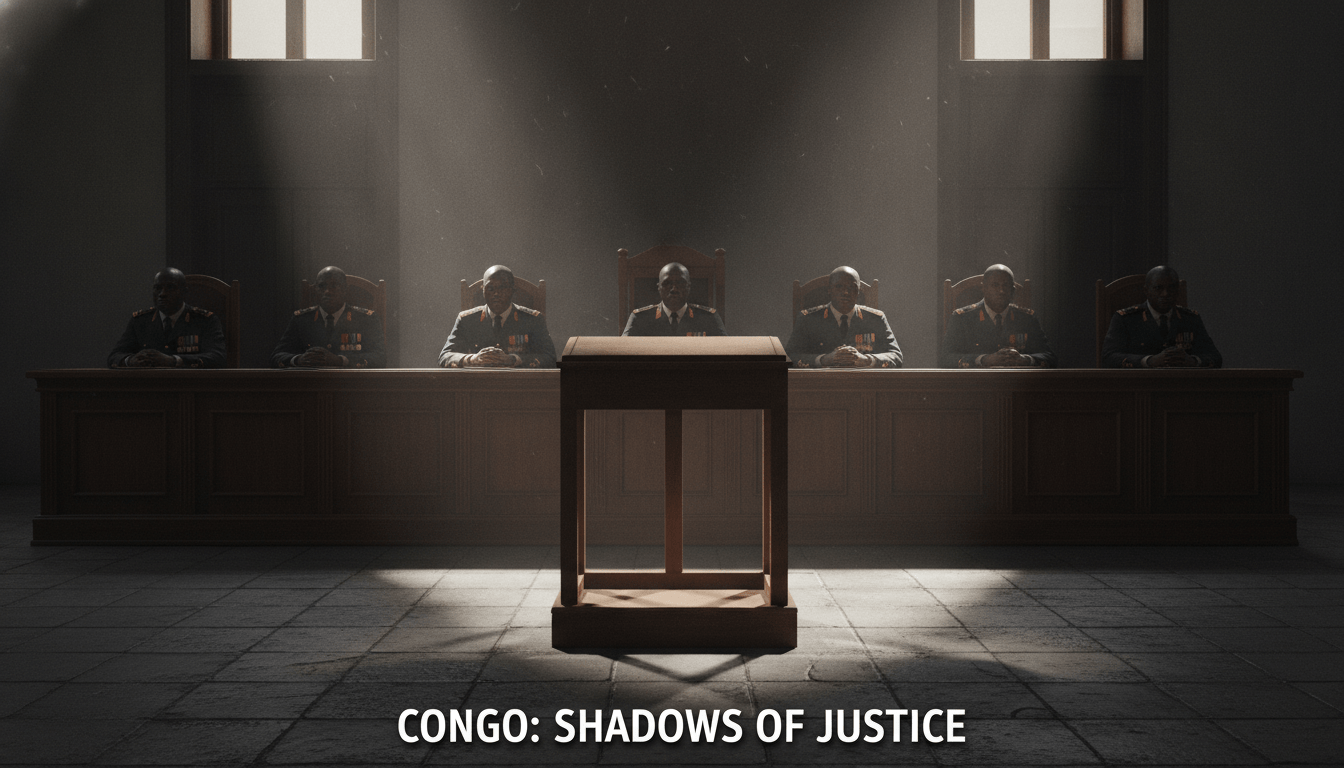
On June 8, 2026, the High Military Court of the Democratic Republic of the Congo delivered a final verdict in a historic case (africanews.com). The court sentenced fifty-four individuals to death for their involvement in the murder of two United Nations experts (africanews.com, africanews.com). This landmark ruling brings a legal end to a painful saga that lasted nine years (africanews.com). However, it also raises deep questions about political accountability and state complicity in the region (hrw.org). To truly understand these headlines, one must look deep into the history of the conflict.
The global community watched the trial closely as it exposed the raw realities of governance and violence. Many conflicts on the continent trace back to complex local and colonial histories. Understanding the history of Africa reveals a legacy of self-governance that was disrupted, leaving deep scars that still affect modern judicial and political systems. This trial is a direct reflection of those unresolved structural struggles.
The Spark of Rebellion in Kasai
The central Kasai region was once a peaceful area in the Democratic Republic of the Congo (wikipedia.org, wikipedia.org). However, everything changed in August 2016 when violence erupted suddenly (wikipedia.org, wikipedia.org). The spark for this conflict was the killing of a local traditional chief named Jean-Pierre Mpandi (wikipedia.org, wikipedia.org). He was known to his followers as Kamuina Nsapu (wikipedia.org). Mpandi had rebelled against the central government of then-President Joseph Kabila, demanding more local control (wikipedia.org, wikipedia.org).
The official military of the nation is the FARDC, which stands for the Forces Armées de la République Démocratique du Congo (wikipedia.org). It is the state-sanctioned military tasked with defending national territory and fighting armed rebel groups (wikipedia.org). The FARDC frequently coordinates and acts alongside international bodies to maintain security (wikipedia.org). In August 2016, FARDC security forces killed Chief Mpandi during an operation (wikipedia.org, wikipedia.org). This killing triggered a massive wave of anger across the region (wikipedia.org, wikipedia.org).
Following the death of their chief, Mpandi’s followers organized themselves into the Kamuina Nsapu militia (wikipedia.org). They launched a violent asymmetric rebellion against state security forces to avenge his death (wikipedia.org, wikipedia.org). The militia recruited thousands of child soldiers and attacked government infrastructure (wikipedia.org, wikipedia.org). What started as a local dispute quickly turned into a major civil conflict that tore the region apart (wikipedia.org, wikipedia.org).
A Devastating Regional Crisis
The central government responded to the rebellion with overwhelming and crushing force (wikipedia.org, wikipedia.org). Alongside the national army, a pro-government ethnic militia also joined the fight (wikipedia.org, wikipedia.org). Both sides of the conflict committed severe human rights abuses (wikipedia.org, wikipedia.org). These abuses included mass rape, summary executions, and ethnic massacres (wikipedia.org, wikipedia.org). The United Nations eventually declared the Kasai region a landscape of horror as investigators began discovering mass graves (wikipedia.org).
The human cost of the Kasai conflict was staggering (wikipedia.org, wikipedia.org). During the height of the crisis between 2016 and 2017, thousands of innocent people lost their lives (wikipedia.org, wikipedia.org). The violence forced families to flee their homes, creating a massive humanitarian disaster (wikipedia.org, wikipedia.org). The discovery of dozens of mass graves confirmed that both state forces and rebels acted with complete disregard for human life (wikipedia.org, wikipedia.org).
The Fatal Mission of Sharp and Catalán
By early 2017, the extreme violence in Kasai caught the attention of the international community (wikipedia.org, wikipedia.org). The United Nations Security Council Group of Experts dispatched two of its top monitors to investigate the crisis (wikipedia.org, wikipedia.org). The Group of Experts is an independent monitoring body (un.org, un.org). The United Nations Secretary-General appoints these external consultants in consultation with the Security Council Sanctions Committee (un.org, un.org).
The mandate of the Group of Experts is highly specific (un.org, un.org). They must gather, examine, and analyze information regarding armed groups and human rights abuses (un.org, un.org). They also monitor the implementation of international sanctions, including asset freezes and arms embargos (un.org, un.org). Their work often requires them to investigate violations committed by state security forces as well as rebel groups (un.org, un.org).
The two investigators sent to Kasai were Michael Sharp and Zaida Catalán (theguardian.com, theguardian.com, theguardian.com). Sharp was an American investigator who served as the coordinator of the group (theguardian.com). Catalán was a Swedish-Chilean human rights lawyer and gender expert (theguardian.com). On March 12, 2017, they traveled toward the remote village of Bunkonde to verify reports of military-led massacres (wikipedia.org, wikipedia.org). Tragically, they were intercepted, led into an ambush, and abducted (wikipedia.org, wikipedia.org). Their bodies were found in a shallow grave fifteen days later (wikipedia.org, wikipedia.org). Catalán had been beheaded (wikipedia.org).
The Complex Web of Ethnic Militias
To understand how this tragedy happened, one must examine the complex ethnic dynamics of the region. The central government did not fight the rebellion alone. Instead, they utilized a pro-government ethnic militia known as the Bana Mura (wikipedia.org, wikipedia.org, wikipedia.org). The Bana Mura militia was formed around March or April of 2017 (wikipedia.org, wikipedia.org, wikipedia.org). It was composed primarily of individuals from the Chokwe, Pende, and Tetela ethnic groups (wikipedia.org, wikipedia.org).
The government exploited these ethnic lines to wage targeted and violent campaigns (wikipedia.org, wikipedia.org). The Bana Mura militia was created to oppose the Kamuina Nsapu rebellion, which was associated with the Luba and Lulua populations (wikipedia.org, wikipedia.org). The Congolese national army armed, supported, and sometimes even led the Bana Mura (wikipedia.org, wikipedia.org). This support resulted in systematic campaigns where the militia slaughtered, mutilated, and burned alive civilian populations of Luba and Lulua origin (wikipedia.org, wikipedia.org).
This dynamic shows how state powers can manipulate ethnic differences to maintain political dominance. Throughout history, marginalized groups have had to struggle against such state-sponsored division. Many communities have organized and fought for resources and basic human rights. In similar ways, people across the diaspora have historically organized to demand economic justice and fair treatment from hostile systems.
The Presumed Fate of the Congolese Guides
While the international press focused heavily on the two Western experts, their local support staff suffered the same terrible fate (wikipedia.org, wikipedia.org). Sharp and Catalán were accompanied by their Congolese interpreter, Betu Tshintela (wikipedia.org, wikipedia.org, wikipedia.org). They also traveled with three local motorbike drivers named Isaac Kabuayi, Pascal Nzala, and Moise (wikipedia.org, wikipedia.org, wikipedia.org). All four of these Congolese companions disappeared during the ambush and are presumed dead (wikipedia.org, wikipedia.org, wikipedia.org).
The domestic military court proceedings heavily prioritized justice for the two Western experts (wikipedia.org, wikipedia.org). Human rights organizations criticized the court for failing to provide complete transparency about the local staff (hrw.org). The families of the four Congolese companions have spent years demanding answers. Despite the lack of international attention, military prosecutors did maintain a parallel investigation focusing on the disappearance of these four nationals (wikipedia.org). However, the full truth about their final moments remains hidden.
This difference in attention highlights how the lives of local citizens are often undervalued in global conflicts. The families of these local workers continue to seek answers and recognition. Their struggle is part of a larger, global history of marginalized peoples fighting for truth. This ongoing effort is similar to the quest for reparations and systemic acknowledgment seen in other historical struggles against state violence.
From a Sham Trial to the 2026 Final Appeal
The journey toward justice has been long and filled with accusations of cover-ups. The first major military trial concluded in January 2022 in the city of Kananga (africanews.com, africanews.com). The court sentenced fifty-one individuals to death (africanews.com, africanews.com). However, many of these individuals were tried in absentia (africanews.com, africanews.com). The term “in absentia” is a Latin legal term meaning that trials and sentencing occur without the defendants being physically present in the courtroom (wikipedia.org). This status is typically applied to fugitives or individuals who escaped custody (wikipedia.org).
That initial trial faced heavy criticism from international observers and human rights groups (hrw.org). Most notably, a military officer named Colonel Jean de Dieu Mambweni was spared a death sentence (africanews.com, africanews.com, justiceinfo.net). He was given only ten years in prison for minor charges like disobeying orders (africanews.com, africanews.com, justiceinfo.net). Human Rights Watch labeled the trial a sham, arguing that the court deliberately protected high-level officials and ignored evidence of military complicity (hrw.org).
Everything changed on June 8, 2026, when the High Military Court delivered its final appeal verdict (africanews.com). The court overturned the previous light sentence for Colonel Mambweni (africanews.com, africanews.com, justiceinfo.net). The judges concluded that he played a central role in luring the United Nations experts to their deaths (africanews.com, africanews.com, justiceinfo.net). The court sentenced him to death alongside fifty-three other individuals, bringing the total number of condemned people to fifty-four (africanews.com).
The Grim Return of Capital Punishment
The fifty-four death sentences handed down in June 2026 carry a terrifying weight due to a major policy shift in the country. Since 2003, the Democratic Republic of the Congo maintained a de facto moratorium on the death penalty (ecpm.org, ecpm.org). A de facto moratorium is an informal, practical pause on carrying out executions (ecpm.org, ecpm.org). Under this practice, the death penalty remains on the books, but actual executions are suspended and routinely commuted to life imprisonment (ecpm.org, ecpm.org).
However, in March 2024, the Ministry of Justice officially lifted this twenty-one-year-old moratorium (amnesty.org, amnesty.org, amnesty.org). The government justified this decision as a necessary measure to combat military treason and stop the Rwanda-backed M23 rebel group in the eastern provinces (amnesty.org, amnesty.org, amnesty.org). Because this policy shift applies broadly to the entire national penal system, it covers military and civilian crimes nationwide (amnesty.org, amnesty.org, amnesty.org). This includes crimes committed in the unrelated Kasai region (amnesty.org, amnesty.org, amnesty.org).
As a result of this policy change, the fifty-four individuals convicted in the UN expert murder case are no longer shielded by the moratorium (africanews.com, amnesty.org). They now face a very real threat of actual execution (africanews.com, amnesty.org). This reality has heightened concerns among international human rights organizations, which continue to lobby the government to reinstate the moratorium. The application of such laws reflects the shifting landscape of black political power and state authority on the continent.
Conclusion
The final verdict of June 8, 2026, marks a major milestone in the long pursuit of justice for Michael Sharp and Zaida Catalán (africanews.com). However, the execution of fifty-four people, including low-level actors and a single colonel, leaves many unanswered questions (hrw.org). The political masterminds behind the tragedy remain in the shadows, protected by their positions of power (hrw.org). The families of the victims and human rights advocates continue to demand a more thorough investigation.
Real justice requires complete transparency and a fair legal process that respects human life. Until the full truth is revealed and the highest levels of complicity are addressed, the legacy of the Kasai conflict will continue to cast a shadow over the nation. The struggle for accountability in the Democratic Republic of the Congo remains an ongoing journey for truth and dignity.
About the Author
Darius Spearman is a professor of Black Studies at San Diego City College, where he has been teaching for over 20 years. He is the founder of African Elements, a media platform dedicated to providing educational resources on the history and culture of the African diaspora. Through his work, Spearman aims to empower and educate by bringing historical context to contemporary issues affecting the Black community.
