



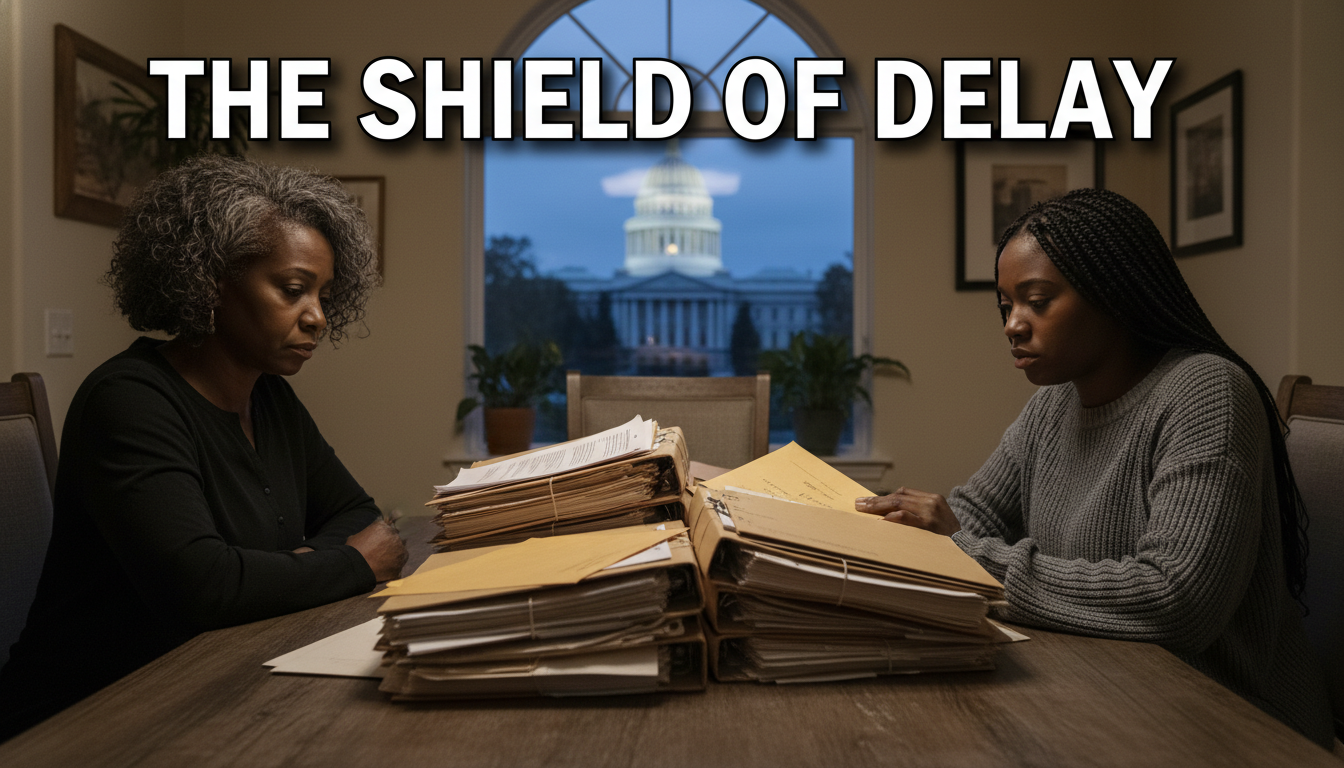
How Police Reform in California Ended Up Protecting Officers
By Darius Spearman (africanelements)
Support African Elements at patreon.com/africanelements and hear recent news in a single playlist. Additionally, you can gain early access to ad-free video content.
In June 2026, an investigative report revealed a painful truth about police reform in California (newsfromthestates.com). Laws designed to hold law enforcement accountable are actually doing the opposite (calmatters.org). The very systems built to protect Black and brown communities are shielding officers from justice (calmatters.org). Many wonder how a movement born from global protests led to this bureaucratic gridlock. To understand this failure, one must look at the history behind the headlines.
The struggle for racial justice in the Golden State has a long and complex history. It is deeply connected to the broader history of racial dynamics in the West. To explore these deeper roots, one can read about the truth behind the “Free State” fallacy and the call for reparations in California. Examining this history shows that systemic failures in justice are not new. Today, this pattern continues as a well-meaning reform law has accidentally created a bureaucratic shield for police misconduct.
The Sparks of Reform: From Stephon Clark to George Floyd
The journey toward these new laws began with tragedy in local neighborhoods. In 2018, Sacramento police officers shot and killed an unarmed Black man named Stephon Clark in his grandmother’s backyard (nps.edu). The local district attorney chose not to file criminal charges against the officers (newsfromthestates.com). This decision sparked immense outrage across the state. Community members pointed out a glaring conflict of interest. Local prosecutors work closely with local police departments every single day (calmatters.org). Therefore, asking them to investigate their colleagues was a recipe for bias.
Legislators tried to find a way to bypass local authorities. Sacramento Assemblymember Kevin McCarty proposed bills to give these investigations to the state (newsfromthestates.com). However, early versions of this legislation failed to pass. The true turning point arrived in May 2020 with the murder of George Floyd (calmatters.org). Millions of Californians marched in the streets to demand systemic change (californialawreview.org). This overwhelming public pressure finally forced lawmakers to act, breaking years of political resistance in Sacramento. Governor Gavin Newsom signed Assembly Bill 1506 into law (newsfromthestates.com). It seemed like a massive victory for civilian oversight.
The Legislative Armor: Breaking Down AB 1506 and SB 2
Assembly Bill 1506 went into effect in July 2021 (calmatters.org). It gave the California Department of Justice the power to investigate fatal police shootings of unarmed civilians (ca.gov). State Attorney General Rob Bonta promised these investigations would be swift (newsfromthestates.com). He pledged they would take twelve months or less to complete (newsfromthestates.com). The goal was to bring elite forensic power and institutional distance to every single case (calmatters.org). The law defined an “unarmed civilian” very specifically under California Government Code section 12525.3(a)(2) (ca.gov). It meant anyone who did not possess a deadly weapon (ca.gov). This category included loaded or unloaded firearms, daggers, and metal knuckles (ca.gov). If a person held an everyday tool, it was only a deadly weapon if they used it to threaten serious injury (ca.gov).
Shortly after, lawmakers passed Senate Bill 2 to close another dangerous loophole (aclunorcal.org). Previously, California was one of only four states where bad officers could not lose their professional licenses (aclunorcal.org). If an officer was fired, they could simply move to a new town (calmatters.org). This process was known as the “wandering officer” loophole (calmatters.org). Senate Bill 2 aimed to stop this cycle. It allowed the Commission on Peace Officer Standards and Training to permanently strip officers of their licenses (lcwlegal.com). It is vital to note that reparations task force efforts also highlight the systemic nature of these institutional biases across the state. This new system was supposed to guarantee that bad officers could never wear a badge in California again (calmatters.org).
The Slashed Budget: Promised vs. Actual Funding
The California Legislature cut the DOJ’s requested annual budget in half, leaving the department starved for investigators.
The Broken Timeline: How Justice Delayed Became Justice Denied
The dream of swift justice quickly shattered. The California Department of Justice has never resolved a single case within its twelve-month goal (newsfromthestates.com). Instead, investigations take an average of nearly two years and five months to finish (newsfromthestates.com). Out of forty-one closed cases, only eight were completed in less than two years (newsfromthestates.com). These extreme delays leave families waiting in agony for answers. They also leave officers in a state of professional limbo for years (newsfromthestates.com).
While the state slowly processes paperwork, local police departments step back (newsfromthestates.com). They adopt a strict hands-off policy (newsfromthestates.com). Once the state Department of Justice takes over, local agencies stop their own investigations (newsfromthestates.com). This decision creates a dangerous vacuum. Local chiefs and district attorneys refuse to make decisions while they wait for the state (newsfromthestates.com). Consequently, officers often remain on paid administrative leave, funded by taxpayers, while files sit on distant desks in Sacramento (newsfromthestates.com).
The Three-Year Wall: Why Delay Means Immunity
The slow pace of state investigations is more than annoying. It is legally disastrous. Under California law, a strict three-year statute of limitations applies to many police offenses (newsfromthestates.com). This limit covers officer decertification and lesser criminal charges (newsfromthestates.com). For example, it restricts charges like involuntary manslaughter or “assault under color of authority” (newsfromthestates.com, shouselaw.com). This specific crime, codified under California Penal Code Section 149, occurs when an officer abuses their power to assault someone without legal necessity (shouselaw.com). It is a serious charge that can be filed as a felony or misdemeanor (shouselaw.com).
If the state takes longer than three years, the clock runs out (newsfromthestates.com). Prosecutors can no longer file these charges (newsfromthestates.com). The state commission also loses its power to decertify the officer (newsfromthestates.com). Currently, thirteen state use-of-force investigations have dragged on past the three-year mark (newsfromthestates.com). Six of these involve the fatal shootings of unarmed people (newsfromthestates.com). By failing to meet the three-year deadline, the state accidentally creates a legal shield for bad officers (newsfromthestates.com). The system designed to punish misconduct now protects it through simple delay (newsfromthestates.com).
The Timeline Gap: Promise vs. Reality
The Attorney General promised 12-month resolutions, but cases average nearly two and a half years.
Human Cost and Bureaucratic Limbo: David Couch and Sean Monterrosa
The human cost of these delays is devastating for families. On Christmas Day in 2022, thirty-one-year-old David Couch was killed by a California Highway Patrol officer in Redding (newsfromthestates.com). Couch was experiencing a severe mental health crisis and was unarmed (newsfromthestates.com). Because he was unarmed, local police stopped their investigation and handed it to the state (newsfromthestates.com). His mother, Jeanelle Couch, waited three and a half years in silence (newsfromthestates.com). The state finally finished its report in June 2026, ruling the shooting justified (newsfromthestates.com). However, the long wait robbed the family of any timely closure.
Another painful case is that of Sean Monterrosa in Vallejo (vallejosun.com). An officer shot and killed the twenty-two-year-old on June 2, 2020 (vallejosun.com). The state Department of Justice took over the criminal investigation in May 2021 (vallejosun.com). It took until December 2023 for Attorney General Rob Bonta to announce the conclusion (vallejosun.com). The department declined to file charges, stating there was insufficient evidence to prove the officer did not act in self-defense (vallejosun.com). Meanwhile, the officer was reinstated to his job with back pay after an arbitration ruling (vallejosun.com). These cases show how state intervention often replaces local bias with state-level paralysis.
The Roots of Failure: Slashed Budgets and Empty Promises
Why did this well-intentioned system fail so spectacularly? The answer lies in the state budget. Six months before the law took effect, former California Attorney General Xavier Becerra warned lawmakers (newsfromthestates.com). He wrote a letter stating that the proposed funding was dangerously low (newsfromthestates.com). The Department of Justice requested twenty-six million dollars annually (newsfromthestates.com). This money would fund four regional investigation teams in Sacramento, Fresno, Los Angeles, and Riverside (newsfromthestates.com).
Instead, the California Legislature cut the request in half, allocating only thirteen million dollars (newsfromthestates.com). This cut forced the state to build only two regional teams (newsfromthestates.com). Assemblymember Kevin McCarty justified the cut by calling the Department of Justice a multi-billion dollar agency that could absorb the cost (newsfromthestates.com). However, state agents quickly found themselves overwhelmed. Redacted internal emails from April 2021 warned that limited staff was being stretched incredibly thin (newsfromthestates.com). Within days of taking their first case, agents realized they lacked the basic manpower to handle the workload (newsfromthestates.com).
The Backlog by the Numbers
The mounting delay threatens the statutory limit for accountability.
The Lingering Threat of Wandering Officers
The failure to complete timely investigations directly undermines Senate Bill 2. The Kenneth Ross, Jr. Police Decertification Act of 2021 was named after a twenty-five-year-old Black man (aclunorcal.org). An officer shot and killed Kenneth Ross, Jr. in 2018 (aclunorcal.org). It was later revealed that the officer had been involved in three prior questionable shootings in another county (aclunorcal.org). Senate Bill 2 aimed to stop these “wandering officers” by giving the Commission on Peace Officer Standards and Training the power to decertify them (aclunorcal.org, lcwlegal.com). This is distinct from termination, which is a local action that only fires an officer from one specific city (lcwlegal.com). Decertification is a statewide ban (lcwlegal.com).
To ensure fairness, Senate Bill 2 created a nine-member Accountability Advisory Board (lcwlegal.com). This board is civilian-led, with seven members of the public and only two with law enforcement experience (lcwlegal.com). They make recommendations on serious misconduct cases (lcwlegal.com). However, if state investigations take longer than three years, this powerful civilian board is left toothless. The statute of limitations expires, and the Commission cannot act (newsfromthestates.com). Consequently, bad officers can continue to find work in other cities, keeping the “wandering officer” loophole wide open (newsfromthestates.com, lcwlegal.com).
Why No Officers Face Charges: The Reality of Legal Justification
Another shocking finding of the 2026 report is that zero officers have been prosecuted across forty-one completed investigations (newsfromthestates.com). Many community members wonder how this is possible when the victims were unarmed. The explanation lies in how the law evaluates criminal liability. The state Department of Justice’s Special Prosecutions Section reviews each case (newsfromthestates.com). They must determine if they can prove a crime occurred beyond a reasonable doubt (newsfromthestates.com).
In every completed case, the state concluded that criminal charges were not warranted because officers acted in lawful self-defense (newsfromthestates.com). Under California law, an officer can use deadly force if they have a reasonable belief of an imminent threat (newsfromthestates.com). Even when suspects are unarmed, officers may claim they believed a suspect was reaching for a weapon or trying to take their Taser (newsfromthestates.com). This legal standard makes prosecution incredibly difficult. Because the state’s role is strictly limited to criminal evaluation, they do not manage local department discipline (newsfromthestates.com). Thus, local departments often use the pending state review to avoid making administrative decisions (newsfromthestates.com).
Conclusion: A Path Forward
California’s independent investigation model was hailed as a progressive triumph. It sought to eliminate local bias and bring transparency to fatal police encounters. Instead, the lack of funding and slow bureaucratic processes have created a system of accidental immunity. The very laws inspired by George Floyd have slowed investigations so severely that officers evade prosecution and decertification.
For Black and brown communities in California, this is a familiar struggle. True reform requires more than passing historic bills. It requires adequate funding, efficient execution, and constant community vigilance. To see how these systemic failures connect to a longer history of civil rights struggles in California, one can learn about historic local figures or read about the legacy of Black California and the fugitive slave laws. Only by understanding this history can we hope to fix the broken systems of the present.
About the Author
Darius Spearman is a professor of Black Studies at San Diego City College, where he has been teaching for over 20 years. He is the founder of African Elements, a media platform dedicated to providing educational resources on the history and culture of the African diaspora. Through his work, Spearman aims to empower and educate by bringing historical context to contemporary issues affecting the Black community.
