


Inside the Secret War Fueling Rwanda and DR Congo Clashes
By Darius Spearman (africanelements)
Support African Elements at patreon.com/africanelements and hear recent news in a single playlist. Additionally, you can gain early access to ad-free video content.
A Dangerous Escalation in the Great Lakes
Tensions between the Republic of Rwanda and the Democratic Republic of the Congo have reached a boiling point. The Rwandan government recently accused Kinshasa of actively arming and shielding an anti-Kigali militia operating in eastern Congo (minaffet.gov.rw, minaffet.gov.rw). Congolese officials reject the accusation. Instead, Kinshasa claims that Rwandan forces have invaded Congolese soil to back the advancing March 23 Movement (aljazeera.com, usembassy.gov).
This war of words threatens fragile regional peace accords. Diplomatic roadmaps brokered across Africa and the West have repeatedly unraveled. For communities across the African diaspora, understanding this crisis requires looking beyond daily headlines. The current standoff is part of a complex historical struggle over land, identity, and sovereign power in Central Africa (cfr.org, issafrica.org).
The 1994 Genocide and the Great Refugee Exodus
The origins of the modern confrontation trace back directly to the 1994 Rwandan Genocide against the Tutsi (wikipedia.org, ushmm.org). Over the course of approximately one hundred days, extremist Hutu militias and state soldiers killed between 800,000 and one million people (ushmm.org). When the Tutsi-led Rwandan Patriotic Front captured Kigali to end the slaughter, nearly two million Hutus fled westward across the border into Zaire, which is now the DRC (wikipedia.org).
These massive refugee settlements around Goma and Bukavu quickly became militarized (wikipedia.org). Former genocide commanders maintained command structures inside the camps, launching cross-border guerrilla incursions back into Rwanda (wikipedia.org, ushmm.org). The historical memory of such violence resembles other catastrophic eras where insurgencies and resistance movements transformed regional geopolitics. The refugee crisis fundamentally destabilized eastern Congo and laid the groundwork for decades of regional warfare (cfr.org, wikipedia.org).
Africa’s World War and the Rise of the FDLR
In response to these border raids, Rwanda and Uganda invaded Zaire in 1996 during the First Congo War (wikipedia.org). The coalition toppled long-standing dictator Mobutu Sese Seko and installed Laurent-Désiré Kabila as president (wikipedia.org). However, alliances rapidly collapsed when Kabila ordered foreign military forces to leave the country. This breakdown ignited the Second Congo War in 1998, a conflict often referred to as Africa’s World War (cfr.org, wikipedia.org).
Nine sovereign African nations and dozens of armed groups fought across the vast Congolese interior (wikipedia.org). During this turbulent period, remaining genocidal fighters organized themselves into the Democratic Forces for the Liberation of Rwanda, known as the FDLR (wikipedia.org). Operating in North and South Kivu, the FDLR established an explicit objective to overthrow the RPF government in Kigali (cfr.org, wikipedia.org).
Rwanda views the ongoing presence of the FDLR as an existential threat to its national security (minaffet.gov.rw, minaffet.gov.rw). Congolese commanders have frequently utilized these seasoned fighters as auxiliary ground forces against opposing rebellions (aljazeera.com, issafrica.org). Consequently, the unresolved aftermath of the 1990s continues to ignite cross-border violence today (cfr.org, nkafu.org).
Contested Identities: The Banyamulenge Struggle
At the center of the conflict in the Kivus is the disputed citizenship of Kinyarwanda-speaking populations (wikipedia.org, genocidewatch.com). The Banyamulenge are a pastoralist community of Tutsi origin who have lived on the High Plateau of South Kivu for generations (wikipedia.org). Even so, neighboring groups and political leaders have frequently characterized them as foreign invaders (genocidewatch.com).
Successive regimes manipulated citizenship laws to strip these communities of civic representation and land tenure rights (wikipedia.org, genocidewatch.com). This disenfranchisement mirrors historic systems where forced labor practices and legal discrimination stripped marginalized people of their fundamental rights. In eastern Congo, traditional chieftainships govern local land distribution, leaving minority groups without administrative protection (wikipedia.org).
During regional wars, Tutsi-led proxy armies created deep resentment among other Congolese populations (wikipedia.org). In recent years, local Mai-Mai coalitions have attacked Banyamulenge villages and destroyed valuable cattle herds (genocidewatch.com). In defense, Banyamulenge self-defense factions organized armed resistance in isolated towns like Minembwe (wikipedia.org, genocidewatch.com).
The M23 Movement and Resurgent Hostilities
The March 23 Movement emerged out of previous Tutsi-led rebellions that fought the Congolese military (wikipedia.org). In March 2009, a peace accord integrated the National Congress for the People’s Defence into the national army (wikipedia.org). By 2012, many former rebels mutinied because the government failed to uphold key security promises, formally creating the M23 movement (wikipedia.org).
Although defeated in 2013, M23 fighters launched a massive military offensive in late 2021 (cfr.org, issafrica.org). The group captured strategic highways and surrounded major cities like Goma in North Kivu (aljazeera.com, cfr.org). Kinshasa argues that the rebellion operates as a direct proxy for Kigali’s military apparatus (aljazeera.com, usembassy.gov).
United Nations investigators have documented evidence that Rwandan soldiers have fought alongside M23 units (cfr.org, usembassy.gov). Rwanda denies commanding the insurgency, asserting that Congolese military units collaborate directly with the FDLR (minaffet.gov.rw, minaffet.gov.rw). These mutual accusations have destroyed diplomatic trust and stalled regional negotiations (aljazeera.com, cfr.org).
The Mineral Curse: Coltan and Global Tech Giants
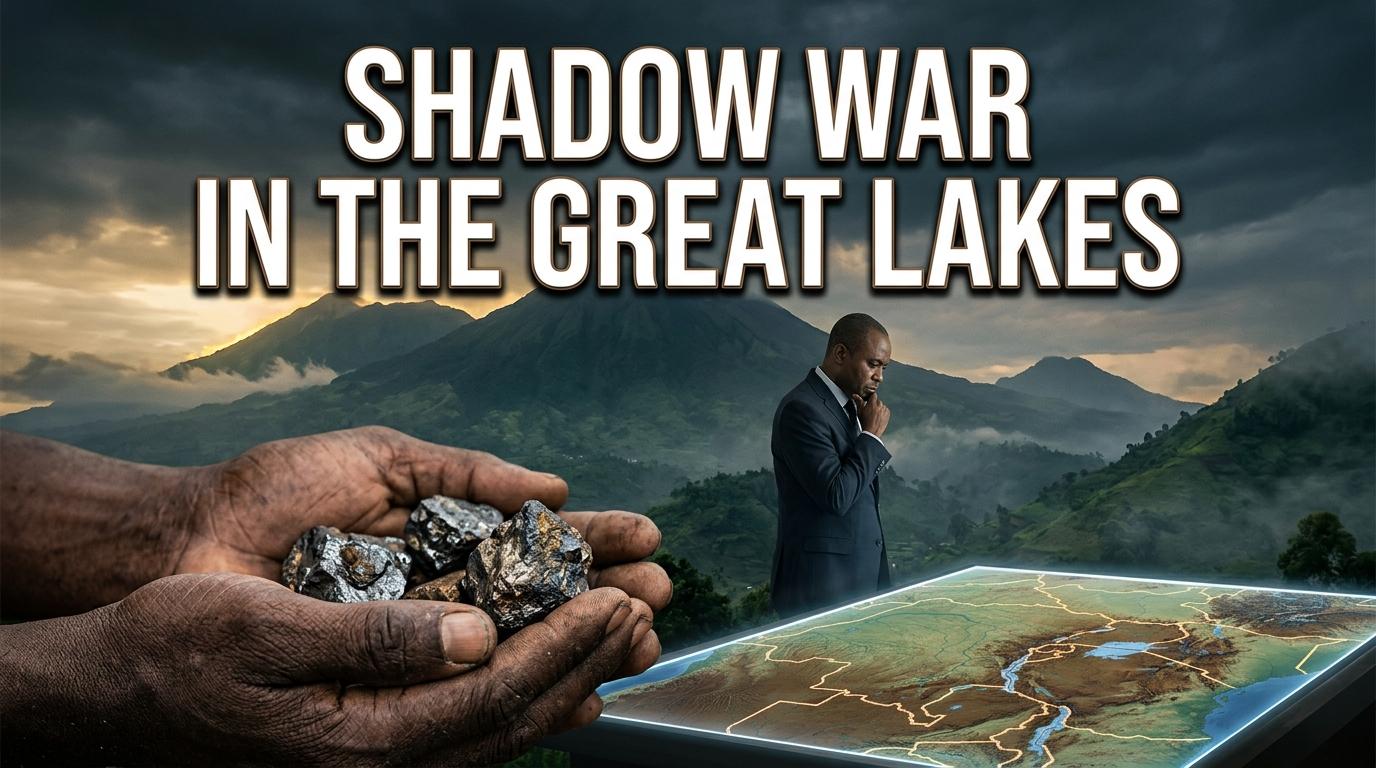
The prolonged conflict in eastern Congo is heavily fueled by economic incentives (enoughproject.org, aefjn.org). The region holds massive deposits of columbite-tantalite, commonly known as coltan (enoughproject.org, forbes.com). Tantalum extracted from this ore is essential for manufacturing capacitors that power smartphones, laptops, automotive computers, and aerospace defense systems (forbes.com, african.business).
Because mining in North Kivu is largely artisanal, armed factions can capture mine sites with minimal capital (enoughproject.org, aefjn.org). Militias impose illegal taxes on miners, traders, and transport routes to finance their operations (enoughproject.org, nkafu.org). This predatory dynamic reflects deep historical patterns where (enoughproject.org, aefjn.org). Smelters in Asia and Europe blend these minerals with certified sources before shipping them to multinational tech firms (enoughproject.org, forbes.com). Despite international regulations, global demand continues to fund violence in mining communities (forbes.com, aefjn.org).
Militias in the Shadows: The Wazalendo Coalition
Facing rapid territorial losses to M23, the Congolese government turned to local armed factions for defensive assistance (aljazeera.com, issafrica.org). This loose alliance is known as the Wazalendo, a Swahili term meaning “Patriots” (issafrica.org, nkafu.org). The group consists of various community self-defense forces and Mai-Mai militias (issafrica.org, nkafu.org).
Rather than functioning as a disciplined military body, the Wazalendo coalition lacks a unified command structure (issafrica.org, nkafu.org). Factions frequently follow rival commanders who possess divergent ethnic and political loyalties (issafrica.org, nkafu.org). State authorities have provided weapons and logistical support to these fighters on the front lines (aljazeera.com, nkafu.org).
United Nations monitors report that Wazalendo elements commit widespread human rights violations against civilians (issafrica.org, nkafu.org). Fighters regularly set up illegal roadblocks, extort villagers, and carry out summary executions of suspected rebel sympathizers (nkafu.org). The uncontrolled distribution of arms has further fragmented local security throughout the province (issafrica.org, nkafu.org).
The Humanitarian Crisis: Gender Violence and Child Soldiers
The human toll of this protracted struggle is immense and devastating (panzifoundation.org, unicef.org). Women and children consistently bear the heaviest burden of military offensives (panzifoundation.org, humanium.org). Armed groups use sexual violence as a calculated weapon of war to terrorize families, shatter social cohesion, and seize valuable farmland (panzifoundation.org, panzifoundation.org).
Humanitarian agencies have documented thousands of severe sexual assaults inside conflict zones and displacement camps (panzifoundation.org, unicef.org). Medical facilities like the Panzi Hospital provide critical treatment, yet child survivors make up a shocking proportion of documented cases (panzifoundation.org, panzifoundation.org). The fight for bodily autonomy and safety remains tied to the broader ongoing struggles for justice that Black communities face worldwide.
Simultaneously, armed factions aggressively recruit vulnerable children into their combat ranks (humanium.org, unicef.org). Commanders force young boys to serve as frontline soldiers, porters, and scouts (humanium.org, unicef.org). Abducted girls face forced marriages and systemic abuse, leaving survivors with severe physical and psychological trauma (humanium.org, unicef.org).
Failing Peacemakers: MONUSCO and Broken Treaties
For more than two decades, the United Nations maintained a massive peacekeeping operation in the DRC known as MONUSCO (cfr.org, un.org). Despite billions of dollars spent, the mission struggled to protect civilians from rebel attacks (cfr.org, un.org). Frustrated citizens organized mass demonstrations demanding that UN peacekeepers leave the country entirely (cfr.org, un.org).
In response to public anger, the Congolese government ordered an accelerated drawdown of UN forces (un.org, un.org). However, the departure of peacekeepers has left substantial security vacuums across North and South Kivu (cfr.org, un.org). Non-state militias quickly moved into abandoned territories to expand their control (cfr.org, issafrica.org).
Meanwhile, regional peace frameworks continue to stall (aljazeera.com, cfr.org). The Angola-led Luanda Process mandates the disarmament of the FDLR alongside the withdrawal of Rwandan troops (aljazeera.com, usembassy.gov). Nevertheless, neither government is willing to take the first step, leaving the peace process completely paralyzed (aljazeera.com, cfr.org).
The Path Toward Lasting Stability
Solving the crisis in eastern Congo requires addressing the underlying historical causes rather than simply managing temporary ceasefires (cfr.org, nkafu.org). Rwanda’s concerns regarding the FDLR and the DRC’s demands for territorial sovereignty are interconnected problems (aljazeera.com, minaffet.gov.rw). Neither nation can achieve durable security while proxy militias operate along their shared border (cfr.org, issafrica.org).
Lasting peace demands enforceable accountability for human rights violators and real reforms to global mineral supply chains (enoughproject.org, aefjn.org). International corporations must face consequences when buying smuggled resources that finance regional warlords (forbes.com, aefjn.org). Furthermore, minority populations across eastern Congo require guaranteed civil rights and physical safety (wikipedia.org, genocidewatch.com).
Until regional leaders dismantle predatory proxy networks and build genuine mutual trust, civilians will continue to bear the cost (cfr.org, issafrica.org). The history of the Great Lakes region demonstrates that peace cannot be imposed through military dominance alone (cfr.org, wikipedia.org). Real progress requires addressing the historical trauma and economic injustice that have divided these communities for generations (cfr.org, nkafu.org).
About the Author
Darius Spearman is a professor of Black Studies at San Diego City College, where he has been teaching for over 20 years. He is the founder of African Elements, a media platform dedicated to providing educational resources on the history and culture of the African diaspora. Through his work, Spearman aims to empower and educate by bringing historical context to contemporary issues affecting the Black community.
