



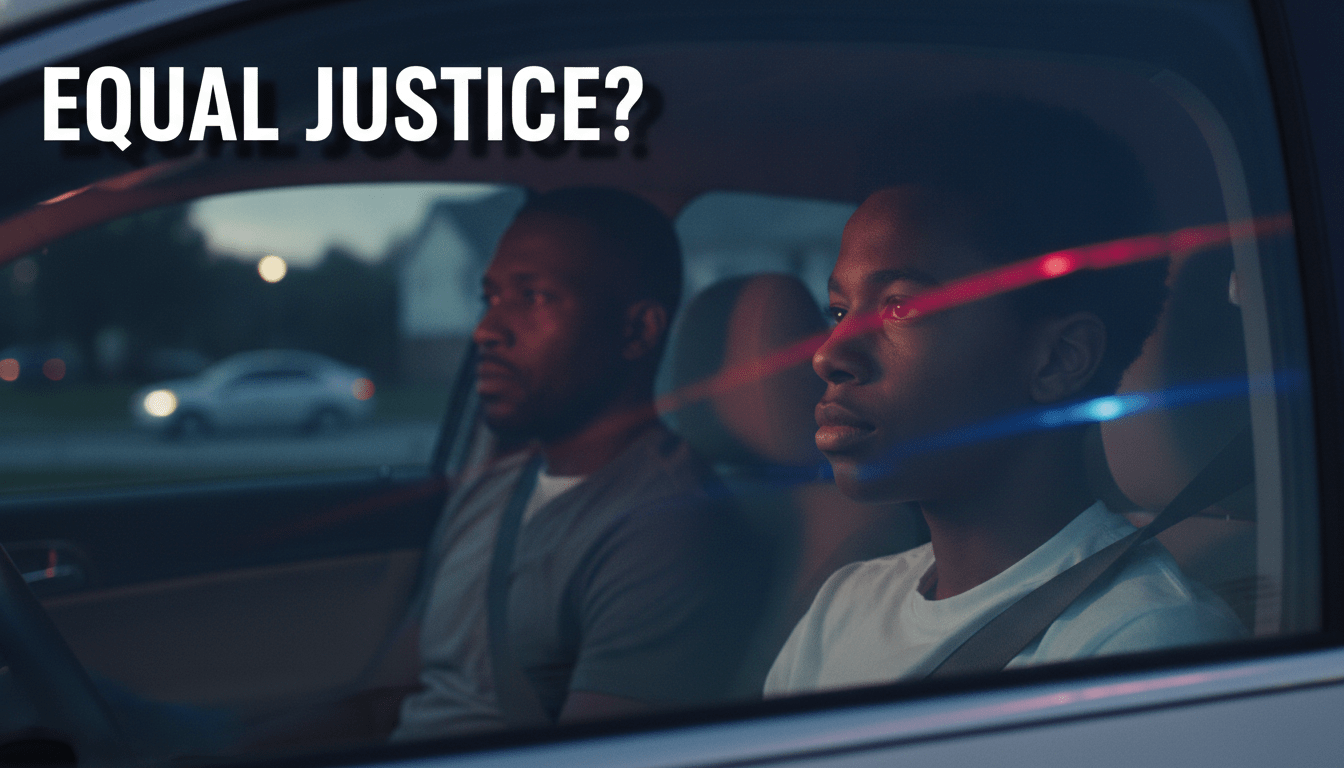
Racial Disparities in Policing: Inside San Diego Arrests
By Darius Spearman (africanelements)
Support African Elements at patreon.com/africanelements and hear recent news in a single playlist. Additionally, you can gain early access to ad-free video content.
A recent investigative report from KPBS has brought a deeply troubling statistic to light in Southern California. In San Diego, Black residents face high arrest rates for resisting an officer and no other charge (kpbs.org). Indeed, they are nine times more likely to face this charge than white residents (kpbs.org). This finding has sparked renewed demands for police reform (kpbs.org). However, this issue is not a modern anomaly.
Historians and civil rights advocates point out that this is not an isolated policy failure. Rather, the stand-alone resisting arrest charge is the modern evolution of century-old systems of racial control. These systems date back to the post-Civil War South. This article will examine the history behind these patterns to understand how these disparities persist today. It is crucial to look beyond the immediate headlines to see the systemic patterns of history.
The Modern Findings: Analyzing the San Diego Data
The KPBS investigation, spearheaded by reporter Katie Hyson, analyzed data from the office of the San Diego City Attorney (kpbs.org). The data spanned from January 1, 2024, through October 31, 2025 (kpbs.org). The results show a system that penalizes citizens for reacting to police presence rather than for committing actual crimes. This reality raises significant questions about modern policing practices in the city.
During this period, officers issued more than 1,300 citations where the sole charge was resisting an officer (kpbs.org). This rate averages out to nearly two citations every single day (kpbs.org). Surprisingly, the office of the City Attorney declined to prosecute approximately 1,000 of those cases (kpbs.org). This massive gap indicates that prosecutors frequently find these charges lack legal merit. However, law enforcement officers continue to make these arrests on the street anyway. This disconnect suggests that the arrest itself, rather than prosecution, is the main objective of the encounter.
<!– wp:html –>
San Diego Resisting Arrest Charges (Jan 2024 – Oct 2025)
<!– /wp:html –>
Escalations in the Community: Real Stories of Arrest
The impact of this policing pattern is visible in the lived experiences of Black residents. In September 2025, Ayisha Williams set up a shade canopy outside her home in Emerald Hills (kpbs.org). Police arrived after a complaint about the canopy encroaching on the sidewalk (kpbs.org). Although she took the canopy down, the situation escalated rapidly (kpbs.org). Eventually, 24 officers arrived at the scene (kpbs.org). Officers handcuffed Williams and her family, and cited her solely for resisting an officer (kpbs.org).
In another incident, Keshawn Price was driving his family home in Spring Valley (kpbs.org). San Diego Police officers pulled him over for alleged speeding (kpbs.org). When Price questioned the stop, officers ordered him out of the vehicle (kpbs.org). The encounter escalated quickly, and officers handcuffed Price and his two teenage children (kpbs.org). Price was booked into jail on a stand-alone charge of resisting, but he was never issued a traffic ticket (kpbs.org). These stories demonstrate how minor encounters escalate into traumatic arrests when citizens ask questions.
The Anatomy of the Resisting Arrest Charge
To understand these incidents, one must examine California Penal Code Section 148(a)(1) (steeringlaw.com). This statute makes it a misdemeanor to willfully resist, delay, or obstruct a peace officer in their duties (sevenslegal.com). However, a physical struggle or flight is not required to violate this law (longbeachdefenseattorney.com, losangelescriminallawyer.pro). Many citizens are unaware that non-physical actions can lead to criminal charges.
Non-physical actions can legally qualify as delaying or obstructing an officer (longbeachdefenseattorney.com). These actions include refusing to identify oneself during a lawful detention (myrightslawgroup.com). Providing a false name or going limp to prevent transport also qualifies under the law (myrightslawgroup.com, longbeachdefenseattorney.com). While arguing or asking for the badge number of an officer is protected speech, blocking paths or interfering with interviews crosses into unlawful obstruction (longbeachdefenseattorney.com, losangelescriminallawyer.pro). This broad legal definition gives officers massive discretion on the street. Consequently, the law itself provides a tool for subjective enforcement.
The History of Contempt of Cop and Social Control
The subjective use of these laws is often referred to as “Contempt of Cop” (steeringlaw.com). This term describes when an officer arrests a civilian for failing to show adequate deference to police authority (steeringlaw.com). Because criticizing the police is constitutionally protected, officers rely on catch-all statutes to justify these arrests (steeringlaw.com). The arrest becomes a punishment for challenging authority.
This practice has deep historical roots in post-Civil War racial control. Following the abolition of slavery, Southern legislatures enacted Black Codes and vagrancy laws (encyclopediavirginia.org). These laws restricted the freedom of newly emancipated Black Americans (psmag.com). Specifically, these codes utilized highly ambiguous language to give police forces massive discretion (encyclopediavirginia.org). If a Black person did not behave with absolute submission, they faced arrest under these catch-all laws (encyclopediavirginia.org).
This history shows how criminal laws have been used to police Black behavior and enforce social hierarchies. Many scholars trace this legacy back to failed to end slavery during Reconstruction, where systems of forced labor and control were simply renamed. In the modern era, “resisting arrest” functions as the contemporary equivalent of those old vagrancy laws.
<!– wp:html –>
The Evolution of Social Control
Post-Civil War Era
Black Codes and Vagrancy Laws criminalize basic freedom of movement to control newly freed Black labor.
Jim Crow Era
Discretionary enforcement of catch-all crimes asserts authority and forces submission to racial hierarchies.
Modern Era
“Contempt of Cop” arrests penalize reactions to police presence using subjective resisting arrest charges.
<!– /wp:html –>
The Cover Charge and the Shield of Brutality
Legal experts point out that resisting arrest is frequently used as a cover charge (steeringlaw.com). If an officer uses excessive force or performs an unlawful detention, they face potential civil liability (steeringlaw.com). By charging the civilian with resisting, the officer creates a formal paper trail that blames the civilian (steeringlaw.com). This paper trail shifts the focus away from officer misconduct.
Consequently, this charge shields the officer from internal scrutiny and civil lawsuits (steeringlaw.com). Civilians must focus their energy on defending themselves against a criminal charge rather than holding the officer accountable. Therefore, the stand-alone resisting charge serves a dual purpose. It asserts police dominance on the street and protects the officer in the courtroom. This dynamic makes it extremely difficult for victims of police misconduct to seek justice.
Overlapping Jurisdictions and Systemic Disparities
The traffic stop involving Keshawn Price highlights complex jurisdictional issues in San Diego County. Price was stopped in Spring Valley, which is an unincorporated community (kpbs.org). Typically, the County Sheriff Department and the California Highway Patrol patrol this area (sdsheriff.gov, sdsheriff.gov). However, municipal police officers in California possess statewide authority to make arrests (ca.gov).
This overlap allows San Diego Police officers to initiate stops outside their normal municipal boundaries (ca.gov). At the same time, prosecutorial duties are divided. The office of the San Diego City Attorney prosecutes misdemeanor offenses that occur within city limits (sandiego.gov). Meanwhile, the Office of the District Attorney handles felony cases and misdemeanors in unincorporated areas (sandiegocounty.gov). This complex web of authority complicates how these cases are monitored and prosecuted. It also makes it harder for the public to track where systemic issues occur.
Systemic Profiling and the Internal Police Culture
These disparities in arrests align with broader patterns of racial profiling in San Diego. Under the Racial and Identity Profiling Act of California, agencies must collect detailed stop data (ca.gov). Year after year, these reports show that Black residents are stopped and searched at significantly higher rates than white residents (ca.gov). These stops rarely result in finding contraband, indicating a high level of bias.
This systemic bias is reinforced by the internal culture of the police department. In 2023, Officer John Cochran, a thirty-year veteran of the department, blew the whistle on what he described as a culture of anti-Black racism (kpbs.org). Cochran filed numerous internal complaints regarding this hostility (kpbs.org). This internal bias directly shapes how officers perceive and interact with Black residents on the street. Therefore, addressing these disparities requires examining the culture of anti-Black politics that shapes local law enforcement policies.
The Breakdown of Police Oversight in San Diego
Accountability is further weakened by the breakdown of local oversight systems. In November 2020, voters approved Measure B to establish the Commission on Police Practices (kpbs.org). This independent board was chartered to investigate officer-involved shootings and evaluate civilian complaints (kpbs.org). The goal was to build trust through transparency.
However, the San Diego Police Department has found ways to bypass this oversight (kpbs.org, kpbs.org). Internal Affairs officers unilaterally categorize many citizen complaints as “miscellaneous” (kpbs.org, kpbs.org). Because the Commission on Police Practices is excluded from reviewing “miscellaneous” files, the department shields these complaints from external review (kpbs.org, kpbs.org). Data reveals that the department classifies approximately 79 percent of civilian complaints under this category (kpbs.org, kpbs.org). This administrative loophole allows officers to face zero consequences for subjective arrests.
<!– wp:html –>
San Diego Citizen Complaints Classified as “Miscellaneous”
Shielded from Review
Miscellaneous (79%)
Reviewed (21%)
<!– /wp:html –>
The Lasting Damages of a Dismissed Arrest
Many people believe that a declined prosecution means the civilian suffered no real harm. However, an arrest that does not lead to prosecution still carries severe, life-altering consequences (defendyouthrights.org, du.edu). The individual is still subjected to physical arrest, handcuffing, and booking into jail (defendyouthrights.org). This initial contact can disrupt lives in permanent ways.
This process creates a permanent arrest record on background checks (defendyouthrights.org). This record often blocks future opportunities for employment, professional licensing, and housing (du.edu). Furthermore, the arrest process causes immediate financial damage, such as vehicle towing fees and lost wages (defendyouthrights.org). The public nature of these arrests also inflicts severe psychological trauma on families (defendyouthrights.org). This cycle of trauma highlights why educating the community on their rights is so essential to modern survival.
Demands for Reform and Structural Accountability
In response to these findings, community organizations are demanding concrete policy changes to dismantle this system. One major proposal is to ban stand-alone resisting arrest charges. Under this reform, officers would be prohibited from charging someone with resisting unless there is another legitimate underlying offense. This change would effectively close the subjective “Contempt of Cop” loophole.
Another proposal is to hold officers civilly and criminally liable for false arrests. Currently, officers face very little risk for fabricating a resisting charge. Giving the independent Commission on Police Practices full authority to review all complaints is also critical. These changes would strip police departments of the ability to self-disqualify complaints. Only through these structural reforms can San Diego begin to eliminate these deep racial disparities. The community continues to push for a justice system that values fairness over control.
About the Author
Darius Spearman is a professor of Black Studies at San Diego City College, where he has been teaching for over 20 years. He is the founder of African Elements, a media platform dedicated to providing educational resources on the history and culture of the African diaspora. Through his work, Spearman aims to empower and educate by bringing historical context to contemporary issues affecting the Black community.
