


The Hidden Labor and School Battles Shaping Black Civil Rights
By Darius Spearman (africanelements)
Support African Elements at patreon.com/africanelements and hear recent news in a single playlist. Additionally, you can gain early access to ad-free video content.
On June 25, 2026, the House Committee on Education and the Workforce convened a critical legislative markup session under Representative Tim Walberg (house.gov). The committee voted to advance a slate of eleven bills focusing on federal workers’ compensation and civil rights in schools (house.gov). While these debates address modern challenges, their foundations trace back over one hundred and fifty years. The legislative decisions made today represent the continuation of a long historical struggle for economic equity.
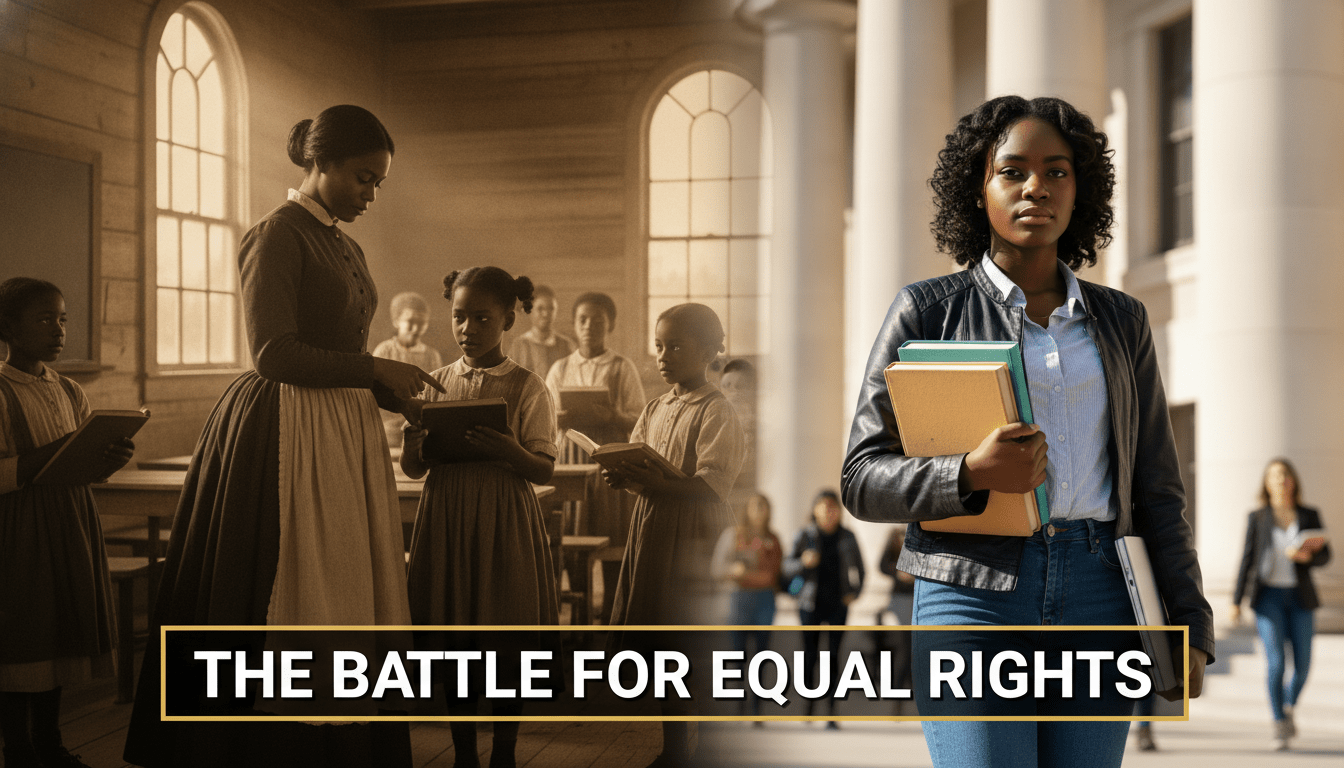
Understanding these modern bills requires looking back to the end of the Civil War. Federal intervention in education and labor has always been closely tied to racial justice. By exploring the history of these federal programs, citizens can better understand the current debates in Washington. Today’s legislative battles over school environments and worker benefits are deeply rooted in the post-war Reconstruction era.
The Reconstruction Roots of Labor Oversight
The close connection between federal labor policy and civil rights is not a modern development. The House Committee on Education and the Workforce was established on March 21, 1867, as the Committee on Education and Labor (wikipedia.org). It was forged during the turbulent Reconstruction era to manage a monumental societal transition. The committee was tasked with helping four million newly emancipated African Americans transition from slavery to free labor (wikipedia.org).
Representative Jehu Baker of Illinois introduced the resolution to create this new committee (vcu.edu). He argued that the federal government had a duty to protect the rights of newly freed working people (vcu.edu). During its early years, the committee worked closely with the Freedmen’s Bureau (history.com). Created under the War Department in 1865, the Bureau managed labor contracts and established public schools (history.com). This early federal agency provided vital humanitarian aid to formerly enslaved families across the South (history.com).
However, the Freedmen’s Bureau faced intense opposition from white Southern politicians and President Andrew Johnson (history.com). President Johnson repeatedly vetoed funding extensions for the Bureau (history.com). He argued that the federal government should not interfere with state labor dynamics (history.com). Despite these obstacles, Radical Republicans in Congress used their legislative power to override several vetoes (history.com). Eventually, political pressure from Southern Democrats forced the Bureau to close in 1872 (history.com). This premature closure forced many Black Americans into exploitative sharecropping systems (history.com).
Milestones of Federal Oversight
Political Realignment and the Shift in Civil Rights
The political alignments of the Reconstruction era were the reverse of modern party structures. During the 1860s and 1870s, the Republican Party championed federal civil rights interventions. The Radical Republican faction pushed hard to secure legal protections for Black Americans. Conversely, the Democratic Party, dominated by white Southern conservatives, fiercely resisted federal civil rights measures. Southern Democrats organized regional movements to restore white supremacy and dismantle post-war progress.
This political alignment persisted for nearly a century before a major national realignment occurred. During the mid-20th century, Northern liberal Democrats increasingly embraced the civil rights movement. This shift culminated in President Lyndon B. Johnson signing the Civil Rights Act of 1964 (wikipedia.org). Consequently, white Southern conservatives began leaving the Democratic Party in massive numbers. The Republican Party capitalized on this shift through its strategic appeal to Southern white voters in the late 1960s.
This political shift permanently transformed the geographic alignments of both political parties. Today, the legacies of these historical transformations continue to influence congressional debates. Modern arguments over federal civil rights oversight in public schools reflect these older partisan conflicts. Understanding this realignment helps clarify why federal education policies remain highly contested in Washington.
The Era of Abandonment and Excluded Labor
During the ninety-seven years between the founding of the committee and the Civil Rights Movement, federal protection withered. Powerful Southern Democratic lawmakers utilized their committee seniority to systematically block civil rights legislation. Consequently, the committee often accommodated the regional system of Jim Crow segregation. This accommodation left millions of Black families without federal legal recourse in the South.
Furthermore, major federal labor laws were drafted to exclude agricultural and domestic workers. Because post-slavery employment options were limited, these exclusions directly targeted the primary occupations of Black workers. This deliberate exclusion left the majority of Southern Black workers without basic wage and hours protections. This exclusion highlighted the systemic hurdles within the early struggles of Black workers for economic survival.
At the same time, federal education aid policies permitted the distribution of funds to segregated schools. For decades, federal dollars flowed to Southern states that maintained unequal, underfunded school systems for Black children. Civil rights advocates, including Representative Adam Clayton Powell Jr., fought to change these policies. Powell introduced amendments to block federal funding from going to segregated school districts. However, a conservative coalition repeatedly defeated these amendments to preserve the segregated system.
Industrialization and the Evolution of Workers’ Compensation
As the United States rapidly industrialized, the physical toll on the workforce forced federal intervention. In 1908, President Theodore Roosevelt signed the nation’s first limited workers’ compensation law (dol.gov). This early program covered federal civil servants working in unusually hazardous positions (dol.gov). It marked the beginning of a shift toward federal responsibility for workplace injuries.
This early step paved the way for the Federal Employees’ Compensation Act of 1916 (dol.gov). Sponsored by Senator John W. Kern and Representative Daniel J. McGillicuddy, FECA established a non-adversarial system (dol.gov). It provided wage replacement and medical care to civilian workers injured on the job (dol.gov). The law allowed injured workers with dependents to receive up to seventy-five percent of their wages (dol.gov). This comprehensive safety net served as a template for state-level workers’ compensation laws across the country (dol.gov).
In 2000, Congress built upon this framework by enacting the Energy Employees Occupational Illness Compensation Program Act (dol.gov). EEOICPA provides medical benefits to Department of Energy contractors and employees (dol.gov). These workers were exposed to occupational hazards and toxic radiation while working on nuclear defense programs (dol.gov). Over time, this program has paid out billions of dollars to support affected workers and their families (dol.gov).
OCR Civil Rights Complaints
Distribution of Complaints by Category (FY 2023)
Title VI and Federal Education Enforcements
The mid-20th century transformed the way the federal government enforced civil rights protections. Title VI of the Civil Rights Act of 1964 prohibited discrimination based on race, color, or national origin (ed.gov). This legal prohibition applied to any educational program or activity receiving federal financial assistance (ed.gov). Consequently, both public school districts and universities were forced to comply with federal equity standards (ed.gov).
The Department of Education’s Office for Civil Rights became the primary enforcement agency for Title VI (ed.gov). Private colleges and universities are bound by these rules because they accept federal financial aid (ed.gov). When students use Pell Grants or federal loans, their institutions must adhere to Title VI (ed.gov). Any university found in violation of these civil rights standards risks losing all federal funding (ed.gov). This powerful enforcement tool historically helped combat racial disparities in educational access.
In 1972, Congress passed Title IX to prohibit sex-based discrimination in educational programs (ed.gov). Together, Title VI and Title IX established a robust framework for student protection (ed.gov). Under these laws, the Office for Civil Rights investigates systemic harassment and unequal resources (ed.gov). However, the application of these civil rights protections has recently become a major source of political debate.
Modern Campus Civil Rights and Student Advocacy
In June 2026, the committee advanced H.R. 8476, the No Antisemitism in Education Act, and H.R. 9203, the Student Protection and University Accountability Act (house.gov, jns.org). These bills establish strict timelines for resolving campus civil rights complaints (house.gov). They also require institutions to designate dedicated civil rights coordinators to manage investigations (house.gov). Supporters argue these bills are necessary to address rising harassment on college campuses.
However, civil rights organizations, including the Council on American-Islamic Relations, have raised serious concerns (cair.com). Advocacy groups warn that codifying broad definitions of discrimination into Title VI could suppress free speech (cair.com). These measures could pressure university administrations to restrict student protests to protect their federal funding (house.gov). This pressure could lead to the preemptive policing of peaceful campus demonstrations.
Consequently, these proposed bills could severely impact Black student organizations and campus activism. Conservative groups are increasingly utilizing Title VI complaint procedures to challenge diversity, equity, and inclusion initiatives (ncanchor.org). They allege that minority-focused academic support and graduate partnerships constitute reverse discrimination (ncanchor.org). As a result, universities may suspend racial justice programs to avoid costly federal investigations.
The Drastic Reversal in Title VI Enforcement
During fiscal year 2023, the Office for Civil Rights received a record nineteen thousand complaints (ed.gov). Title VI race and national origin cases represented about eighteen percent of that total caseload (ed.gov). Historically, these complaints addressed racial harassment and disproportionate school discipline (ed.gov). However, the actual enforcement of these protections has shifted dramatically in recent years.
Following the administrative transition in 2025, federal enforcement against anti-Black racial discrimination slowed significantly. The Department of Education has resolved zero cases of racial harassment against Black or Latino students. Instead, civil rights enforcement resources have been diverted to target university diversity initiatives (ncanchor.org). This shift has left many Black victims of campus hate crimes without federal recourse.
Furthermore, federal investigators have targeted local initiatives designed to support Black academic achievement (ncanchor.org). Programs like the Chicago Public Schools’ Black Student Success Plan have faced federal compliance challenges (ncanchor.org). This redirection of civil rights enforcement has sparked major concerns among civil rights advocates. They argue that the original protective purpose of Title VI is being undermined to serve political agendas.
Federal Compensation Program Metrics
- Direct Worker Compensation $16.43 Billion
- Medical Bill Payments $16.07 Billion
- FECA Annual Safety Net 2.6M – 2.7M Workers
- Annual FECA Payouts ~$3 Billion
Balancing Fraud Detection and Healthcare Equity
In addition to education bills, the committee advanced measures to reform federal workers’ compensation programs (house.gov). H.R. 8822, the Federal Workers’ Compensation Integrity and Care Act, matches recipient records with other databases (house.gov). This matching system allows the Department of Labor to access earnings databases to prevent fraud (house.gov). Supporters argue this oversight is necessary to protect taxpayer dollars from abuse (house.gov).
However, automated data-matching systems are highly susceptible to clerical errors and name mismatches. When a discrepancy is flagged, benefits are often immediately suspended during the investigation. For low-income and Black federal employees, these sudden suspensions can trigger a severe financial crisis. These workers often lack a financial safety net to survive weeks without their compensation payments.
At the same time, the committee advanced H.R. 4122, the Health Care for Energy Workers Act (house.gov). This bipartisan bill allows nurse practitioners and physician assistants to order medical supplies under EEOICPA (house.gov). The communities affected by this bill are primarily rural, lower-income residents living near federal nuclear weapons facilities (house.gov). These regions suffer from severe shortages of medical doctors, causing long delays for sick workers (house.gov). By utilizing the local healthcare workforce, H.R. 4122 directly addresses these geographic and economic barriers to care (house.gov).
Conclusion: Connecting Past Struggles to Modern Realities
The legislative slate advanced in June 2026 shows that the core mission of the committee remains highly contested (house.gov). Whether managing civil rights in schools or regulating federal worker benefits, these debates mirror those of the nineteenth century (wikipedia.org). Today’s representatives continue to debate the proper role of federal oversight. As these bills move through Congress, the historical context must not be forgotten.
The protection of civil rights and economic equity requires constant vigilance. Ensuring that public institutions remain accountable is essential to preserving the progress made over the past one hundred and fifty years. True progress requires balancing administrative efficiency with the preservation of vital protections for marginalized workers and students.
About the Author
Darius Spearman is a professor of Black Studies at San Diego City College, where he has been teaching for over 20 years. He is the founder of African Elements, a media platform dedicated to providing educational resources on the history and culture of the African diaspora. Through his work, Spearman aims to empower and educate by bringing historical context to contemporary issues affecting the Black community.
