


Why Black Consumers Boycott Brands Today
By Darius Spearman (africanelements)
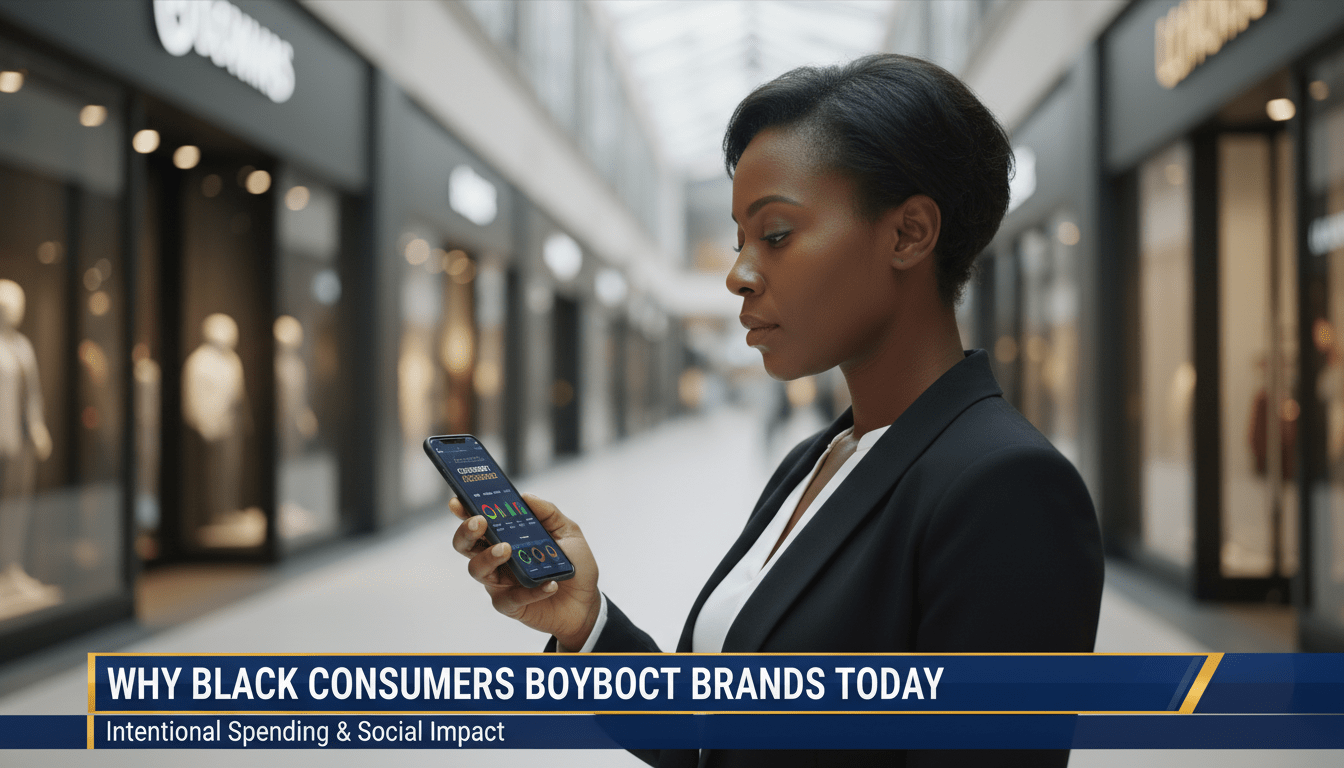
A new Nielsen report exposes a massive shift in the American economy. Approximately 70 percent of Black consumers actively boycott brands that disrespect their community. This number represents a notable increase from 66 percent in 2023. African Americans hold enormous financial influence. They possess roughly $2.1 trillion in spending power. If Black America operated as an independent country, it would rank as the sixteenth largest economy in the world (nielsen.com). The transition from passive buying to organized resistance demonstrates significant strategic intentionality. Black consumers now demand corporate accountability. This economic pressure is a sophisticated weapon. Modern shoppers use their wallets as ballots. They withdraw support from companies that fail to honor their promises. The historical foundations of this movement reveal a century of organized financial pushback against systemic inequality.Support African Elements at patreon.com/africanelements and hear recent news in a single playlist. Additionally, you can gain early access to ad-free video content.
Early Roots of Economic Resistance
The strategy of economic withdrawal runs deep within the Black American experience. During the Great Depression of the 1930s, African Americans faced an unemployment rate double the national average. Activists in cities like Chicago and Washington D.C. launched campaigns to address this disparity. These protests became known as the movement to refuse spending where one cannot work. Black citizens targeted white-owned businesses located within their own neighborhoods. These store owners eagerly accepted Black dollars but refused to hire Black clerks. The goal centered entirely on securing employment (wikipedia.org).
The impact of these early boycotts proved massive. In 1938, a pivotal Supreme Court case solidified the legal right to picket for fair employment. The ruling protected protestors who demanded economic equity from local grocers. By 1940, these organized efforts had successfully secured more than 5,000 jobs in Washington D.C. alone (dcpreservation.org). These actions laid the groundwork for future generations. The historical struggle for labor rights established a powerful template. Economic withdrawal became a proven method for forcing systemic change.
Civil Rights and the Push for Dignity
The strategy evolved during the 1950s to encompass broader civil rights objectives. The Montgomery Bus Boycott of 1955 shifted the primary focus from employment to human dignity. African Americans comprised 75 percent of the city transit ridership at that time. The community organized a massive and sustained withdrawal of their patronage. The resulting 381-day protest caused a 90 percent drop in bus ridership (stanford.edu). This organized action cost the local government an estimated $3,000 per day in lost revenue. This figure translates to approximately $35,000 daily in modern currency.
The success in Montgomery demonstrated the true weight of collective economic action. Leaders realized that financial pressure could dismantle segregationist policies. This era highlighted the broader pursuit of freedom within the community. Activists used financial leverage to negotiate better treatment. The bus boycott proved that civil rights required economic consequences. Companies and municipalities eventually surrendered when their profits vanished. This phase cemented the concept of selective patronage as a cornerstone of the movement.
Organizing Through Operation Breadbasket
During the 1960s, the Southern Christian Leadership Conference introduced a new economic strategy. The organization launched Operation Breadbasket in 1962 to demand structural economic justice. Leaders targeted large corporations that profited heavily from Black consumers. They insisted that companies hire Black workers and utilize Black-owned services. Under the national direction of Jesse Jackson, the program achieved remarkable success (britannica.com). Organizers demanded that major grocery chains stock products created by Black manufacturers. They successfully placed dairy items, produce, and cleaning supplies on store shelves.
Operation Breadbasket utilized a clear negotiation process. Activists first approached executives with data regarding their hiring practices. If the company refused to change, the community initiated strict boycotts. Within its first fifteen months in Chicago, the program secured 2,000 new jobs (shelterforce.org). These positions generated $15 million in annual income for the community. Activists also forced companies like Pepsi to hire Black-owned trucking firms. This comprehensive approach built a strong foundation of kinship and resilience across neighborhoods. It proved that organized consumer pressure could successfully alter corporate supply chains.
The Era of Corporate Racial Reckoning
The modern wave of corporate accountability began during the summer of 2020. The murder of George Floyd sparked a global movement for racial justice. Protests erupted in more than 4,400 cities worldwide. Corporate America felt intense pressure to respond to the public outcry. Companies quickly issued statements supporting racial equity and inclusion. Major brands pledged approximately $50 billion toward racial justice initiatives (forbes.com). They promised to close the wealth gap and support minority entrepreneurs. The business world described this period as a historic watershed moment.
These programs aimed to restructure how companies operated internally and externally. Diversity initiatives sought to increase representation across all organizational levels. Equity programs required companies to remove systemic barriers to advancement. Inclusion efforts attempted to create environments where all employees felt valued. Furthermore, supplier diversity commitments directed procurement budgets toward minority-owned businesses (hbs.edu). Consumers believed these promises represented a permanent shift in business culture. African Americans trusted that corporations finally recognized the value of their financial contributions.
Reversing Diversity Under Political Pressure
By early 2025, the corporate landscape experienced a dramatic reversal. The political climate shifted, causing companies to abandon their 2020 commitments. A 2023 Supreme Court ruling effectively ended race-conscious admissions in universities. Legal activists quickly applied this same logic to private sector employment (stanford.edu). Subsequently, the newly inaugurated Trump administration issued strict executive orders. These directives aimed to eliminate diversity programs within government agencies and among federal contractors. Additionally, state legislatures introduced over 100 bills to dismantle inclusion initiatives (repec.org).
Corporations reacted to this impact of federal policies with fear. Brands like Target, Disney, and Wells Fargo began scaling back their diversity programs. The fear of reverse discrimination lawsuits drove executives to cancel equity initiatives (fastcompany.com). Companies quietly removed minority supplier quotas from their public goals. They disbanded internal diversity teams and altered their hiring languages. This sudden retreat signaled to Black consumers that the 2020 promises were largely performative. The rollback ignited widespread frustration across the African American diaspora.
Direct Action Against Broken Promises
The dismantling of equity programs led to immediate consumer retaliation. In March 2025, civil rights leaders organized a massive 40-day boycott against Target. Activists launched the campaign during the Lenten season to emphasize moral accountability. The protest challenged the retailer for rolling back its initial two-billion-dollar commitment to Black businesses. Organizers demanded the restoration of representation on store shelves. They insisted that the company fulfill its original financial promises (binnews.com).
This targeted economic strike yielded measurable consequences for the retailer. Target reported a 1.7 percent decrease in net sales by the end of fiscal year 2025. Same-store sales dropped by 2.5 percent during the same period (ppc.land). The boycott heavily damaged the corporate reputation score of the brand. Eventually, leadership acknowledged a severe breakdown in trust with Black shoppers. The company ultimately added $100 million to its initial business funding commitment. Although activists did not win every demand, they proved their economic strength.
Nielsen Data Exposes the Shift
The latest numbers from Nielsen confirm a structural change in consumer habits. The 2026 Black Influence report reveals a severe consequence for misaligned brands. The data shows that 70 percent of Black consumers will intentionally boycott offending companies. These individuals actively avoid businesses that devalue their culture or reverse diversity commitments (nielsen.com). This percentage reflects a highly organized and data-driven approach to spending. For the first time, corporate respect ranks higher than product quality in purchasing decisions.
Nielsen research indicates that representation directly drives revenue. Black shoppers are twice as likely to patronize brands that engage them authentically. They prefer companies that advertise through trusted cultural voices and platforms. Conversely, companies that mistreat employees face immediate financial backlash (nielsen.com). Over 57 percent of respondents refuse to support businesses with poor labor practices. The statistics highlight a demographic that carefully monitors corporate behavior. Brands that remain silent on social issues now face direct financial penalties from this powerful consumer base.
Advisories and Consumer Scorecards
Modern activism relies heavily on data distribution and public transparency. Organizations provide tools to help shoppers make informed economic choices. The NAACP launched a comprehensive Black Consumer Advisory in early 2025. This system warns individuals about corporations that have abandoned their racial equity pledges (naacp.org). The advisory functions as a detailed guide for targeted economic accountability. It encourages intentional spending rather than functioning as a traditional boycott call.
The organization evaluates brands using specific performance metrics. The scorecard tracks the elimination of diversity roles and the reduction of supplier contracts. It also monitors corporate funding for historically Black colleges (naacp.org). Consumers use this information for shaping political dynamics in the marketplace. The NAACP framework demands that companies publish their diversity data in quarterly reports (naacp.org). This level of scrutiny prevents corporations from hiding their policy changes. Shoppers now possess the necessary information to align their spending with their core values.
Addressing the Circulation Gap
While boycott participation rises, economic experts point to a significant internal challenge. The African American community struggles with a severe dollar circulation deficit. Researchers call this phenomenon the accountability gap. Currently, the Black dollar circulates within the community for approximately six hours (repec.org). In contrast, money stays within white communities for seventeen days. Funds circulate within Asian neighborhoods for nearly twenty-eight days (stanford.edu). This rapid departure of wealth severely limits neighborhood economic growth.
Activists work tirelessly to correct this financial imbalance. They pair negative boycotts with proactive spending campaigns. The push to buy from Black-owned businesses aims to increase internal economic retention. Estimates suggest that only about three percent of total Black spending reaches Black-owned enterprises (blackwallstreet.org). Increasing this circulation rate to ten percent could generate millions of new jobs. Economic withdrawal serves as half of the overall strategy. Building internal wealth through intentional investment completes the vision for total financial empowerment.
The Future of Economic Accountability
The modern marketplace requires complete transparency and consistent corporate respect. Black purchasing power has evolved into a highly coordinated financial mechanism. The current 70 percent boycott rate signifies a permanent shift in consumer expectations. African Americans refuse to accept performative gestures or broken corporate promises. They utilize their multi-trillion-dollar spending capacity to enforce strict ethical standards. Companies face a straightforward choice between authentic engagement and total financial exclusion.
The legacy of economic resistance continues to adapt and strengthen. From the early grocery store pickets to modern social media blackouts, the mission remains constant. Activists prove that withholding capital remains the most effective form of protest. The community understands that money dictates policy in a capitalist society. Black consumers demand their rightful place at the economic table. They will continue to hold corporations strictly accountable for their actions and their investments.
About the Author
Darius Spearman is a professor of Black Studies at San Diego City College, where he has been teaching for over 20 years. He is the founder of African Elements, a media platform dedicated to providing educational resources on the history and culture of the African diaspora. Through his work, Spearman aims to empower and educate by bringing historical context to contemporary issues affecting the Black community.
