


Why DR Congo Ebola Outbreak Spreads Across Borders
By Darius Spearman (africanelements)
Support African Elements at patreon.com/africanelements and hear recent news in a single playlist. Additionally, you can gain early access to ad-free video content.
A Tale of Two Neighboring Nations
On July 28, 2026, the Ministry of Health in Uganda declared the official end of its localized Ebola outbreak (who.int, mediacentre.go.ug). This major victory occurred exactly 42 days after the last patient left a hospital care unit on June 16, 2026 (who.int, mediacentre.go.ug). The 42-day period equals two full incubation cycles of the virus (mediacentre.go.ug). Ugandan health workers celebrated this milestone after managing to prevent wide community transmission across the country (mediacentre.go.ug).
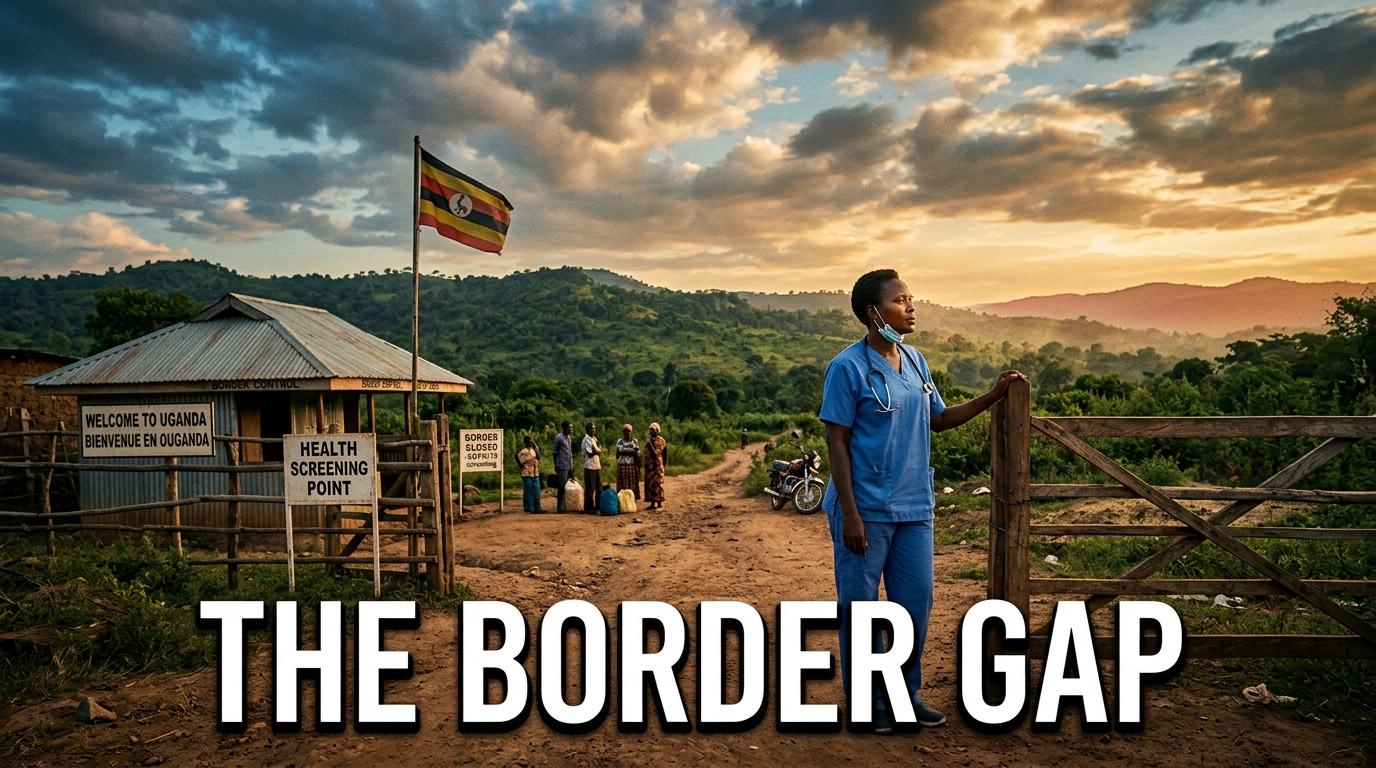
Meanwhile, across the western border, the Democratic Republic of Congo faces a mounting health emergency (washingtonpost.com, reliefweb.int). Medical teams in northeastern provinces battle the fastest-spreading Ebola outbreak on record (washingtonpost.com, reliefweb.int). Thousands of individuals have fallen ill within weeks (reliefweb.int). This stark difference between two neighbors highlights how health infrastructure, political stability, and community trust directly shape disease outcomes (washingtonpost.com, lse.ac.uk).
The global community recognized the severity of this crisis early (who.int). On May 17, 2026, World Health Organization Director-General Dr. Tedros Adhanom Ghebreyesus officially declared the situation a Public Health Emergency of International Concern (who.int). This legal status is the highest warning level under International Health Regulations (who.int). A Public Health Emergency of International Concern legally binds 196 nations to coordinate containment efforts and share resources (who.int). It empowers international leaders to issue temporary travel guidelines without closing borders entirely (who.int). African communities have consistently shown remarkable resilience in crisis situations, yet structural disparities continue to hamper response efforts across boundaries.
Viral Evolution and the Rare Bundibugyo Strain
To understand the current crisis, one must examine the history of the virus (cdc.gov). Researchers first identified the Ebola virus in 1976 during dual outbreaks in Sudan and Zaire, which is now the Democratic Republic of Congo (cdc.gov). Scientists named the pathogen after the Ebola River in Zaire (cdc.gov). Today, scientists organize human-pathogenic ebolaviruses into four distinct species: Zaire, Sudan, Taï Forest, and Bundibugyo (cdc.gov).
The Bundibugyo species emerged in late 2007 in western Uganda near the border with the Democratic Republic of Congo (wikipedia.org). Genetic sequencing showed that the Bundibugyo virus differs by more than 30 percent from other ebolaviruses (wikipedia.org). Before the 2026 emergency, the strain had caused only two recorded outbreaks in history (wikipedia.org). The first outbreak occurred in Uganda in 2007, while the second struck the Democratic Republic of Congo in 2012 (wikipedia.org).
Epidemiologists track disease severity using a metric called the Case Fatality Rate (tandfonline.com). The Case Fatality Rate measures the percentage of diagnosed patients who die from a specific disease within a defined timeframe (tandfonline.com). Unlike general population mortality rates, it focuses strictly on confirmed clinical cases (tandfonline.com). The Case Fatality Rate also differs from the Infection Fatality Ratio, which includes undetected mild cases in its calculation (tandfonline.com). Historically, the Bundibugyo strain carries a Case Fatality Rate between 30 and 50 percent (wikipedia.org). While lower than the lethal 90 percent rate of the Zaire strain, it remains extremely dangerous (cdc.gov, wikipedia.org).
The Market Failure Behind Vaccine Disparities
Public health responders faced a critical vulnerability during the 2026 emergency (cepi.net, gavi.org). Over the last decade, scientists created successful tools like the Ervebo vaccine to fight Ebola (cdc.gov, gavi.org). However, these vaccines target the Zaire species exclusively (cdc.gov). They provide no cross-protection against the Bundibugyo strain (cepi.net).
Similarly, monoclonal antibody treatments like Inmazeb and Ebanga offer no protection against Bundibugyo (cepi.net). Monoclonal antibody treatments are laboratory-engineered proteins that act like natural immune defenses (goodrx.com). Inmazeb uses a cocktail of three distinct antibodies to bind to viral proteins and stop cell entry (inmazeb.com). Ebanga relies on a single antibody isolated from a human survivor of a 1995 outbreak (ebanga.com). These therapies neutralize the Zaire virus effectively (goodrx.com, ebanga.com). Yet, their structural specificity makes them ineffective against different strains (cepi.net).
This lack of readiness stems from a systemic market failure in global research funding (cepi.net, gavi.org). Commercial pharmaceutical firms face high financial risks when developing drugs for rare diseases (cepi.net, gavi.org). Because Bundibugyo outbreaks occur rarely, drug developers saw no guaranteed commercial buyers (cepi.net, gavi.org). Out of nearly 100 filovirus treatments in development prior to 2026, more than half targeted the Zaire strain alone (cepi.net). Zero commercial vaccines existed for Bundibugyo (cepi.net).
To fill this void, non-profit institutions stepped forward (cepi.net, cepi.net). The Coalition for Epidemic Preparedness Innovations acts as a global alliance to fund candidate vaccines (cepi.net). Driven by its mission to prepare treatments within 100 days of an outbreak, the Coalition launched a $60 million effort in 2026 (cepi.net, cepi.net). It funded three candidate vaccines for human clinical safety trials (cepi.net, cepi.net). Additionally, on July 2, 2026, the World Health Organization listed the first molecular test for Bundibugyo under its Emergency Use Listing pathway (who.int). This mechanism allows unapproved diagnostic tools to reach remote diagnostic labs quickly during international emergencies (who.int, who.int).
Uganda Success Versus Democratic Republic of Congo Crisis
The stark difference in outcomes between Uganda and the Democratic Republic of Congo involves structural preparedness (washingtonpost.com, mediacentre.go.ug). Uganda reported 20 total cases and two deaths during the 2026 outbreak (mediacentre.go.ug). Health officials traced every case back to a single imported contact from across the border (mediacentre.go.ug). Through rapid trace-and-quarantine tactics, workers isolated affected individuals immediately (mediacentre.go.ug). Public compliance remained high, aided by clear communication from national agencies (mediacentre.go.ug).
Conversely, the situation in eastern provinces of the Democratic Republic of Congo deteriorated rapidly (washingtonpost.com, reliefweb.int). By late July 2026, health authorities recorded 3,262 cases and 1,437 deaths (reliefweb.int). The virus spread to over 1,000 cases within just 40 days (reliefweb.int). Active military conflict in provinces like Ituri impedes medical response teams (washingtonpost.com, reliefweb.int). Armed rebel groups control major roads, making contact tracing dangerous (washingtonpost.com, reliefweb.int).
Furthermore, front-line responders face extreme hazards (reliefweb.int). Over 100 healthcare workers in the Democratic Republic of Congo contracted Ebola during the 2026 outbreak (reliefweb.int). Structural problems worsened when medical staff at treatment centers organized strikes over unpaid hazard pay (reliefweb.int). Deprived of wages for two months, workers temporarily halted operations in critical isolation units (reliefweb.int). Many workers face severe economic exploitation while attempting to save lives in unsafe environments.
Colonial Roots and the Deep Trust Deficit
Public health experts acknowledge that medical equipment alone cannot stop an outbreak (lse.ac.uk). A profound trust deficit exists between rural communities and foreign medical institutions in the Democratic Republic of Congo (lse.ac.uk). This suspicion stems from more than a century of painful history (britannica.com, ushmm.org). During the late nineteenth century, King Leopold II of Belgium subjected the population to brutal violence to extract rubber and ivory (britannica.com, ushmm.org). Colonial administrators dismantled local authority structures and instituted brutal systems of forced labor (britannica.com, ushmm.org).
In modern times, external forces continue to extract wealth from the nation (amnesty.org). Eastern provinces hold massive deposits of gold, coltan, and cobalt (amnesty.org). Global demand for tech minerals fuels endless violent conflict among proxy militias (amnesty.org). Meanwhile, basic medical infrastructure remains completely neglected (lse.ac.uk, amnesty.org). Local residents frequently express confusion when foreign aid agencies spend millions solely to treat Ebola (lse.ac.uk). They observe that common treatable conditions like malaria and measles receive little international funding (lse.ac.uk).
Consequently, many community members suspect that health interventions serve external financial interests (lse.ac.uk). The popular phrase “Ebola is a business” reflects a widespread belief that political elites profit from emergency aid (lse.ac.uk). This suspicion leads to community resistance against state isolation wards and safe burial protocols (lse.ac.uk). Without addressing these historical grievances, medical personnel struggle to gain community cooperation during outbreaks (lse.ac.uk).
International Security and Financial Requests
The speed of the 2026 Ebola outbreak created international financial strains (reliefweb.int, whitehouse.gov). In June 2026, the Africa CDC announced that response estimates grew from $518 million to $1.4 billion (reliefweb.int). Director-General Jean Kaseya reported that failure to secure these funds would allow the outbreak to spill across international borders (reliefweb.int).
In response to the growing crisis, the White House submitted a $1.4 billion funding request to the United States Congress (whitehouse.gov). American officials recognized that stopping a pathogen at its source is essential for global defense (whitehouse.gov). Controlling the virus abroad prevents catastrophic health threats from reaching international airports (whitehouse.gov). Furthermore, the eastern Democratic Republic of Congo supplies key minerals for global green energy supply chains (amnesty.org, fdd.org). Prolonged instability threatens raw material access worldwide (fdd.org).
Geopolitical interests also influence international policy decisions (fdd.org). Following prior reductions in foreign aid, non-Western medical teams expanded operations in Central Africa (fdd.org). Western governments recognize that funding health security helps maintain key diplomatic alliances (fdd.org). Complex geopolitical dynamics demonstrate how regional public health remains tied to historical trends and foreign interventions across the global south.
Building Lasting Healthcare Strength
The contrasting outcomes of the 2026 Bundibugyo Ebola outbreak offer crucial public health lessons (who.int, lse.ac.uk). Uganda proved that rapid contact tracing, institutional transparency, and public cooperation can stop a pathogen without specialized vaccines (who.int, mediacentre.go.ug). Decades of investment in domestic management allowed Ugandan authorities to close transmission chains effectively (mediacentre.go.ug).
Conversely, the ongoing crisis in the Democratic Republic of Congo shows that medical tools fail without social stability and community trust (washingtonpost.com, lse.ac.uk). Lasting health security requires reliable health infrastructure, fair wages for workers, and an end to resource exploitation (reliefweb.int, lse.ac.uk). Global health organizations must invest in local communities continuously, rather than reacting solely during emergency crises (cepi.net, lse.ac.uk).
About the Author
Darius Spearman is a professor of Black Studies at San Diego City College, where he has been teaching for over 20 years. He is the founder of African Elements, a media platform dedicated to providing educational resources on the history and culture of the African diaspora. Through his work, Spearman aims to empower and educate by bringing historical context to contemporary issues affecting the Black community.
