


Why San Diego Mandated Year-Round Black History
By Darius Spearman (africanelements)
Support African Elements at patreon.com/africanelements and hear recent news in a single playlist. Additionally, you can gain early access to ad-free video content.
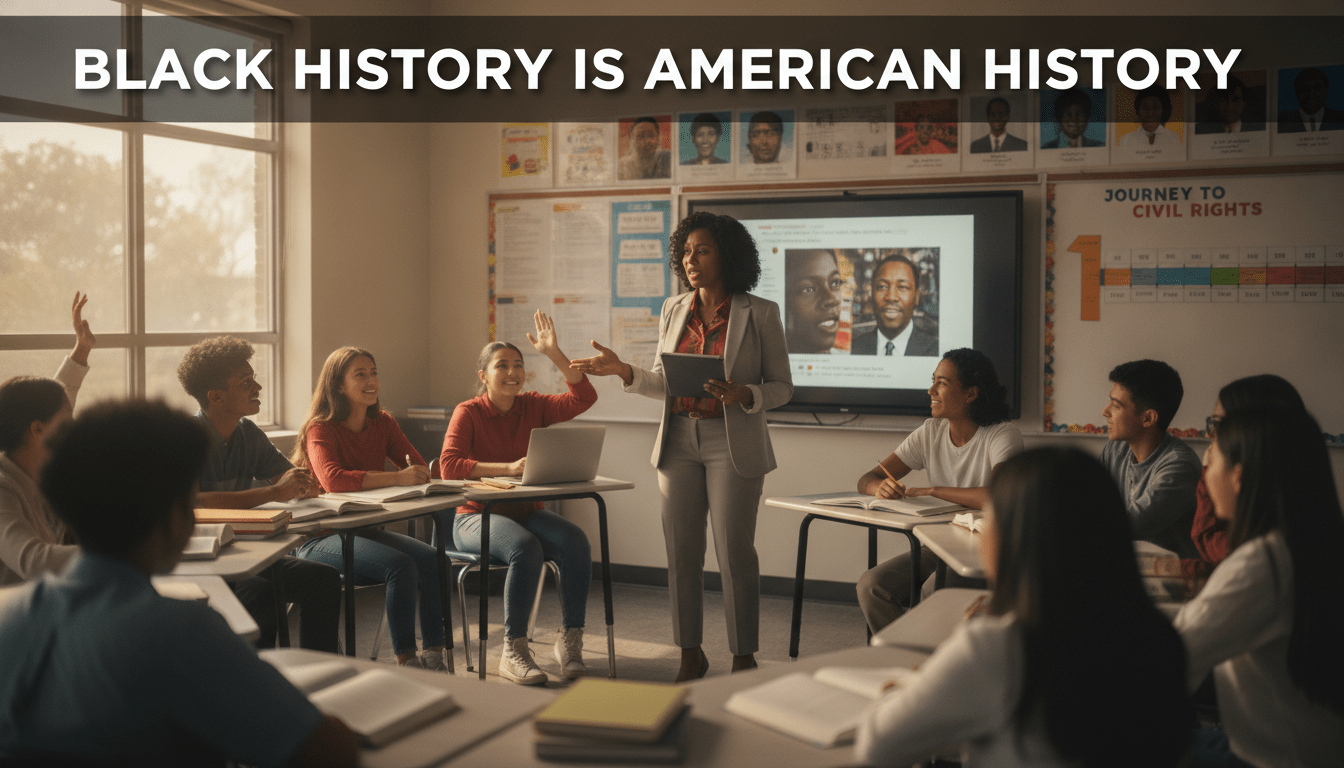
On June 18, 2026, the San Diego County Board of Education passed Resolution No. 2026-22 (sdcoe.net). This policy officially designated June 19, 2026, as Juneteenth Independence Day (sdcoe.net). Beyond this calendar change, the board introduced a sweeping mandate. The resolution emphasizes the necessity of teaching Black history throughout the entire school year, rather than restricting it to a single month (sdcoe.net).
This decision marks a pivotal moment in the local educational landscape. It seeks to dismantle systemic inequities in Southern California public schools. Historically, representation in curricula has been a hard-fought battle. Activists have long organized to preserve diverse perspectives, including efforts like the creation of Black studies programs to ensure historical truths are taught.
To understand the magnitude of this headline, one must look at the history behind it. The policy represents the intersection of a 160-year struggle for liberation, decades of local civil rights advocacy, and a structural shift in California public education.
The Long Road to Galveston and the Meaning of Juneteenth
The concept of Juneteenth is deeply defined by the struggle against systemic barriers that delayed basic human rights. Although President Abraham Lincoln issued the Emancipation Proclamation on January 1, 1863, freedom did not arrive instantly (blackpast.org, britannica.com). Geographic isolation and a lack of Union troops allowed Texas slaveholders to ignore the executive order (blackpast.org, tshaonline.org). Consequently, they continued to exploit enslaved labor for more than two years (blackpast.org, britannica.com).
This era of exploitation finally met a legal end on June 19, 1865. Union Major General Gordon Granger arrived in Galveston, Texas, to read General Order No. 3 (blackpast.org, tshaonline.org). The order officially declared that all enslaved African Americans in Texas were legally free (blackpast.org, britannica.com). This historic announcement sparked celebrations that became known as “Juneteenth.”
Even with legal freedom, systemic barriers persisted. When local reconstruction authorities barred Black communities from celebrating in public parks, formerly enslaved people pooled their financial resources to buy private tracts of land (blackpast.org, britannica.com). These spaces were often named Emancipation Parks. Newly freed people continued to face immense socio-economic challenges where the Civil War failed to end involuntary servitude through predatory sharecropping and convict leasing systems.
The Nationalization of Freedom: The Poor People’s Campaign of 1968
For decades, Juneteenth remained a largely regional celebration centered in Texas. However, a major historical turning point in 1968 helped transform the holiday into a nationwide symbol of civil rights advocacy (blackpast.org, britannica.com). This nationalization was catalyzed by the Poor People’s Campaign in Washington, D.C. (blackpast.org, wttw.com).
Originally planned by Dr. Martin Luther King Jr., the campaign sought to highlight severe economic inequality in the United States. Following his assassination, civil rights leaders like the Reverend Ralph Abernathy and Coretta Scott King carried the movement forward (blackpast.org, wttw.com). When the campaign faced challenges in achieving its legislative goals, organizers decided to hold a massive demonstration on June 19, 1968 (blackpast.org, wttw.com).
The rally was designated as Juneteenth Solidarity Day, drawing over 100,000 diverse participants to the nation’s capital (blackpast.org, wttw.com). Leaders intentionally connected the fight against systemic poverty with the historic theme of delayed freedom (blackpast.org). They argued that persistent economic injustice acted as a modern equivalent to the delayed news of emancipation. When the marchers returned to their home cities like Milwaukee and Minneapolis, they established local Juneteenth traditions, nationalizing the Texas holiday (blackpast.org, britannica.com, wttw.com).
San Diego’s Civil Rights Legacy and the Fight for Representation
While Juneteenth originated in Texas, Southern California has its own deep history of Black activism. Organized efforts for racial justice in San Diego date back to 1917, when intellectual leader W.E.B. Du Bois visited the city (naacp.org). His visit inspired the local community to organize a regional branch of the National Association for the Advancement of Colored People (NAACP), which received its official charter in early 1919 (naacp.org).
The NAACP stands as America’s oldest and largest civil rights organization. It was founded on February 12, 1909, by an interracial coalition of activists in response to rampant anti-Black violence and the deadly 1908 race riot in Springfield, Illinois (naacp.org). Its mission is to eliminate racial prejudice and secure political, educational, social, and economic equality for all minority citizens. Early advocacy focused on ending lynching, utilizing publications like the 1919 report Thirty Years of Lynching in the United States to pressure national political leaders (naacp.org).
In 1940, the organization established its legal arm, the NAACP Legal Defense and Educational Fund (LDF), which successfully litigated the landmark Brown v. Board of Education Supreme Court case in 1954 (naacp.org). The group also mobilized major grassroots milestones, including backing Rosa Parks during the Montgomery bus boycott. This historic organization also worked continuously to expand political representation, challenging systemic efforts to suppress minority votes in elections.
Decades of Activism: Keeping the Holiday Alive Locally
In San Diego County, grassroots organizers worked for decades to preserve the legacy of Juneteenth. The North San Diego County NAACP has hosted an annual Juneteenth celebration in Oceanside for more than forty years (thecoastnews.com, kpbs.org). This gathering served as a vital cornerstone for cultural preservation and community organizing when the holiday lacked mainstream recognition.
Over time, municipal governments began to institutionalize this celebration. The State of California designated Juneteenth as a state holiday in 2017 (kpbs.org). Following federal recognition in 2021, San Diego County began officially observing the holiday in 2022 (kpbs.org). In 2023, the San Diego City Council voted unanimously to establish Juneteenth as a paid holiday for all municipal employees (sandiego.gov).
The 2026 resolution by the San Diego County Board of Education represents the latest development in this timeline (sdcoe.net). Instead of merely offering a day of paid leave, this policy establishes a year-round educational framework (sdcoe.net). It connects the celebration of freedom directly to classroom instruction.
Beyond February: Shifting the Paradigm of Black History
Historically, public schools have confined the study of Black history to a single month. This practice originated in 1926 when historian Carter G. Woodson established Negro History Week to ensure Black contributions were documented (sdcoe.net). The observation expanded into a federally recognized month in 1976 (sdcoe.net).
However, educators and historians have long argued that isolating Black history to February creates a tokenized curriculum (sdcoe.net). It implies that the history of Black Americans is separate from the broader narrative of American history. Resolution No. 2026-22 directly challenges this pedagogical approach (sdcoe.net).
The resolution explicitly states that Black history is American history (sdcoe.net). It asserts that educational leaders bear a responsibility to ensure students learn about the contributions, innovations, and leadership of Black Americans throughout the entire year (sdcoe.net). Additionally, the resolution demands that schools address the systemic inequities that continue to shape society.
The Equity Blueprint: Concrete Tools for Inclusive Classrooms
To turn the mandate of Resolution No. 2026-22 into practical classroom action, the board relies on established organizational frameworks (sdcoe.net, sdcoe.net). Specifically, the policy utilizes the San Diego County Office of Education’s Equity Blueprint for Action (sdcoe.net). This strategic document is a research-backed guide designed to improve educational outcomes for historically marginalized groups, focusing on African American, American Indian, and Latinx students (sdcoe.net, sdcoe.net).
The blueprint offers practical tools that help teachers integrate inclusive history into daily lesson plans. One primary tool is the LCAP Equity Tool, which guides administrators in aligning local funding with equity goals in School Plans for Student Achievement (sdcoe.net, sdcoe.net). It also incorporates a Multi-Tiered System of Support (MTSS) to help teachers connect academic lessons with social-emotional learning and behavioral interventions (sdcoe.net).
Furthermore, the blueprint’s companion website provides accessible curriculum toolkits and lesson guides (sdcoe.net). These resources include the “California Indian Education for All” project, Kumeyaay tribal history units, and guides for teaching about Native foods (sdcoe.net, sdcoe.net). These tools allow educators to shift away from Eurocentric models, building asset-based classroom climates that celebrate diverse student identities.
Understanding the State Mandate: Assembly Bill 101
The actions of the San Diego County Board of Education align with a broader statewide effort to reform high school graduation requirements. In 2021, California passed Assembly Bill 101 (AB 101), which mandates that public high school students must complete at least one semester of ethnic studies to graduate (lacoe.edu, ocde.us, ca.gov). Under this law, schools were required to begin offering these courses in the 2025-26 school year, making the Class of 2030 the first graduation class required to complete the course (scoe.org, csba.org, cnusd.k12.ca.us).
However, a significant funding loophole exists within the text of AB 101. The statewide mandate is legally structured to take effect only if the Legislature appropriates dedicated funding to support its implementation (csba.org). Because the state budget has failed to allocate dedicated funds, the state-level mandate is currently inactive, and school districts are not legally bound by the deadline (csba.org).
Consequently, districts that choose to move forward with the curriculum must absorb the costs themselves (csba.org). They must fund teacher hiring, training, and materials using local funds like the Local Control Funding Formula (LCFF) or older, one-time state grants (learningpolicyinstitute.org, ocde.us, ed100.org, growsf.org, csba.org). Furthermore, monitoring is not managed by a direct state enforcement agency, but occurs locally through the annual development of each district’s Local Control and Accountability Plan (LCAP) (learningpolicyinstitute.org, voiceofsandiego.org, csba.org, ed100.org).
Local Governance: SDCOE versus SDUSD Jurisdictions
To understand how these educational policies are implemented, one must look at the division of power in California’s school system. The San Diego County Office of Education (SDCOE) and its elected Board serve as an intermediate administrative agency (sdcoe.net, sdcoe.net). They support and oversee the county’s school systems, but they do not hold direct operational control over independent school districts like the San Diego Unified School District (SDUSD) (sdcoe.net, sdcoe.net, csba.org, csba.org).
Under the California Education Code, independent school districts are governed by their own locally elected school boards, which maintain day-to-day authority over local instructional delivery and budgets (csba.org, csba.org). Therefore, resolutions passed by the County Board of Education are not legally binding on independent districts (csba.org, csba.org). They function primarily as recommendations, guidelines, and supportive frameworks (csba.org, csba.org).
The County Board maintains direct, binding policy-making authority only over its own county-operated schools, such as Juvenile Court and Community Schools (sdcoe.net, sdcoe.net, csba.org). Its binding authority over independent districts is strictly limited by state statute to administrative appeals, such as reviewing student expulsions or interdistrict transfer denials (sdcoe.net, csba.org). Despite these limitations, local districts often adopt these regional recommendations voluntarily. For instance, SDUSD historically led the way by implementing its own ethnic studies graduation requirement for freshmen in the 2020-21 school year, long before any state deadlines (kpbs.org, voiceofsandiego.org, kpbs.org).
Academic Roots: Defining Ethnic Studies in California
As schools introduce these new requirements, defining the academic scope of the curriculum is essential. Academic Ethnic Studies is the critical, interdisciplinary study of race, ethnicity, and indigeneity in the United States (ucla.edu, lacoe.edu, wikipedia.org). Rather than presenting history through a singular narrative, the discipline centers on the experiences, cultures, struggles, and contributions of four historically marginalized groups: African Americans, Native Americans, Chicanx/Latinx Americans, and Asian Americans (lacoe.edu, santarosa.edu, csus.edu).
This academic discipline differs significantly from traditional history courses, which have historically presented historical events through a Eurocentric perspective (wikipedia.org, csus.edu). Traditional courses can disconnect or marginalize the histories of students of color (ucla.edu, csus.edu). In contrast, Ethnic Studies utilizes a critical lens to examine power dynamics, systemic barriers, and structural inequalities (wikipedia.org, sjsu.edu, csus.edu). The curriculum incorporates cultural texts, oral histories, film, music, and art directly produced by communities of color, rather than relying solely on conventional textbooks (wikipedia.org, csus.edu).
The discipline itself emerged from student-led activism in 1968, when the Third World Liberation Front organized strikes at San Francisco State University and the University of California, Berkeley (ucla.edu, santarosa.edu, wikipedia.org, sjsu.edu). These students challenged the complete absence of marginalized perspectives in university curricula. Many of these student movements drew inspiration from the revolutionary rise of the Black Panther Party to challenge institutional power and demand community-led education.
The Modern Classroom Challenge: Demographics and the Training Gap
Implementing a year-round, high-quality history curriculum poses distinct challenges in San Diego County. Demographic data highlights a stark reality of racial isolation in the region. According to the U.S. Census Bureau, non-Hispanic Black or African American residents make up only 4.6% to 5.5% of the county’s 3.3 million population (census.gov, censusreporter.org, usafacts.org, sandiegocounty.gov). Because of this small demographic footprint, structured policies are crucial to ensure Black history is represented in classrooms where students have little personal exposure to Black peers or teachers.
Furthermore, the county continues to deal with the lasting legacies of redlining. Redlining was a discriminatory practice in which financial institutions systematically denied home mortgages and services to specific geographic areas (federalreservehistory.org, ncrc.org). In the 1930s, federal agencies drew color-coded security maps, grading neighborhoods with high concentrations of Black and minority residents as D, or hazardous (federalreservehistory.org, ncrc.org, stlouisfed.org).
A 1936 Home Owners’ Loan Corporation map of San Diego explicitly redlined southeastern neighborhoods like Logan Heights while protecting white-populated areas like La Jolla (arcgis.com, sandiegocounty.gov). Although the Fair Housing Act of 1968 outlawed this practice, redlining established a persistent cycle of housing segregation and wealth disparities (ncrc.org, sandiegocounty.gov). Today, some ZIP codes in San Diego County register diversity scores of nearly zero, indicating extreme racial homogeneity (sdcoe.net). This makes classroom instruction an essential tool for building interethnic bridges.
However, a November 2025 study by UCLA and Stanford University revealed that while 77% of California’s teacher preparation programs offer relevant training, a severe lack of dedicated state funding and standardized guidelines remains (ucla.edu, stanford.edu). This leaves individual districts to navigate curriculum implementation independently, raising concerns about unequal curriculum quality (ucla.edu, stanford.edu).
About the Author
Darius Spearman is a professor of Black Studies at San Diego City College, where he has been teaching for over 20 years. He is the founder of African Elements, a media platform dedicated to providing educational resources on the history and culture of the African diaspora. Through his work, Spearman aims to empower and educate by bringing historical context to contemporary issues affecting the Black community.
