


Why the Cyrus Carmack-Belton Verdict Ignites Deep Anger
By Darius Spearman (africanelements)
Support African Elements at patreon.com/africanelements and hear recent news in a single playlist. Additionally, you can gain early access to ad-free video content.
Protests Erupt in Richland County
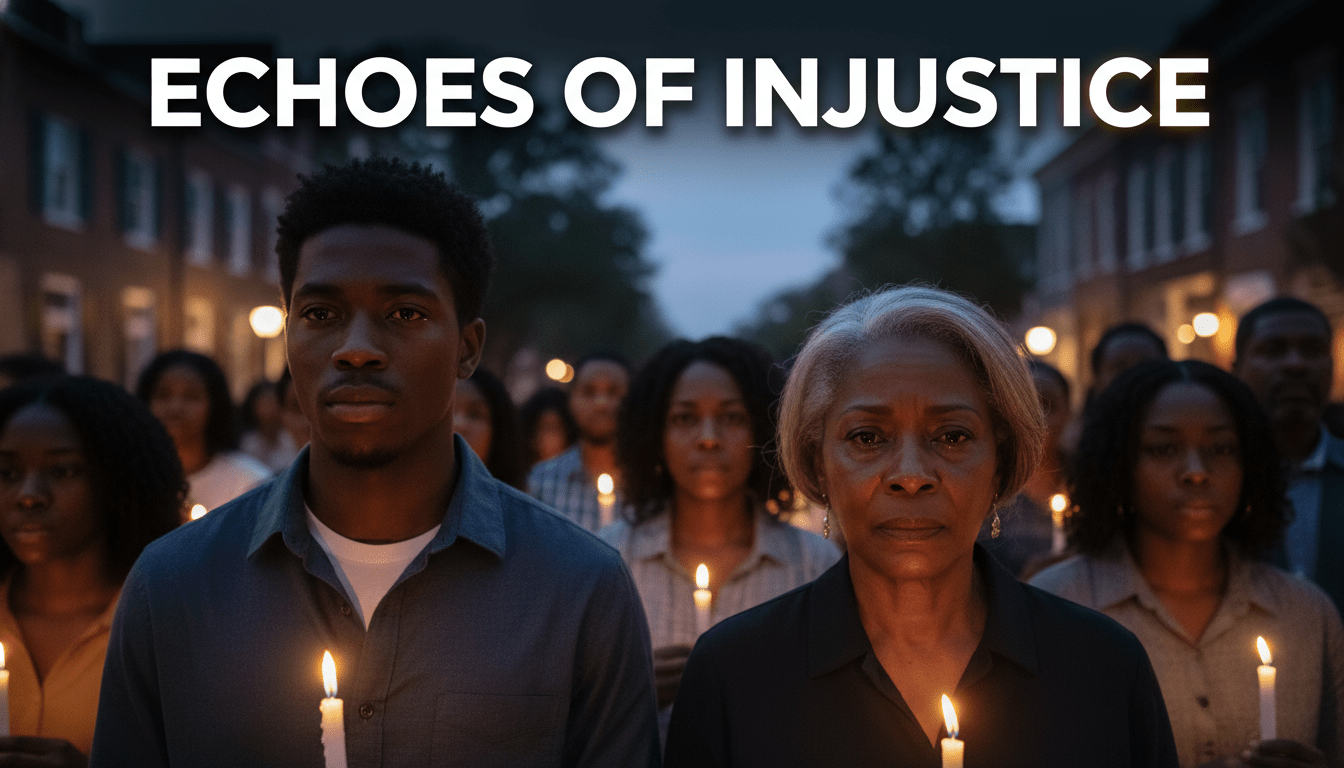
In June 2026, protests erupted across Columbia, South Carolina. Demonstrators gathered to express their outrage following a highly controversial trial (southcarolinapublicradio.org). On June 1, 2026, a Richland County jury acquitted sixty-one-year-old convenience store owner Chikei Rick Chow of murder (southcarolinapublicradio.org). The trial centered on the fatal shooting of fourteen-year-old Cyrus Carmack-Belton in May 2023 (southcarolinapublicradio.org). Civil rights groups, including the NAACP and the National Action Network, rallied on June 4 (southcarolinapublicradio.org). They condemned the verdict as a severe miscarriage of justice (southcarolinapublicradio.org).
The incident began when the teenager entered a Shell gas station convenience store (thestate.com). Chikei Rick Chow and his family falsely suspected the youth of shoplifting four bottles of water (thestate.com). Security footage later proved the teenager put the bottles back and stole nothing (thestate.com). Despite this fact, the store owner and his son Andy pursued him on foot (thestate.com). The chase ended with the teenager being shot in the back (thestate.com). Community members argued that the chase itself was a form of extrajudicial violence.
The Legal Mechanics of the Verdict
The Richland County jury deliberated for nearly eight hours before reaching a verdict (southcarolinapublicradio.org). The twelve-member panel consisted of seven Black jurors and five jurors of other races (thestate.com). This diverse group ultimately found Chikei Rick Chow not guilty of murder (southcarolinapublicradio.org). Many observers wondered how a jury with such a demographic makeup could acquit. The defense successfully raised reasonable doubt by focusing on South Carolina self-defense statutes.
Under South Carolina law, a defendant does not carry the burden to prove self-defense. Instead, the prosecution must disprove self-defense beyond a reasonable doubt (mcmillianlawsc.com). The defense team utilized the “defense of others” doctrine (thestate.com). They argued that Chikei Rick Chow fired his weapon to protect his son Andy (thestate.com). Andy Chow testified that the teenager turned and pointed a loaded pistol at him during the chase (thestate.com). This testimony created the legal space for an acquittal.
Defense of Others and Law of Withdrawal
The “defense of others” doctrine allows individuals to use deadly force to protect a third party (mcmillianlawsc.com). Legally, the defender steps directly into the shoes of the person being threatened. However, the prosecution argued that the Chows were the initial aggressors because they chased the boy (thestate.com). Generally, an initial aggressor forfeits their right to claim self-defense.
To overcome this obstacle, the defense invoked the “law of withdrawal” (thestate.com). They argued that Andy Chow effectively withdrew from the conflict (thestate.com). When the teenager allegedly pointed a gun, Andy raised his hands in surrender (thestate.com). Legally, this action restored Andy’s right to self-defense. Consequently, Chikei Rick Chow was legally authorized to use lethal force to protect his son (thestate.com). This complex legal strategy bypassed the consequences of the initial chase.
Retail Vigilantism Versus Shopkeeper Privilege
Merchants often claim they have a right to protect their property. South Carolina law codifies this through the shopkeeper’s privilege (justia.com). This privilege allows store owners to briefly detain suspected shoplifters (justia.com). However, the detention must occur in a reasonable manner and for a reasonable time (justia.com). It is meant strictly for investigating theft on or near the premises.
In contrast, retail vigilantism involves extrajudicial actions that exceed these legal limits. The Chows chased the teenager one hundred and thirty yards down a public street (thestate.com). Shopkeeper’s privilege does not authorize armed, off-property pursuits. Furthermore, citizens cannot use deadly force to protect mere property, such as water bottles. This violent overreach highlights a growing trend of private citizens acting as police officers. Historically, this trend reflects a broader shift toward systemic inequality.
The Historical Shadow of Emmett Till
The Cyrus Carmack-Belton case does not exist in isolation. Historically, Black youth have faced extreme danger when accused of retail offenses. In 1955, fourteen-year-old Emmett Till entered a grocery store in Mississippi (wikipedia.org). He was falsely accused of making improper advances toward a white female clerk (wikipedia.org). Consequently, white men abducted, tortured, and brutally murdered the child (wikipedia.org).
An all-white jury quickly acquitted the killers (wikipedia.org). That acquittal shocked the nation and galvanized the early Civil Rights Movement (wikipedia.org). The pattern of criminalizing Black children over minor commercial interactions began long ago. This history of post-Civil War oppression created a legal culture where Black lives are devalued. The suspicion of Black youth in retail spaces remains a persistent trigger for deadly violence.
The Legacy of Latasha Harlins
Another painful parallel occurred on March 16, 1991, in Los Angeles (latimes.com). Fifteen-year-old Latasha Harlins entered a local deli (latimes.com). The store owner, Soon Ja Du, falsely accused the teenager of stealing orange juice (latimes.com). In reality, Harlins had cash in her hand to pay for the beverage (latimes.com). A physical altercation ensued at the counter (latimes.com).
After the fight, Harlins put the juice down and turned to walk away (latimes.com). Soon Ja Du pulled a handgun and shot the girl in the back of the head (latimes.com). A jury later convicted Du of voluntary manslaughter (latimes.com). However, Judge Joyce Karlin exercised extreme judicial discretion (latimes.com). She suspended Du’s prison sentence and imposed probation, community service, and a minor fine (latimes.com). This lenient sentence served as a catalyst for the 1992 Los Angeles Riots (latimes.com).
Stand Your Ground and Its Disparities
Modern self-defense laws have expanded significantly over the past two decades. Historically, common law required a “duty to retreat” in public spaces (rand.org). However, many states enacted Stand Your Ground statutes (rand.org). These laws eliminate the duty to retreat if a person senses an imminent threat (rand.org). South Carolina codified this concept in its Protection of Persons and Property Act (justia.com).
Extensive research shows deep racial disparities in how these laws are applied. A study by the Urban Institute analyzed federal homicide data (pbs.org). The study found that white shooters who kill Black victims are three hundred and fifty-four percent more likely to have the shooting ruled justifiable (pbs.org). Conversely, Black defendants rarely succeed when claiming Stand Your Ground. The legal system continues to view Black citizens as inherent threats. Activists from modern civil rights movements argue these laws institutionalize racial bias.
Pretrial Immunity and the Court Battle
Before the case went to a jury, Chikei Rick Chow sought total immunity. His defense team formally invoked South Carolina’s Protection of Persons and Property Act (thestate.com). They requested a pretrial immunity hearing to throw out the charges (thestate.com). In November 2025, Circuit Court Judge Scott Sprouse presided over the hearing (thestate.com).
Judge Sprouse ultimately denied the motion for immunity (thestate.com). The judge ruled that the store owner acted as the initial aggressor (thestate.com). Therefore, Chow could not claim self-defense under the Act to avoid a trial (thestate.com). This crucial ruling forced the case to proceed to a full criminal trial (thestate.com). Although Chow lost his bid for pretrial immunity, his lawyers successfully used similar self-defense arguments in front of the jury.
Bullet in the Back: The Millisecond Turn
One of the most contentious aspects of the trial was the physical evidence. Autopsy reports showed that Cyrus Carmack-Belton was shot once directly in the back (thestate.com). The prosecution argued that shooting a fleeing child in the back cannot be self-defense. However, the defense presented a dynamic physical theory to the jury.
The defense argued that a human body can turn in a fraction of a second (thestate.com). They asserted that the teenager pointed a gun and then spun around to flee (thestate.com). In that split second, the store owner fired his weapon (thestate.com). Because the prosecution could not disprove this exact millisecond, reasonable doubt remained (thestate.com). This complex physical argument convinced the jury to acquit, leaving the family grieving.
Firearm Homicides
Public Safety and the Vigilante Mindset
The rise of Stand Your Ground laws has not made communities safer. Research published by the RAND Corporation shows these laws are associated with a suggestive increase in firearm homicides (rand.org). Specifically, researchers found an eight to eleven percent rise in homicides nationwide (rand.org). These laws seem to encourage a vigilante mindset among private citizens.
Legal experts warn that these statutes deputize untrained merchants as judge and jury. Consequently, ordinary disputes turn into lethal encounters. The tragic death of Cyrus Carmack-Belton reflects this national trend. The community continues to organize and demand systemic reforms. The struggle for Black liberation must address these deadly disparities in the justice system. Only through systemic change can families find true safety.
About the Author
Darius Spearman is a professor of Black Studies at San Diego City College, where he has been teaching for over 20 years. He is the founder of African Elements, a media platform dedicated to providing educational resources on the history and culture of the African diaspora. Through his work, Spearman aims to empower and educate by bringing historical context to contemporary issues affecting the Black community.
