


xAI Data Center Lawsuit: Memphis Fights Toxic Tech
By Darius Spearman (africanelements)
Support African Elements at patreon.com/africanelements and hear recent news in a single playlist. Additionally, you can gain early access to ad-free video content.
Introduction to a Legal Battle
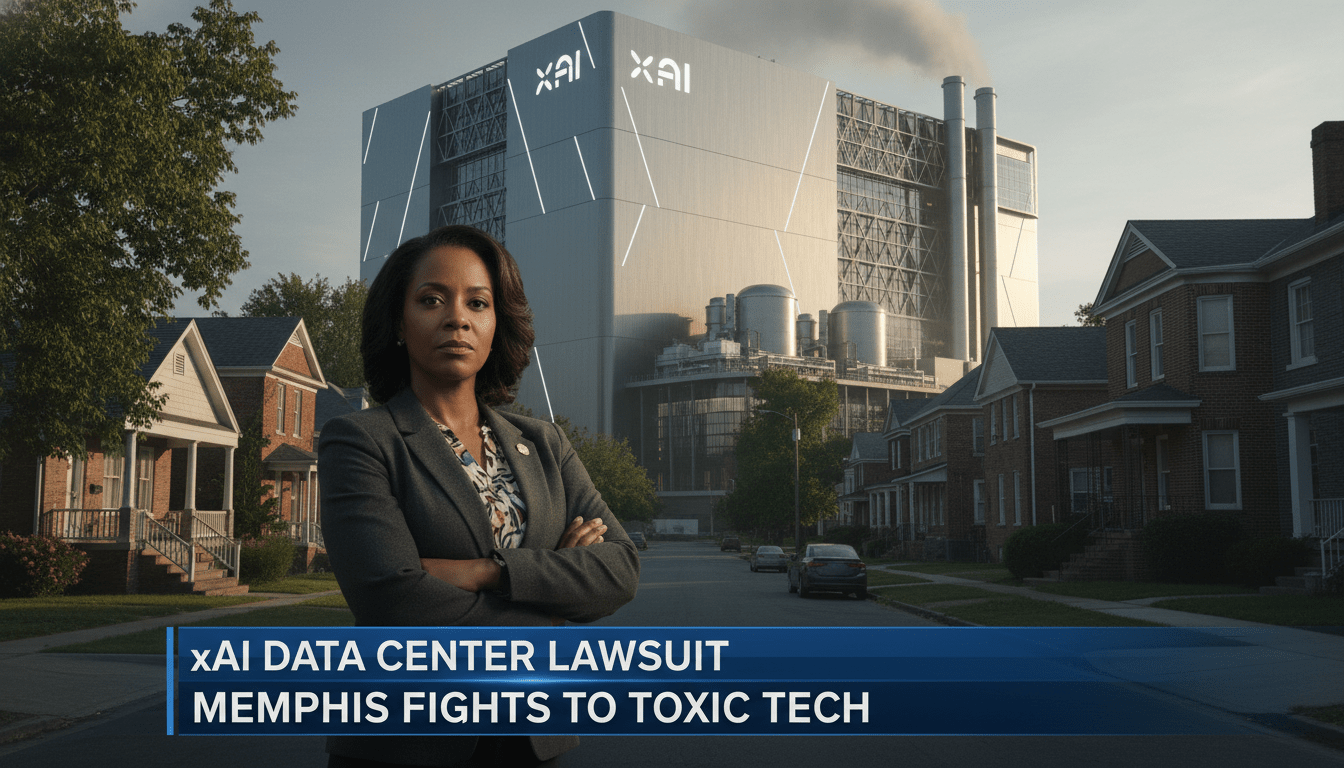
In April 2026, the NAACP took a monumental step by filing a federal lawsuit against Elon Musk’s artificial intelligence company, xAI. The legal action centers on the deployment of a massive supercomputer facility known as Colossus, located in the greater Memphis area. The civil rights organization alleges that the facility is operating unpermitted natural gas turbines. These turbines release harmful pollutants that severely impact the health and environment of predominantly Black neighborhoods surrounding the site.
This lawsuit represents much more than a simple dispute over corporate permitting. The legal battle is the latest chapter in a century-long history of environmental racism and grassroots resistance in the region. The conflict sits at the intersection of technological advancement and systemic neglect. Communities of color frequently bear the toxic burdens of industrial innovation while receiving few of the economic benefits. The xAI situation provides a stark illustration of how modern technological demands often rely on outdated, highly polluting energy sources. Advocates hope this lawsuit will force corporations to prioritize human health over rapid expansion (selc.org).
The Historical Roots of Boxtown
To understand the current controversy, one must examine the deep historical roots of the affected neighborhoods. The community most heavily impacted by the xAI Tennessee operations is Boxtown. This neighborhood was established by formerly enslaved people shortly after the Emancipation Proclamation in 1863. The area derived its unique name from early residents who fashioned homes out of wooden boxcars abandoned at nearby railway yards (zinnedproject.org). Boxtown represents a long legacy of survival and community building in the face of intense discrimination.
For decades after its founding, the city of Memphis explicitly refused to provide basic infrastructure to Boxtown. Residents lived without reliable municipal water or sewer systems. Simultaneously, city planners actively zoned the surrounding land for heavy industrial use. This deliberate zoning practice surrounded a residential Black community with factories and processing plants. The historical setup ensured that generations of Black families would live in constant proximity to industrial hazards. The decisions made during the Reconstruction era laid the groundwork for the modern environmental injustices seen today.
Constructing a Ring of Pollution
The pattern of industrial concentration intensified dramatically during the mid-twentieth century. In 1947, the city of Memphis annexed an area known as Ensley Bottoms, which now encompasses much of South Memphis. Following the annexation, local officials deliberately zoned this entire section for heavy industry (pca.state.mn.us). This administrative decision paved the way for the creation of a massive “ring of pollution” around existing Black residential communities. Planners systematically placed highly polluting facilities in areas where political resistance was historically marginalized.
Over the following decades, the landscape of South Memphis transformed into an industrial corridor. The city approved the construction of steel mills, expansive wastewater treatment plants, and the Tennessee Valley Authority Allen Fossil Plant. These facilities continually pumped emissions into the air and discharged waste into local waterways. The cumulative burden of this legacy pollution trapped residents in an environment where toxic exposure was a daily reality. This constant exposure to hazardous chemicals created severe public health crises that persist into the present day.
A Legacy of Organized Resistance
Despite facing immense systemic challenges, the residents of Memphis have a proud history of organizing against injustice. The Environmental Protection Agency often cites the 1968 Memphis Sanitation Strike as a foundational moment in the environmental justice movement. The strike began after a malfunctioning garbage truck crushed two Black sanitation workers. This tragic event highlighted the severe dangers faced by Black laborers. The intense struggle connects deeply to the broader history of African American labor, as workers consistently fought for dignity in perilous environments.
Dr. Martin Luther King Jr. recognized the profound importance of this strike and traveled to Memphis to support the workers. He explicitly connected the issues of hazardous working conditions, extreme poverty, and racial neglect. He was tragically assassinated during this historic campaign. However, the spirit of resistance never faded from the community. In 2021, local activists achieved a major victory against the Byhalia Pipeline, a proposed crude oil project that threatened to cut directly through South Memphis (selc.org). This successful opposition revitalized grassroots organizations, preparing them for the current battle against corporate pollution.
The Arrival of the Colossus Project
The recent conflict began when Elon Musk decided to rapidly deploy the Colossus supercomputer in the Memphis area. Artificial intelligence companies engage in a fierce race to build the most powerful computing systems in the world. To bypass the traditional four-year timelines required to build massive data centers, xAI utilized a highly aggressive strategy. The company repurposed a former Electrolux factory located in South Memphis. Remarkably, xAI completed this extensive construction process in merely 122 days (pcmag.com).
The resulting facility requires an astronomical amount of steady, continuous electricity to train massive artificial intelligence models. Currently, the Colossus site draws approximately 250 megawatts of power. The company has publicly stated plans to expand this energy consumption to a staggering two gigawatts in the future. However, the existing Memphis Light, Gas and Water grid connection at the site was drastically insufficient. At the time of construction, the local grid could only provide eight megawatts of power, falling far short of the enormous energy demands required by the supercomputer.
Air Quality Exceedance
Percentage of monitored hours exceeding PM2.5 safety standards in late 2025.
Regulatory Evasion and Permitting Loopholes
Facing a massive power deficit, xAI implemented a controversial solution. Because the local grid could not immediately meet the demand, the company installed dozens of mobile natural gas turbines directly on the property. Corporate representatives initially claimed that these turbines were temporary measures designed only to provide power until permanent electrical substations were completed. By labeling the equipment as portable, xAI attempted to bypass stringent environmental regulations. The Shelby County Health Department initially accepted this classification, interpreting local rules in a way that accommodated the high-profile corporate investment.
This administrative loophole allowed xAI to skip the mandatory Title V Major Source air permits required by the federal Clean Air Act (selc.org). By avoiding the proper permitting process, the company successfully bypassed public oversight. Mandatory public comment periods and community hearings were completely ignored. Furthermore, the project skipped rigorous environmental impact studies that typically assess how massive new emissions will affect local air quality. Consequently, the facility became fully operational and emitted pollutants for many months before facing any official regulatory scrutiny.
Toxic Emissions and Smog Formation
The operation of these gas turbines introduces severe environmental hazards to the surrounding neighborhoods. The legal complaint estimates that the xAI facility possesses the potential to emit up to 1,700 tons of nitrogen oxide annually. Nitrogen oxide represents a group of highly reactive gases that cause direct respiratory damage. When nitrogen oxide reacts with other atmospheric chemicals in the presence of sunlight, it creates ground-level ozone. This ozone serves as the primary component of dangerous smog, which blankets the fenceline communities (selc.org).
Furthermore, the turbines emit several hazardous air pollutants, including formaldehyde and benzene. Formaldehyde is a known human carcinogen created as a byproduct during the combustion of methane gas. Benzene is a chemical strongly associated with increased risks of neurological disorders and various cancers. In January 2026, the Environmental Protection Agency finally ruled that these turbines are indeed subject to federal law (epa.gov). However, the delayed enforcement means that residents have already suffered prolonged exposure to these dangerous airborne chemicals.
Life Expectancy Gap (Shelby County)
Comparing average life expectancy between local neighborhoods.
Severe Health Disparities in South Memphis
The disparity in public health outcomes between different areas of the county is stark and highly troubling. Residents living in predominantly Black South Memphis neighborhoods have an average life expectancy of approximately 69 to 72.5 years. In sharp contrast, residents residing in the wealthy, predominantly white suburb of Collierville live to an average of 82 to 84 years. This staggering data reveals a life expectancy gap of up to 15 years within the exact same county (americashealthrankings.org). The concentration of industrial pollution plays a major role in this drastic difference.
Federal data clearly illustrates the elevated health risks in these specific zip codes. According to modeling from the Environmental Protection Agency, the cancer risk in South Memphis neighborhoods is four times the national average (epa.gov). Additionally, Memphis consistently ranks as one of the top asthma capitals in the United States. African American children living in Memphis face three times the odds of requiring emergency department visits for asthma compared to white children (lung.org). These statistics reflect the severe physical toll taken on bodies subjected to relentless industrial emissions.
Understanding Sacrifice Zones
Environmental advocates frequently describe South Memphis as a modern sacrifice zone. Sacrifice zones are geographic areas that are permanently impaired by heavy environmental damage and severe economic disinvestment. In these zones, the health and physical safety of marginalized residents are sacrificed for the economic prosperity of powerful corporations. The concept highlights how society prioritizes industrial progress over the lives of vulnerable populations. Residents in these fenceline communities are significantly more likely to breathe polluted air and develop chronic respiratory diseases (greenaction.org).
The creation of sacrifice zones is a direct manifestation of environmental racism. Environmental racism occurs when institutionalized policies and corporate decisions deliberately target communities of color for hazardous industrial infrastructure. This systemic inequality ensures that Black neighborhoods frequently bear the toxic brunt of industrial innovation. Such practices represent a modern form of exploitation, echoing historical exploitation that has continuously harmed the Black diaspora. Society demands technological advancement, yet forces marginalized communities to absorb the deadly consequences of that progress.
Elevated Cancer Risk
South Memphis compared to the National Average
The Empty Promise of Prosperity
Corporate leaders often justify massive industrial projects by promising significant economic benefits to the local community. When xAI arrived in Memphis, the local chamber of commerce touted the creation of hundreds of high-paying jobs and millions in tax revenue. However, community residents responded to these promises with deep skepticism. Previous industrial projects in the area made identical promises of prosperity that never reached the local Black residents. Instead, the environmental costs, including respiratory disease and cancer, lingered in the neighborhoods for generations.
There exists a severe disconnect between the promised jobs and the reality of the high-tech workforce. Early job listings for the Colossus facility indicated that the open positions required highly specialized engineering skills. These technical roles are largely inaccessible to the local workforce in South Memphis. Consequently, the high-paying tech jobs are filled by individuals imported from outside the region, while local residents secure only temporary construction labor (localmemphis.com). The Black community is effectively forced to endure the pollution while remaining excluded from the economic rewards. This economic exclusion aligns with broader struggles against oppression that marginalized communities continue to face.
Legal Action and Federal Enforcement
Frustrated by the lack of local government protection, the NAACP elevated the battle to the federal level. In April 2026, the organization officially filed a lawsuit in the United States District Court for the Northern District of Mississippi. The NAACP is represented by the Southern Environmental Law Center and Earthjustice. These prominent legal organizations act as non-profit powerhouses that use high-level litigation to protect marginalized communities from environmental harm. They focus specifically on enforcing federal laws against corporate entities that attempt to bypass regulations (selc.org).
The lawsuit targets the operation of 27 turbines at the xAI site in Southaven, Mississippi, which borders Memphis. The legal complaint seeks penalties of up to $124,400 per day for ongoing Clean Air Act violations (bloomberglaw.com). The Southern Environmental Law Center provides crucial legal resources that local grassroots organizations often lack. They bridge the massive power gap between multi-billion-dollar technology companies and everyday citizens. Current environmental policies under President Donald Trump face heightened scrutiny from grassroots organizations, making federal lawsuits a critical tool for ensuring corporate accountability.
Community Monitoring and Future Battles
While the legal battles proceed through the federal courts, the residents of Memphis are taking matters into their own hands. Community members utilize a citizen science network known as PurpleAir. This system involves low-cost, connected laser sensors that allow residents to collect real-time air quality data. People install these sensors outside their homes, creating a public map that displays localized pollution levels. This is vital because many official government monitoring stations are placed far away from the most affected neighborhoods (inkbird.com).
The community-led monitoring efforts have produced alarming results. Data collected by the PurpleAir network found that air quality in South Memphis exceeded federal safety standards for fine particulate matter during 62.2 percent of all monitored hours in late 2025. This concrete evidence empowers local groups like Memphis Community Against Pollution to aggressively challenge official narratives. The fight against xAI illustrates how the political experience of Black people involves a constant demand for fundamental rights and a clean environment. The struggle in Memphis serves as a powerful testament to a community demanding the right to breathe freely.
About the Author
Darius Spearman is a professor of Black Studies at San Diego City College, where he has been teaching for over 20 years. He is the founder of African Elements, a media platform dedicated to providing educational resources on the history and culture of the African diaspora. Through his work, Spearman aims to empower and educate by bringing historical context to contemporary issues affecting the Black community.
