


How Black Food Culture is Fueling the Fight for Nolan Wells
By Darius Spearman (africanelements)
Support African Elements at patreon.com/africanelements and hear recent news in a single playlist. Additionally, you can gain early access to ad-free video content.
On July 4, 2026, an eighteen-year-old student-athlete traveled by boat to Horn Island, Mississippi (sunherald.com). Nolan Xavier Wells was a promising wide receiver for Southwest Mississippi Community College (sunherald.com). He traveled to the island with three companions for a holiday trip (sunherald.com). Nolan was the only Black young man in this group (sunherald.com). Sadly, he did not return with them that evening (sunherald.com). A massive multi-agency search began immediately (sunherald.com). On July 6, searchers discovered his body on the island shore (sunherald.com).
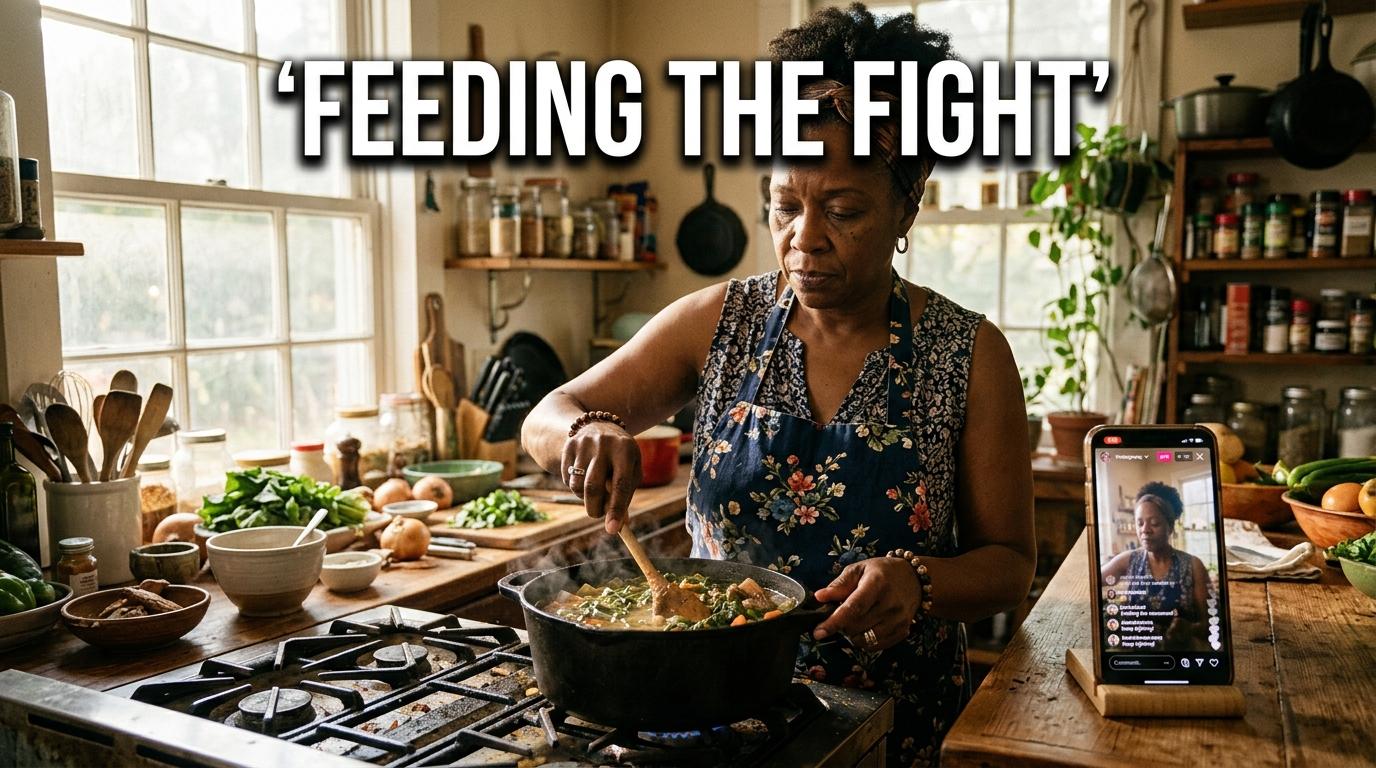
The tragic news of his death quickly crossed into the digital world. Black culinary creators across social media responded with profound grief and solidarity (theroot.com). Under the hashtag #FoodTok, creators flooded the platform with tribute cooking videos (theroot.com). They prepared traditional soul food dishes to honor the young athlete (theroot.com). Sonja Norwood, a Mississippi food creator, organized this collective digital response (theroot.com). She called on creators to host a virtual community gathering (theroot.com). This gathering was named a digital repast (theroot.com).
The Troubling Disappearance on Horn Island
The circumstances surrounding the death of Nolan Wells raised immediate alarm. His family encountered several highly suspicious details after he went missing (substack.com). Nolan traveled with three white peers, but they returned to the mainland alone (substack.com). They did not notify his family immediately (substack.com). Shockingly, they had Nolan’s mobile phone in their possession (substack.com). The family had to track the phone using a location application (substack.com).
Once the phone was recovered, the family discovered deeper concerns (substack.com). Nolan’s Snapchat account was completely wiped of all photos and videos from that afternoon (substack.com). Furthermore, local messaging logs from his phone appeared deleted (substack.com). A bystander on the island captured a video during the trip (substack.com). In that footage, a voice resembling Nolan can be heard demanding his phone back (substack.com). These anomalies sparked intense demands for a transparent investigation (substack.com).
Law Enforcement and the Fight for Autopsy Truths
The preliminary stance of local law enforcement did not satisfy the community. The Jackson County Sheriff and the coroner stated that Nolan likely died of accidental drowning (sunherald.com). They announced that there was no immediate evidence of foul play (sunherald.com). However, they confirmed that the death investigation remained active and ongoing (sunherald.com). Detectives began analyzing boat GPS data and forensic phone extractions (sunherald.com).
Due to a deep distrust of local officials, the Wells family took immediate action (sunherald.com). They ordered an independent autopsy in Washington, District of Columbia (sunherald.com). Activist Colin Kaepernick stepped forward to fund this secondary medical examination (sunherald.com). This procedure aimed to challenge the preliminary drowning ruling (sunherald.com). Meanwhile, the local District Attorney committed to presenting all final evidence to a grand jury (sunherald.com). This step ensures an impartial review of the case (sunherald.com).
National Advocates Step Into the Spotlight
To ensure justice, the Wells family retained prominent national civil rights advocates (bencrump.com). Attorney Benjamin Crump and Reverend Al Sharpton immediately joined the legal effort (bencrump.com). Benjamin Crump is widely recognized as a primary defender for grieving Black families (bencrump.com). He has previously represented the families of George Floyd, Trayvon Martin, and Breonna Taylor (bencrump.com).
Reverend Al Sharpton, founder of the National Action Network, also lent his voice to the cause (bencrump.com). The duo uses national press conferences to prevent local cases from being ignored (bencrump.com). Their involvement elevates local tragedies to a global scale (bencrump.com). They demand complete transparency from local Mississippi police (bencrump.com). This high-profile advocacy is crucial for families who suspect systemic indifference (bencrump.com). This legal battle represents the continuous making of a movement for equal justice.
Mississippi and the Long Shadow of Racial Terror
The skepticism surrounding the death of Nolan Wells is shaped by history. Historically, Mississippi recorded more racial lynchings of Black Americans than any other state (crrj.org). This history of racial violence creates profound communal trauma (crrj.org). When a Black youth dies mysteriously in the presence of white peers, suspicion is inevitable (crrj.org). Residents carry the lived experience of past systemic failures (crrj.org).
The most famous instance of this violence occurred in 1955 (crrj.org). Fourteen-year-old Emmett Till was brutally murdered in Money, Mississippi (crrj.org). An all-white jury quickly acquitted his killers despite clear evidence (crrj.org). Before Till, civil rights workers like George Lee were killed for registering Black voters (crrj.org). This pattern of violence explains why families refuse to trust preliminary accidental rulings without deep investigation (sunherald.com).
The Cultural Sanctuary of the Southern Repast
In response to this grief, #FoodTok creators revived a sacred tradition (theroot.com). The repast is a communal meal shared by loved ones after a funeral (beaconbroadside.com). Historically, this custom emerged during the post-emancipation era (beaconbroadside.com). It served as a vital tool for building kinship and surviving systemic oppression (beaconbroadside.com). Gathering around comfort foods offered emotional resilience to marginalized communities (beaconbroadside.com).
During the Jim Crow era, public gatherings of Black people were heavily surveilled (beaconbroadside.com). Consequently, the repast became a covert space for civil rights organizing (beaconbroadside.com). Activists met in private residences and Black-owned funeral homes (beaconbroadside.com). Under the guise of mourning, they established bail funds and planned protests (beaconbroadside.com). Indeed, families historically fought for economic justice while sharing plates of collard greens and yams (beaconbroadside.com).
Georgia Gilmore and the Kitchens of Protest
Using food as an instrument of rebellion has a rich history. During the Montgomery Bus Boycott of 1955, transportation was the primary logistical challenge (atlasobscura.com). Over forty thousand Black citizens refused to ride segregated city buses (wikipedia.org). They needed alternative transport to reach their jobs daily (wikipedia.org). To fund this massive carpool network, a cook named Georgia Gilmore organized a secret group (atlasobscura.com).
She established a network called “The Club from Nowhere” (atlasobscura.com). This group consisted of Black maids, cooks, and service workers who prepared baked goods (atlasobscura.com). They sold pies, pound cakes, and fried chicken to fund the movement (atlasobscura.com). Gilmore donated the weekly proceeds directly to the boycott organizers (atlasobscura.com). This funding kept the carpool system running by paying for gas and car repairs (atlasobscura.com).
Gilmore proved that domestic spaces could fuel radical political action. Her story illustrates how Black women contributed to the civil rights struggle through everyday labor (atlasobscura.com).
Georgia Gilmore’s Culinary Fundraising
Weekly revenue raised by “The Club from Nowhere” to fund transportation during the 1955–1956 Montgomery Bus Boycott.
Feeding the Revolution: The Black Panthers
The connection between food security and political protest deepened in 1969. The Black Panther Party established the Free Breakfast for Schoolchildren Program in Oakland, California (growinghope.net). They argued that systemic hunger was a form of state-sanctioned violence (growinghope.net). The program rapidly expanded to communities across the entire nation (growinghope.net).
Within a year, the Black Panthers fed over twenty thousand children before school daily (growinghope.net). This practical mutual aid program demonstrated the power of community self-reliance (growinghope.net). It directly pressured the United States government to expand federal school breakfast programs (growinghope.net). Feeding children became a radical statement of political resistance and community survival (growinghope.net).
Timeline of Culinary Activism
Georgia Gilmore mobilized cooks to fund the Montgomery Bus Boycott transportation network.
The Black Panther Party fed over 20,000 children nationwide, establishing food security as a civil right.
Social media food creators mobilized to demand justice and honor the memory of Nolan Wells.
Subverting the Algorithm on Modern Social Media
The FoodTok movement for Nolan Wells continues this legacy in the digital age (theroot.com). Today, social media algorithms promote rapid consumption and fleeting attention (theroot.com). To combat this, creators used the feed logic against itself (theroot.com). Sonja Norwood initiated the campaign under the handle @Wickdconfections (theroot.com). She urged fellow creators to ignore the pressure to remain non-political (theroot.com).
Norwood posted a video preparing Mississippi pot roast as a solemn tribute (theroot.com). She set her video to Billie Holiday’s 1939 song, “Strange Fruit” (theroot.com). This haunting anti-lynching anthem was written by Abel Meeropol (theroot.com). He was a Jewish schoolteacher deeply disturbed by Southern lynchings (theroot.com). By using this song, Norwood connected Nolan’s death to a history of racial violence (theroot.com, theroot.com). Other creators followed her lead, flooding the feed with soul food recipes (theroot.com).
The Massive Reach of Modern Digital Activism
The scale of this modern protest is truly global. The hashtag #FoodTok has accumulated over 3.8 trillion views on TikTok (edigitalagency.com.au). Additionally, the hashtag #foodtiktok is utilized across 14.3 million posts (edigitalagency.com.au). By filling these highly active digital tags with tribute videos, creators forced millions to pause (theroot.com). This method ensured that Nolan’s name was not simply scrolled past (theroot.com).
This digital repast created a virtual communal table for mourning (theroot.com). It allowed creators to bypass traditional media outlets to share their message (theroot.com). The movement demonstrated that digital spaces can preserve community memory (theroot.com). As Sonja Norwood noted, Black food culture has always been an archive of memory and struggle (theroot.com).
The Scale of Modern Digital Activism
The immense reach of modern social media platforms allows for rapid community coordination. The Nolan Wells movement mobilized these massive digital spaces to demand accountability.
A Continuous Legacy of Culinary Resistance
The viral solidarity movement on FoodTok is not a passing trend. It is a modern continuation of historical resistance. From the secret kitchens of Montgomery to the digital feeds of today, food remains a tool of survival. The simple act of cooking continues to serve as a powerful form of protest.
As the family of Nolan Wells demands justice, the online community continues to cook in solidarity. They refuse to let his story be forgotten. By preparing traditional soul food, they honor his memory and declare their resilience. In times of grief and silence, the kitchen remains a fortress of hope and resistance.
About the Author
Darius Spearman is a professor of Black Studies at San Diego City College, where he has been teaching for over 20 years. He is the founder of African Elements, a media platform dedicated to providing educational resources on the history and culture of the African diaspora. Through his work, Spearman aims to empower and educate by bringing historical context to contemporary issues affecting the Black community.
