

Health Data Privacy Under Fire in U.S.-Africa Pandemic Deals
By Darius Spearman (africanelements)
Support African Elements at patreon.com/africanelements and hear recent news in a single playlist. Additionally, you can gain early access to ad-free video content.
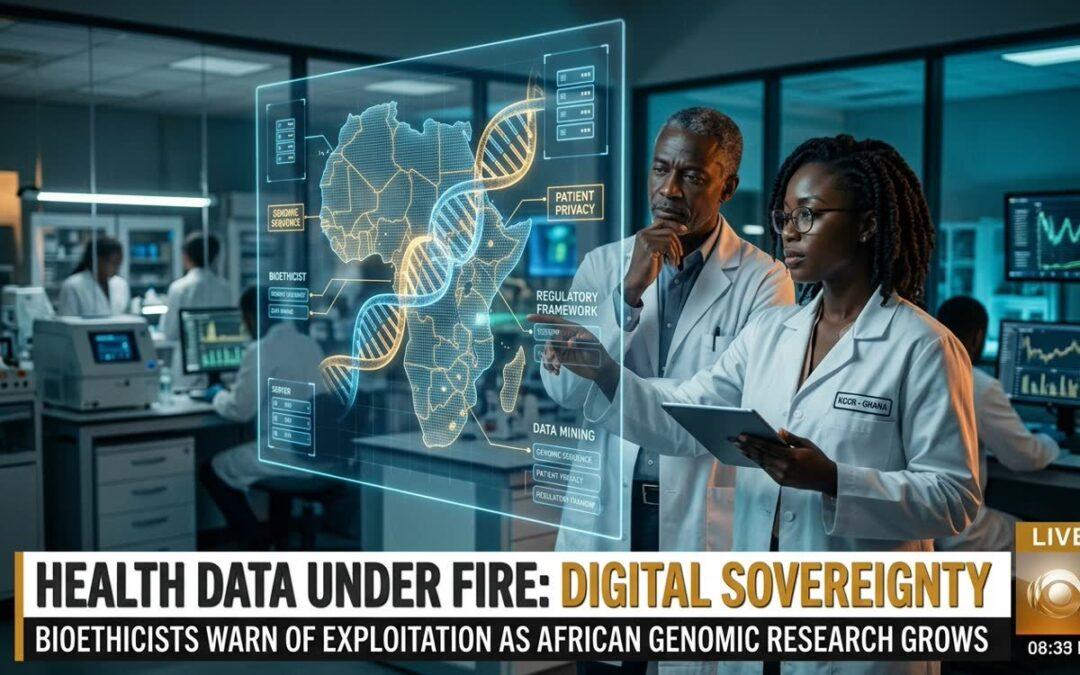
A diplomatic conflict is unfolding across the African continent and the United States. New bilateral health and pandemic readiness accords have ignited fierce debate among bioethicists, civil rights groups, and public health officials. At the center of the dispute is the issue of health data privacy and digital sovereignty. The United States government is using foreign assistance to secure unprecedented access to medical files, pathogen samples, and digital surveillance feeds across Africa (propublica.org, state.gov).
For Black diaspora observers and African legal scholars, this dispute feels familiar. The terms of these agreements carry deep historical echoes. For centuries, Western scientific institutions have treated Black populations as sources of raw material for biological extraction (nih.gov, wustl.edu). Today, that extraction has shifted into the digital realm. Patient records, viral isolates, and genetic codes are now the primary currency in international public health (bcg.com, dataethicsclub.com).
The America First Global Health Strategy and Bilateral Aid
The current policy landscape represents a major shift in how the United States manages global health assistance. The United States Department of State launched the America First Global Health Strategy to replace historic humanitarian models. Under this policy, the administration phased out traditional development structures and bypassed multilateral forums like the World Health Organization (healthpolicy-watch.news, state.gov). Instead, American diplomats introduced transactional, bilateral Memoranda of Understanding with individual African governments (citizen.org, citizen.org).
These bilateral pacts tie life-saving disease relief to explicit concessions regarding digital health infrastructure and biological specimens. Under a 4.5 billion dollar funding pool, the State Department offered financial support for domestic health programs (state.gov). In exchange, recipient countries must grant American officials direct administrative logins to national health systems (propublica.org). Partner countries must also transfer dangerous pathogen specimens within five days of detection (healthpolicy-watch.news, healthpolicy-watch.news).
This bilateral model departs sharply from the historical architecture of the President’s Emergency Plan for AIDS Relief, established in 2003. The original PEPFAR framework operated primarily through non-governmental consortiums that gathered aggregated, anonymized metrics (kff.org, kff.org). Those protections insulated individual citizens from foreign government surveillance. By contrast, the current agreements require interoperable connections across hospital intake databases, public health registries, and genomic laboratories (propublica.org). These structural mandates leave partner nations with limited control over their domestic health records (jurist.org).
“The bilateral agreements link life-saving health assistance directly to mandatory digital logins and long-term biological specimen concessions.”
Source: (propublica.org)
African legal analysts point out that this transactional approach mirrors broader patterns of foreign pressure. Historically, Western powers have tied external financing to structural concessions, much like financial extraction and debt leverage used in economic adjustment programs. When vital medicines depend on surrendering digital health infrastructure, the ethical boundary between voluntary cooperation and coercion disappears (hrw.org, citizen.org).
The Tuskegee Syphilis Study Legacy in Global Medicine
Concerns surrounding modern health data extraction cannot be separated from the historical abuses suffered by Black communities. The modern debate directly invokes the Tuskegee syphilis study legacy (nih.gov). Between 1932 and 1972, the United States Public Health Service conducted an experiment on 600 impoverished Black men in Macon County, Alabama (wikipedia.org). Researchers actively deceived these men and withheld proven penicillin treatments for decades simply to observe the fatal course of the disease (nih.gov, wikipedia.org).
The institutional mindset that enabled the Tuskegee study viewed Black bodies as experimental instruments rather than human beings entitled to full rights. A similar disregard for autonomy appeared in 1951 at Johns Hopkins Hospital. Doctors took cervical cancer cells from Henrietta Lacks without her knowledge or informed consent (nih.gov). Those cells, known worldwide as HeLa, became an immortal cell line that generated billions of dollars in commercial breakthroughs, vaccines, and scientific patents (nih.gov, nih.gov). Lacks and her family received no compensation, acknowledgment, or control over her biological materials for generations (nih.gov).
Duration of Historical Health Extraction Obligations
This medical exploitation was not confined to North America. Throughout the colonial era in Africa, European medical teams treated colonized subjects as open-air research subjects (wustl.edu). In the Congo and French Equatorial Africa, colonial authorities conducted invasive lumbar punctures and experimental drug trials to manage sleeping sickness (wustl.edu, wikipedia.org). Authorities routinely carried out these procedures by force without native consent. This history created deep mistrust between Black communities and Western biomedical programs, sustaining intergenerational family resilience against coercive medical interventions (nih.gov, wustl.edu).
Pathogen Access and Benefit Sharing After the Ebola Outbreak
Modern agreements also reflect patterns established during recent epidemic emergencies. Between 2014 and 2016, the West Africa Ebola outbreak infected more than 28,000 individuals across Guinea, Liberia, and Sierra Leone (healthpolicy-watch.news). During that crisis, foreign research teams and international laboratories collected and exported hundreds of thousands of patient blood samples (healthpolicy-watch.news, ampeid.org). Western scientists transported these specimens out of the continent without equitable Material Transfer Agreements (ampeid.org).
African researchers later dubbed these extractive practices sample safaris (healthpolicy-watch.news, ampeid.org). Foreign research institutions patented viral sequences and created lucrative medical countermeasures using those materials (thinkglobalhealth.org, ampeid.org). Meanwhile, local African scientists were routinely excluded from research authorship, intellectual property rights, and clinical leadership (healthpolicy-watch.news, thinkglobalhealth.org). When effective Ebola vaccines and therapies finally reached the market, source communities faced severe shortages and premium pricing (healthpolicy-watch.news, globalpolicywatch.com).
“During the Ebola outbreak, thousands of biological samples left West Africa without fair agreements. Western laboratories patented treatments, while local clinics faced severe shortages.”
Source: (healthpolicy-watch.news)
The global community attempted to address these structural imbalances through international law. The United Nations Convention on Biological Diversity and the 2010 Nagoya Protocol recognized that biological materials are sovereign national assets (spnhc.org, globalpolicywatch.com). Under these agreements, international access requires Prior Informed Consent and mutually agreed terms for sharing benefits (spnhc.org). These protections laid the groundwork for pathogen access and benefit sharing mechanisms within the World Health Organization (healthpolicy-watch.news, globalpolicywatch.com).
The COVID-19 pandemic shattered faith in voluntary global solidarity. When South African scientists reported the Omicron variant in late 2021, Western governments responded with immediate travel bans rather than equitable medical supplies (healthpolicy-watch.news, healthpolicy-watch.news). In response, the Africa Group at the WHO demanded binding pathogen access and benefit sharing terms in a new Pandemic Agreement (healthpolicy-watch.news, globalpolicywatch.com). They argued that real-time pathogen surveillance must guarantee direct allocations of finished vaccines and therapeutics to developing nations (healthpolicy-watch.news). By walking away from these global talks, the United States used bilateral deals to bypass these equity rules (propublica.org, citizen.org).
The Race for AI Models and Black Patient Health Data
The corporate scramble for African medical records is driven by technological developments in artificial intelligence and precision genomics. Current genomic databases are heavily unbalanced. Individuals of European ancestry make up nearly 80 percent of all participants in worldwide genetic studies (bcg.com, monash.edu). In contrast, people of African descent account for less than three percent of cataloged genetic sequences (bcg.com, nih.gov).
This demographic gap creates a major hurdle for global biotechnology companies. African populations possess the highest level of human genetic diversity on the planet (bcg.com, nih.gov). Modern artificial intelligence tools require diverse genetic samples to discover new drug targets and predict disease risks accurately (bcg.com, dataethicsclub.com). Without access to Black patient health data, proprietary machine-learning models produce inaccurate predictions and limited therapeutic applications (dataethicsclub.com, monash.edu).
Global Genomic Database Representation
Because of this dynamic, access to African medical information represents tremendous economic value. Under the State Department bilateral agreements, the American government can transfer collected health information to commercial contractors and pharmaceutical companies (propublica.org, citizen.org). Crucially, these frameworks include no rules requiring commercial firms to share patents, profits, or data access with African institutions (propublica.org, citizen.org).
Public health advocates warn that this dynamic creates an unjust pipeline. Raw biological and clinical records leave African medical facilities to train commercial algorithms in North America (dataethicsclub.com, monash.edu). Those algorithms are then turned into patented medical treatments. Eventually, these therapies are sold back to developing nations at high market prices (citizen.org, dataethicsclub.com). This dynamic recalls historical campaigns led by the Black Panther Party, who created independent community health clinics to shield Black neighborhoods from exploitative medical institutions.
Resisting Digital Colonialism in Healthcare Across Africa
The push to secure digital access has triggered strong legal and political resistance across Africa. Bioethicists, human rights attorneys, and community activists have condemned the agreements as digital colonialism in healthcare (hrw.org, dataethicsclub.com). They argue that digital colonialism occurs when foreign tech and pharmaceutical companies extract sovereign community data without fair return, local consent, or shared ownership (hrw.org, dataethicsclub.com).
In East Africa, legal challenges have already paused these initiatives. In December 2025, the United States signed a multi-year bilateral health framework with Kenya valued between 1.6 and 2.5 billion dollars (jurist.org, healthpolicy-watch.news). The Consumers Federation of Kenya filed a constitutional lawsuit challenging the deal (jurist.org). The High Court of Kenya subsequently issued conservatory orders halting implementation (jurist.org). The court ruled that handing over digital access violated Kenya’s Constitution, the Data Protection Act, and the Digital Health Act (jurist.org).
Civil society groups raised urgent concerns regarding patient privacy in Uganda and Kenya. National health databases store sensitive records regarding HIV treatment, reproductive care, and tuberculosis (hrw.org, propublica.org). Unsecured digital portals could expose vulnerable groups to public stigma and criminal prosecution if system logins are breached (hrw.org). Handing administrative credentials to foreign private contractors weakens sovereign privacy protections established by domestic parliaments (hrw.org, jurist.org).
Status of Bilateral Health Frameworks (2025–2027)
Several African sovereign states have resisted external pressure entirely. Namibia, Ghana, and Zimbabwe declined proposed funding packages outright (healthpolicy-watch.news, healthpolicy-watch.news). Officials in Windhoek refused to trade national data systems for annual funding, ending decades of aid dependency (healthpolicy-watch.news). In late 2026, Zambia established an alternative diplomatic model (african.business). Health Minister Roma Chilengi announced a five-year health agreement with the United States that removed the disputed specimen and data transfer requirements (african.business).
To defend health sovereignty, regional bodies are building collective protections. The Africa Centres for Disease Control and Prevention and the African Union are implementing the AU Data Policy Framework (africacdc.org). This policy establishes common regional standards for cross-border data transfers (africacdc.org). It also requires that access to African biological resources must directly build domestic research capacity and support sovereign technological independence (africacdc.org, globalpolicywatch.com).
The global fight over health data privacy connects current diplomacy to a long history of anti-colonial struggle. In the diaspora and across Africa, communities have recognized that bodily autonomy and political liberty are inseparable (hrw.org, dataethicsclub.com). Modern resistance to extractive bilateral contracts represents a continuation of that historic resolve. As activists join shared struggles against oppression around the world, African societies are asserting that life-saving public health cooperation must never come at the cost of basic human dignity (hrw.org, healthpolicy-watch.news).
About the Author
Darius Spearman is a professor of Black Studies at San Diego City College, where he has been teaching for over 20 years. He is the founder of African Elements, a media platform dedicated to providing educational resources on the history and culture of the African diaspora. Through his work, Spearman aims to empower and educate by bringing historical context to contemporary issues affecting the Black community.
