


DRC 2028 Presidential Vote: Is a Term Extension Coming?
By Darius Spearman (africanelements)
Support African Elements at patreon.com/africanelements and hear recent news in a single playlist. Additionally, you can gain early access to ad-free video content.
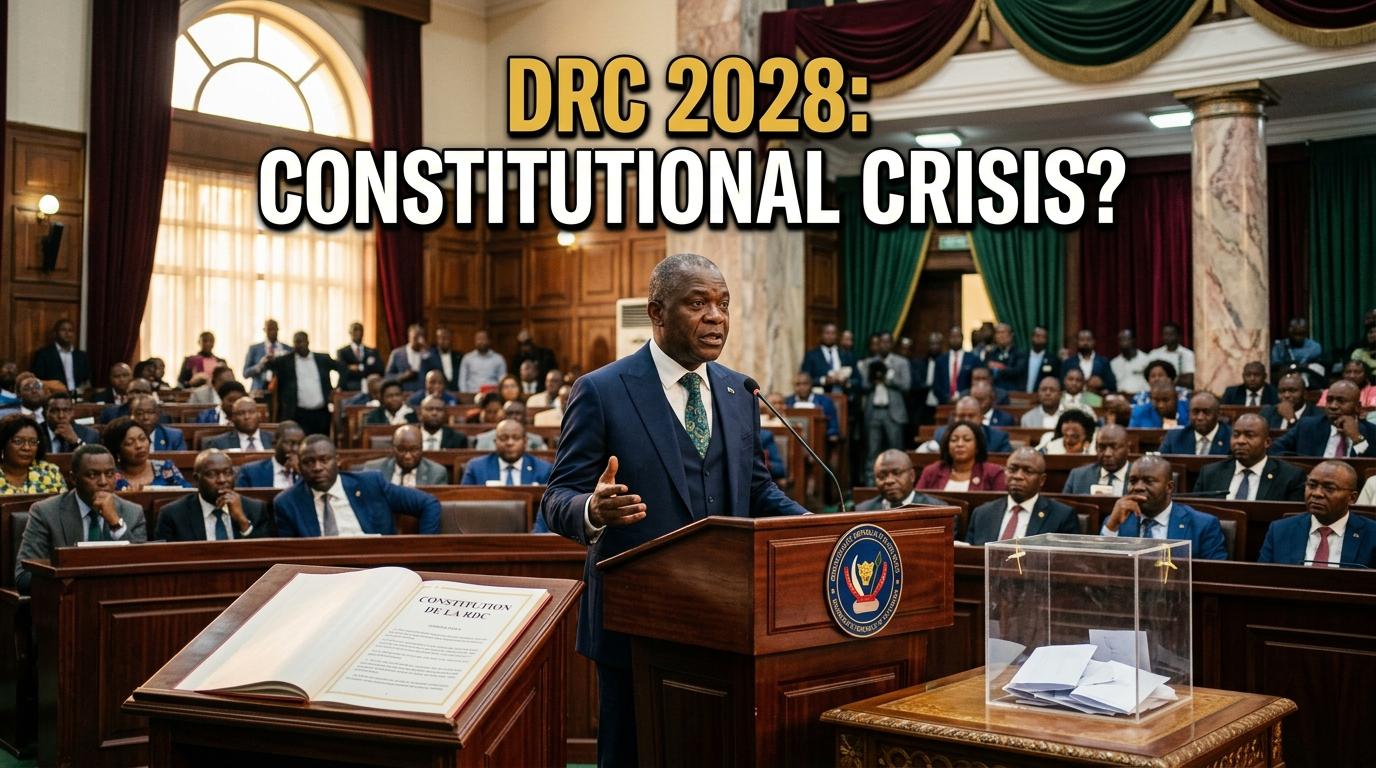
A major political conflict is developing across the Democratic Republic of the Congo. At the center of the dispute is the foundational legal document of the nation. Political leaders, legal scholars, and grassroots organizers are debating the legal parameters of the upcoming 2028 presidential election (aljazeera.com, issafrica.org). President Félix Tshisekedi is currently serving his second term, which is his final mandate under current constitutional rules (aljazeera.com).
However, supporters of the ruling coalition have initiated conversations about replacing the existing charter entirely. Critics describe this effort as an attempt to reset presidential term limits. Observers across the global African diaspora recognize this pattern from earlier eras of state consolidation. The ongoing debate touches on core questions of political self-determination and institutional accountability in Central Africa.
Shadows of Mobutu and Executive Overreach
The historical backdrop of Congolese governance explains why term limits remain such a sensitive issue today. Following independence and the assassination of Patrice Lumumba, Mobutu Sese Seko seized control of the state in 1965 (wikipedia.org). Over more than three decades, Mobutu built a centralized authoritarian regime that altered the supreme law of the land at least seventeen times (issafrica.org, constitutionnet.org). Each legal adjustment removed democratic safeguards and expanded executive authority.
During that era, Mobutu outlawed rival political organizations and established a single-party state. The constitution became an instrument of personal control rather than a protector of citizen rights. This historical experience created widespread public suspicion regarding executive-led legal changes. Generational struggles against authoritarian rule laid the groundwork for modern resistance movements across the country (hrw.org).
Mobutu Autocracy
Seventeen constitutional revisions systematically dismantled multiparty systems to build a personalized regime.
Sun City Peace Pact
Inter-Congolese dialogue forged the 2006 Constitution, installing Article 220 as an untouchable lock on presidential terms.
The Glissement Crisis
Joseph Kabila delayed elections for two years before street protests and church mediation forced a transfer of power.
Fourth Republic Debate
Tshisekedi administration proposes a new foundational charter, raising questions regarding term resets.
The Sun City Accords and the 2006 Compromise
The foundation of current Congolese law emerged directly from peace negotiations that concluded the Second Congo War. That conflict involved nine African nations and numerous rebel factions, causing immense civilian suffering and institutional division (wikipedia.org). Belligerents, civil society leaders, and opposition groups gathered in Sun City, South Africa, in 2002 to negotiate a transitional political framework (issafrica.org, constitutionnet.org).
The resulting 2006 Constitution established the Third Republic. Congolese voters ratified the document through a nationwide popular referendum with 84.3 percent support (constitutionnet.org). This charter introduced a semi-presidential system designed to prevent the return of autocracy (issafrica.org, constitutionnet.org). It balanced authority between the president, the prime minister, and provincial administrations while protecting fundamental civil liberties (issafrica.org, constitutionnet.org).
Central to this legal framework was Article 220, known as an intangible provision (issafrica.org, constitutionnet.org). Article 220 explicitly prohibits any constitutional amendment that alters universal suffrage, the republican form of government, or the limit of two presidential terms (issafrica.org, constitutionnet.org). In addition, Article 64 gave citizens a constitutional duty to oppose anyone attempting to seize or maintain power unlawfully (issafrica.org, hrw.org).
Joseph Kabila and the Memory of Glissement
The resilience of the 2006 Constitution faced a major test between 2015 and 2018 under former President Joseph Kabila. As his second elective mandate neared its conclusion, his government claimed financial and logistical hurdles prevented timely voting (issafrica.org). This delay tactic became known across the nation as glissement, or slippage (issafrica.org, democracyinafrica.org).
During that political crisis, opposition political parties mobilized large civic demonstrations to defend term limits (issafrica.org). Félix Tshisekedi and the historic opposition party, the Union pour la Démocratie et le Progrès Social (UDPS), were leaders in that resistance (issafrica.org). Opposition figures invoked Article 64 to demand adherence to the constitutional calendar (issafrica.org).
Domestic mobilization, church mediation, and international diplomatic pressure eventually prevented an open constitutional revision. Delayed general elections occurred in December 2018 (issafrica.org, democracyinafrica.org). The election produced the first peaceful transfer of executive power in Congolese history, bringing Félix Tshisekedi to the presidency (issafrica.org, brookings.edu). This transition established an important democratic precedent that current political actors now cite (issafrica.org).
Félix Tshisekedi and the Fourth Republic Push
After winning a second term in December 2023, President Tshisekedi adopted a new stance toward the 2006 Constitution (aljazeera.com). Government officials began describing the document as an outdated charter drafted abroad by belligerents during wartime (issafrica.org, constitutionnet.org). Administration spokespersons argue that the current semi-presidential model creates institutional gridlock between the head of state and parliament (issafrica.org).
Rather than attempting to amend Article 220 directly, the ruling coalition has proposed replacing the entire document to inaugurate a Fourth Republic (issafrica.org, constitutionnet.org). Under comparative constitutional law, enacting a new constitution creates an entirely new legal order (issafrica.org, constitutionnet.org). This legal maneuver resets term limits, allowing an incumbent to seek office under the new rules (issafrica.org, constitutionnet.org). The process reflects broader debates about decolonizing political structures to better suit local institutional realities.
Article 64 and Opposition Mobilization
The prospect of a revised basic law has united political opposition parties and civil society organizations against the government. Leaders such as Martin Fayulu and Moïse Katumbi have organized rallies to protest what they label an unconstitutional power grab (aljazeera.com, issafrica.org). Opponents have formed political alliances centered around the enforcement of Article 64 (issafrica.org).
These groups assert that modifying the fundamental rules of governance risks destabilizing a fragile political environment (issafrica.org). The opposition has warned that bypassing term caps will lead to civil disobedience and public boycotts of administrative bodies (issafrica.org, hrw.org). These disputes highlight ongoing questions regarding democratic voting power and the protection of constitutional rights.
Opposition strategists emphasize that the December 2023 presidential elections suffered from significant logistical failures (democracyinafrica.org, democracyinafrica.org). The Independent National Electoral Commission faced criticism after voting was unofficially extended across multiple days (aljazeera.com, democracyinafrica.org). Because administrative trust remains fragile, critics argue that introducing a referendum campaign will deepen public divisions (issafrica.org).
The Church and Grassroots Civil Action
Religious bodies serve as influential institutions in Congolese civic life, often compensating for weak state infrastructure (aljazeera.com). The National Episcopal Conference of Congo (CENCO) and the Church of Christ in Congo (ECC) represent a large majority of the population (aljazeera.com). Historically, these religious bodies have maintained institutional independence and mediated serious political crises (aljazeera.com).
Both CENCO and the ECC have expressed reservations regarding constitutional revisions ahead of the 2028 elections (aljazeera.com). Church leaders emphasize that altering presidential term lengths threatens national unity and undermines the post-war consensus (aljazeera.com). Their joint electoral observation teams provide independent assessments during general elections (aljazeera.com, democracyinafrica.org).
Alongside faith institutions, youth-led civic movements like LUCHA (Lutte pour le Changement) and Filimbi remain active in urban centers (hrw.org). These grassroots activists organize peaceful demonstrations to defend democratic norms (hrw.org). However, state security forces have periodically broken up public protests and detained activists (hrw.org). The contest over civic space remains an ongoing struggle for local human rights advocates (hrw.org).
Article 220 Lock
Prohibits term changes under the 2006 charter, prompting the ruling coalition to advocate a full replacement.
Faith Coalitions
CENCO and the ECC mobilize nationwide moral authority and independent observers to oppose term extensions.
Eastern Insecurity
Ongoing conflict with M23 rebels threatens logistical preparation, raising concerns about election delays.
Critical Minerals
Global demand for cobalt, copper, and coltan complicates international diplomatic pressure on domestic governance.
Eastern Insecurity, Minerals, and Geopolitics
The constitutional debate occurs alongside severe security challenges in the eastern provinces of North Kivu, South Kivu, and Ituri (aljazeera.com, reliefweb.int). The resurgence of the M23 rebel movement, allied with the Alliance Fleuve Congo (AFC), has displaced over a million residents (reliefweb.int, aljazeera.com). United Nations investigators have documented foreign military support assisting rebel operations in these resource-rich territories (hrw.org, aljazeera.com).
Government officials have noted that holding national elections in 2028 could prove difficult if armed conflicts remain unresolved (issafrica.org, constitutionnet.org). Opposition groups worry that regional instability might serve as a justification for administrative delays (issafrica.org, constitutionnet.org). Understanding these competing interests requires analyzing how natural resources intersect with state power dynamics across the region.
The DRC holds vital global reserves of cobalt, copper, tantalum, and coltan (justice.gov). These minerals are essential components for consumer electronics and the global green energy transition (justice.gov, responsiblestatecraft.org). Foreign governments and international corporations frequently balance governance concerns with securing access to mining supply chains (responsiblestatecraft.org). As a result, international diplomatic responses to domestic legal reforms remain cautious (responsiblestatecraft.org).
Continental Norms and Regional Precedents
The political contest in Kinshasa connects to broader governance trends across the African continent. Treaties like the African Charter on Democracy, Elections and Governance formally discourage unconstitutional alterations of legal frameworks (issafrica.org). Regional bodies such as the African Union and the Southern African Development Community emphasize democratic stability (issafrica.org).
In practice, regional institutions have responded unevenly when civilian executives utilize referendums or judicial rulings to alter term limits (issafrica.org). While military coups frequently face diplomatic sanctions, constitutional rewrites often receive less regional pushback (issafrica.org). This dynamic places the primary responsibility for defending constitutional boundaries on domestic civil society (issafrica.org).
Observers in the African diaspora monitor these developments closely. The political history of Central Africa shows that durable stability depends upon predictable transfers of executive authority. Bypassing legal boundaries established through historic compromises can increase political volatility and weaken institutional trust.
Looking Ahead to the 2028 Vote
The struggle over the Congolese constitution reflects competing visions for the future of the nation. Supporters of constitutional replacement argue that a new charter can modernize public administration, reform provincial elections, and eliminate structural inefficiencies (issafrica.org). They maintain that a newly structured state will be better equipped to address persistent security and economic challenges (issafrica.org).
Opponents counter that abandoning the 2006 framework unravels a foundational peace agreement that ended years of warfare (aljazeera.com, issafrica.org). They stress that respecting established presidential term limits is necessary for preserving democratic norms (aljazeera.com, issafrica.org). As the 2028 election approaches, the legal strategies and grassroots mobilizations emerging in Kinshasa will play a central role in shaping the political trajectory of Central Africa (aljazeera.com, issafrica.org).
About the Author
Darius Spearman is a professor of Black Studies at San Diego City College, where he has been teaching for over 20 years. He is the founder of African Elements, a media platform dedicated to providing educational resources on the history and culture of the African diaspora. Through his work, Spearman aims to empower and educate by bringing historical context to contemporary issues affecting the Black community.
