


Niger Uranium Mine Takeover: Why France Lost Its Grip
By A. Darius Spearman (africanelements)
Support African Elements at patreon.com/africanelements and hear recent news in a single playlist. Additionally, you can gain early access to ad-free video content.
The Spark in the Desert Sands
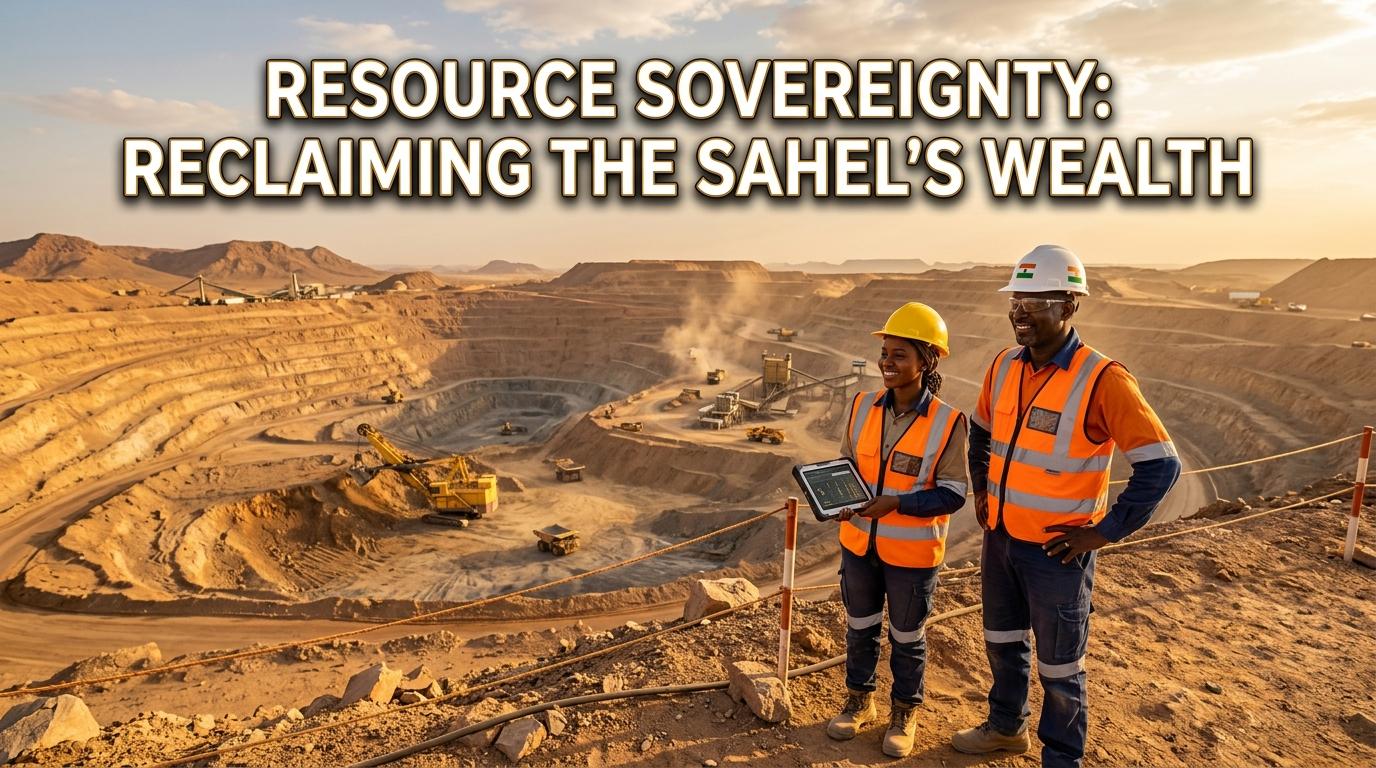
A quiet revolution has unfolded across the desert landscapes of northern Niger. For over five decades, French state corporations controlled the vast mineral wealth buried beneath the Sahara. That era came to an end when the Nigerien government transferred the historic SOMAÏR uranium operations to a wholly state-owned enterprise known as Tsumco SA (mining.com, mining.com.au). This decisive move stripped the French nuclear conglomerate Orano of its last active extraction assets in the country (orano.group, mining.com).
The takeover is more than a standard business dispute. It represents a dramatic turning point in West African economic sovereignty. For generations, African nations watched their natural wealth fuel foreign power grids while local populations remained in darkness (beyondnuclearinternational.org, ecologic.eu). Today, Niger is rewriting those rules, challenging legacy agreements, and asserting direct sovereign control over its most valuable strategic asset (thepanafrikanist.com, peoplesdispatch.org).
Colonial Roots of Nigerien Uranium
The story began in 1957 when French geologists from the Bureau de Recherches Géologiques et Minières searched for copper in the Azelik region (world-nuclear.org, wikipedia.org). Instead of copper, they discovered massive sandstone deposits rich in uranium (wikipedia.org). France quickly realized that this desert territory held the key to its strategic nuclear ambitions, both for military deterrence and domestic power generation (fpri.org, world-nuclear.org).
Niger gained formal political independence in 1960, but economic control remained tied to Paris through bilateral treaties (fpri.org). In 1968, France established the Société des Mines de l’Aïr, known as SOMAÏR, near the northern oasis town of Arlit (world-nuclear.org, wikipedia.org). Commercial mining began in 1971 under terms that granted French state entities a commanding 63.4 percent stake, leaving Niger with a minority share through its state asset holding firm, SOPAMIN (world-nuclear.org, world-nuclear.org). A second major underground mine, COMINAK, opened in 1978 to further secure the French energy supply (world-nuclear.org, wikipedia.org).
The Web of Françafrique
The unequal mining arrangements were part of a broader system known as Françafrique. This informal network preserved French economic, monetary, and military hegemony across its former colonies (fpri.org). Through preferential trade agreements, Paris secured access to strategic minerals while controlling national currencies via the CFA franc system (fpri.org). Consequently, wealth flowed outward to European conversion facilities, leaving local infrastructure underdeveloped (thepanafrikanist.com, ecologic.eu).
Whenever African leaders attempted to alter these terms, political instability frequently followed. In 1974, Nigerien President Hamani Diori demanded higher uranium prices to fund relief during a devastating Sahelian drought (fpri.org, wikipedia.org). Within months of challenging French pricing terms, Diori was overthrown in a military coup led by Seyni Kountché (fpri.org, wikipedia.org). For decades thereafter, foreign corporations operated with minimal fiscal interference from Niamey (fpri.org).
The Paradox of Plenty in Arlit
Over five decades of active mining yielded approximately 158,889 metric tonnes of uranium from the northern deserts (world-nuclear.org, world-nuclear.org). This output made Niger one of the top ten uranium producers globally (world-nuclear.org, iaea.org). Yet, the financial proceeds rarely reached the general population. While Nigerien uranium illuminated millions of French households, nearly 70 percent of Nigeriens remained without electricity (beyondnuclearinternational.org, ecologic.eu). More than 40 percent of the population lived below the extreme poverty line (ecologic.eu).
The environmental costs in the mining hub of Arlit were severe. Independent investigations by organizations like CRIIRAD and Greenpeace documented millions of tonnes of radioactive tailings left exposed to desert winds (hibakusha-worldwide.org, eeb.org). Local communities suffered from depleted aquifers and contaminated drinking water supplies (eeb.org, beyondnuclearinternational.org). Mineworkers and residents faced elevated rates of respiratory ailments and unexplained illnesses without adequate medical support (hibakusha-worldwide.org, beyondnuclearinternational.org). The extraction model embodied the classic paradox of plenty (thepanafrikanist.com, peoplesdispatch.org).
Decades of Friction and Broken Deals
Tensions between Niger and French operators intensified in the early twenty-first century. During the late 2000s, President Mamadou Tandja attempted to renegotiate mining contracts, demanding that Areva increase royalty payments and end tax exemptions (fpri.org, theguardian.com). While new terms were agreed upon in 2014 under President Mahamadou Issoufou, the financial benefits remained limited (fpri.org, theguardian.com). The collapse of global commodity prices following the 2011 Fukushima disaster prompted foreign firms to slow project investments across the region (world-nuclear.org, wikipedia.org).
A central point of contention was the massive Imouraren deposit, considered one of the largest undeveloped uranium reserves in the world (mining.com, mining.com.au). Orano repeatedly postponed industrial development at Imouraren, citing unfavorable international prices (world-nuclear-news.org, orano.group). Local officials argued that the foreign firm was holding strategic permits inactive while denying the state crucial economic revenues (thepanafrikanist.com, miningfocusafrica.com). Similar to historic broken institutional promises, these delays deepened local skepticism regarding Western corporate partnerships (fpri.org).
The 2023 Shift and the Alliance of Sahel States
A fundamental rupture occurred in July 2023 when the National Council for the Safeguard of the Homeland, led by General Abdourahamane Tchiani, assumed power in Niamey (apnews.com, fpri.org). The new administration quickly moved to dismantle traditional diplomatic and military ties with France (apnews.com, apnews.com). French troops were ordered to leave the country, and long-standing bilateral defense agreements were scrapped (apnews.com, fpri.org).
Furthermore, Niger joined forces with neighboring Mali and Burkina Faso to establish the Alliance of Sahel States (fpri.org, africansecurityanalysis.com). This confederation emerged out of a collective desire to establish mutual defense and break free from external geopolitical domination (fpri.org, africansecurityanalysis.com). The alliance coordinated policies on resource nationalism across the Sahel (fpri.org). In a unified stance, member nations also withdrew from the Economic Community of West African States, signaling their complete pivot away from Western-aligned regional frameworks (fpri.org, africansecurityanalysis.com).
Reclaiming the Mines: From Orano to Tsumco
The military government systematically applied its sovereignty doctrine to the extractive sector. In June 2024, the state revoked Orano’s exploitation permit for the massive Imouraren deposit, citing years of development delays (mining.com.au, world-nuclear-news.org). One month later, authorities rescinded the operating license for the Madaouela deposit previously held by Canada-based GoviEx Uranium (mining.com, miningfocusafrica.com). These steps demonstrated that Western mining firms would no longer hold exclusive claims without active domestic development (thepanafrikanist.com, miningfocusafrica.com).
The transition culminated in the complete takeover of SOMAÏR. After seizing operational control in late 2024, the Council of Ministers formally nationalized the mining operation (mining.com, world-nuclear-news.org). The government created Tsumco SA, an entirely state-owned entity, and awarded it the official large-scale operating permit for the In Azaoua concession (mining.com, mining.com.au). Niger also placed approximately 1,300 metric tons of processed yellowcake concentrate, valued at roughly €250 million, up for sale on open international markets (mining.com, world-nuclear-news.org).
The Global Fallout and Legal Battles Ahead
The expulsion of French operators has sent shockwaves through international nuclear supply chains. France and the wider European Union were forced to accelerate procurement from alternative suppliers in Kazakhstan, Uzbekistan, Canada, and Australia (world-nuclear.org, iaea.org). Meanwhile, Orano launched arbitration proceedings against the Nigerien state at the International Centre for Settlement of Investment Disputes (world-nuclear-news.org, orano.group, orano.group). The corporation is seeking substantial financial compensation for expropriated equipment and canceled concessions (world-nuclear-news.org, africanlawbusiness.com).
Despite legal friction, Niamey is charting an independent path. The government has engaged in discussions with international partners, including state entities from Russia, China, Turkey, and Iran, to secure new investment and technical expertise (thepanafrikanist.com, peoplesdispatch.org). However, significant logistical challenges remain. Because Niger is landlocked, exporting refined yellowcake requires secure transit corridors through neighboring coastal ports (fpri.org, peoplesdispatch.org). Transport disruptions and trade barriers present continuous economic hurdles for the state operator (world-nuclear-news.org, peoplesdispatch.org).
Mineral Sovereignty and the Pan-African Future
The reclamation of SOMAÏR represents a broader awakening across the African continent. From Malian gold mines to Congolese cobalt reserves, African nations are actively renegotiating concession terms that favored foreign corporations for generations (thepanafrikanist.com, peoplesdispatch.org). This push for resource self-determination mirrors broader historical struggles for economic justice found throughout the global Black diaspora.
True liberation requires more than just replacing foreign operators with state companies. African intellectuals have long argued that shedding colonial influences must extend into industrial policy, technology transfer, and education. To succeed, Niger must channel its newly acquired mineral proceeds directly into local power generation, public schools, and healthcare infrastructure (ecologic.eu, peoplesdispatch.org). By breaking the chains of Françafrique, Niger has taken a bold step toward reclaiming its heritage, its resources, and its sovereign future (thepanafrikanist.com, fpri.org).
About the Author
A. Darius Spearman is a professor of Black Studies at San Diego City College, where he has been teaching for over 20 years. He is the founder of African Elements, a media platform dedicated to providing educational resources on the history and culture of the African diaspora. Through his work, Spearman aims to empower and educate by bringing historical context to contemporary issues affecting the Black community.
