

The Hidden War: Indigenous Resistance to Amazon Organized Crime
By Darius Spearman (africanelements)
Support African Elements at patreon.com/africanelements and hear recent news in a single playlist. Additionally, you can gain early access to ad-free video content.
In May 2026, a historic coalition brought a powerful message to the global stage. Indigenous and Afro-Indigenous leaders traveled to the United Nations. They submitted an urgent petition about a severe security crisis. Organized crime has moved deep into their ancestral rainforest territories. Criminal syndicates are replacing traditional communities with violent enterprises. These communities represent the front lines of environmental defense.
However, state governments repeatedly offer the wrong solutions. They send armed troops into fragile environments. This militarization fails to protect the people. In fact, it often brings more violence and displacement. The communities demand a completely different approach. They want community-led security and legal recognition. This struggle highlights a profound fight for survival and territorial rights. It represents a global call for justice that the world can no longer ignore.
The Evolution of a Multi-Layered Threat
The current crisis did not happen overnight. It grew from a forty-year evolution of illegal economies. During the 1980s, powerful Colombian cartels discovered the Amazon. Groups like the Medellín and Cali cartels needed safe transit routes. The dense river networks provided perfect cover. They moved cocaine toward Atlantic ports with relative ease. This period marked the beginning of a criminal takeover.
By the 1990s, the landscape shifted dramatically. Brazilian prison-based gangs expanded their operations. Organizations like the Comando Vermelho and the Primeiro Comando da Capital moved into the rainforest. They wanted direct control over the lucrative supply chain. These groups established bases in remote border regions. They used the lack of state presence to build massive illegal empires.
In 2016, a critical turning point occurred. A fragile non-aggression pact between these two Brazilian factions collapsed. This failure sparked a brutal war for control. The violence quickly spilled from urban prisons into rural rivers. Gangs fought over strategic transit routes. This instability allowed them to diversify their criminal activities. They moved rapidly into illegal gold mining, timber trafficking, and land grabbing (crisisgroup.org).
Historic Afro-Indigenous Land Struggles
Afro-descendant communities in the Amazon possess a long history of resistance. Many communities, known as Quilombolas, trace their roots to escaped enslaved people. These ancestors established hidden settlements far from colonial reach. They developed a unique survival strategy known as escape agriculture. This method prioritized secrecy and mobility over traditional farming. It allowed them to grow food without drawing attention. Their efforts created a lasting legacy of environmental stewardship.
Today, the Afro-Indigenous identity remains complex and heavily marginalized. These individuals hold both African and Indigenous ancestry. They often face dual erasure from society and the law. Colonial legal systems frequently ignored their unique heritage. Despite constitutional promises, their struggle for land continues. The Brazilian Constitution of 1988 guaranteed land rights to Quilombola descendants. However, the reality looks vastly different today.
Only five percent of Afro-descendant territories in Latin America have formal legal recognition. The remaining lands sit dangerously unprotected (rightsandresources.org). This lack of documentation leaves them vulnerable to criminal takeovers. The struggle mirrors other global movements. It recalls how Black and Indigenous bonds formed strong resistance networks in the past. These communities fight the exact same colonial forces today.
The Amazon Security Crisis in Numbers
Narco-Deforestation and Environmental Loss
Criminal syndicates no longer rely solely on drug trafficking. They have transformed into complex transnational corporations. This shift has created a terrifying phenomenon known as narco-deforestation. Drug trafficking organizations clear massive areas of rainforest. They use this cleared land for illegal cattle ranching. This process allows them to launder millions in illicit profits. The cattle industry provides the perfect cover for dirty money. It remains loosely regulated and highly profitable.
The environmental devastation is staggering. Research links nearly ninety percent of current Amazon deforestation to illegal activities (amazonwatch.org). Drug traffickers act as narco-ranchers, destroying the fragile ecosystem. They seize land from Indigenous and Afro-descendant communities. This violent displacement removes the most effective protectors of the forest. The criminals convert untraceable cash into legitimate private assets.
This corporate model allows criminal groups to adapt quickly. If drug prices fall, they simply expand their illegal mining operations. They use the same hidden routes for drugs, gold, and timber. The forest becomes a mere tool for financial gain. The people who have protected the Amazon for centuries suffer the devastating consequences (amazonwatch.org).
Why Militarization Fails the People
State governments consistently react to the crisis with military force. They send heavily armed troops into remote rainforest communities. However, Indigenous leaders argue this approach does terrible harm. Militarized raids are often temporary and chaotic. They rarely establish any form of permanent safety. In many cases, the military presence restricts the daily lives of local people. It hinders traditional governance while failing to stop the criminals.
Ercilia Castañeda, a prominent Indigenous leader, fiercely criticized these state tactics. She noted that military interventions often lead to forced displacement. Communities suffer immense psychological harm during these aggressive raids. The troops do not address the root causes of the crime. They ignore the profound state neglect in rural areas. There is a complete lack of basic public services. Schools, hospitals, and clean water remain desperately scarce (un.org).
This dynamic echoes a familiar era of mass incarceration in other nations. The state uses sheer force rather than investing in the community. Leaders report that some state forces even cooperate with the criminal syndicates. The people cannot trust the very institutions meant to protect them. They demand an immediate end to this violent cycle.
The Afro-Descendant Land Recognition Gap
The UN Petition and Global Diplomacy
In early 2026, Amazonian leaders decided they had endured enough. They organized a massive diplomatic push on the international stage. Over sixty leaders gathered in Pucallpa, Peru. They represented communities from Brazil, Colombia, Ecuador, and Peru. Together, they issued the powerful Pucallpa Declaration. This document stated that Indigenous territorial control is the only effective defense. It firmly argued against state-sponsored violence and systemic neglect.
Following this declaration, leaders traveled directly to the United Nations. Representatives from major Amazonian organizations delivered a formal petition. They addressed the UN Permanent Forum on Indigenous Issues. Leader Jamner Manihuari emphasized the severe reality of the situation. He called the crisis a direct attack on their survival and their governance (un.org). The leaders demanded immediate international attention and tangible support.
However, the UN forum holds limited power. It functions purely as an advisory body without enforcement capabilities. It cannot send peacekeepers to stop the violence. Global political shifts, including the administration of President Donald Trump in the United States, greatly impact international funding and environmental policies (un.org). Despite these limitations, the petition achieved a crucial goal. It brought the crisis into the global spotlight. It linked local suffering to a broader history of historical exploitation. The leaders forced the world to finally listen.
Community-Led Security Solutions
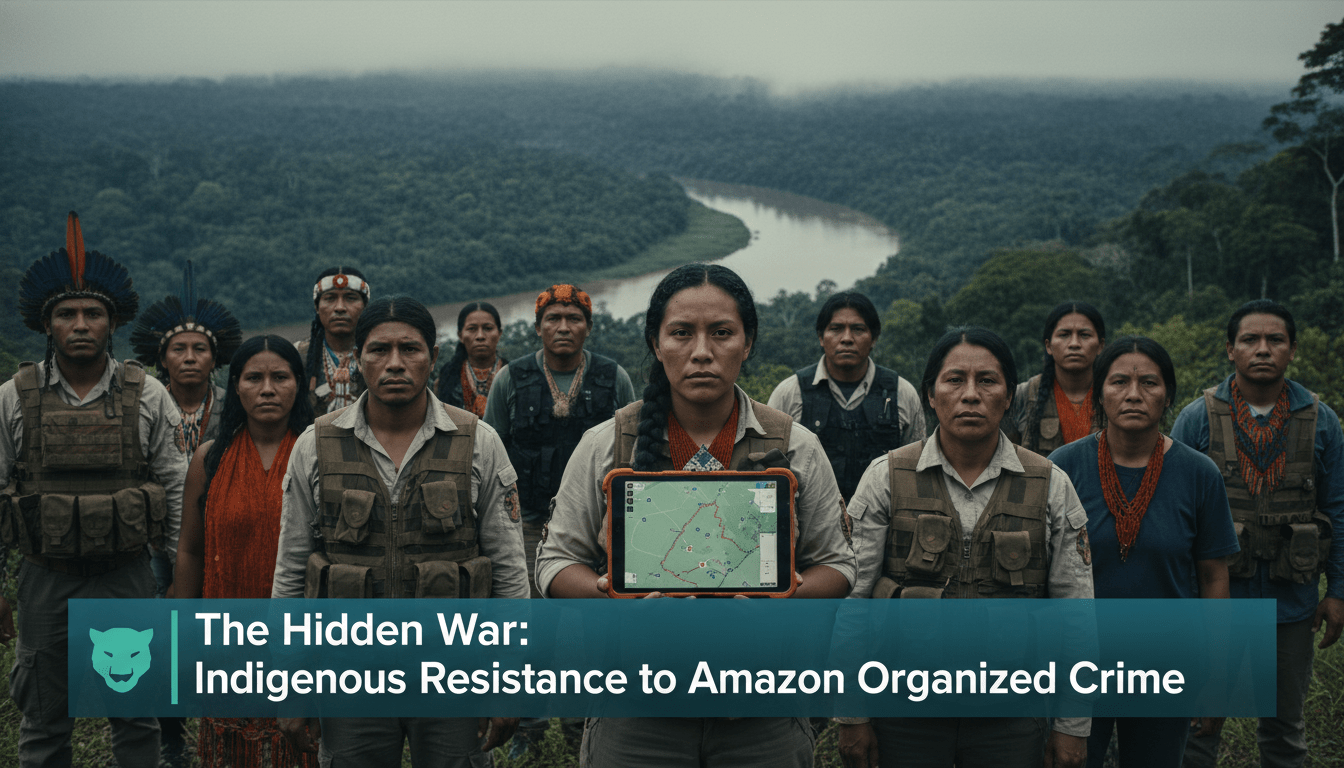
The petition presented a very clear alternative to state militarization. Indigenous and Afro-Indigenous leaders advocated for a rights-based approach. They demanded recognition as equal partners, rather than helpless subjects. The communities already possess highly effective strategies for protection. They operate unarmed, community-led security patrols. These brave groups are widely known as Indigenous Guards.
These guards combine ancient ancestral knowledge with modern technology. They use GPS devices, drones, and satellite imagery. They actively monitor their remote territories for illegal mining and logging. When they spot intruders, they file formal legal complaints. They maintain a permanent, watchful presence on the land. This makes them far more effective than temporary military raids (amazonfrontlines.org).
Several communities have demonstrated remarkable success. The Wampís Nation in Peru successfully expelled illegal miners from their territory. They relied entirely on local patrols and strong community organization. These solutions cost significantly less than state military campaigns. Yet, the guards operate with very little funding. They rely on international solidarity funds and local community donations (amazonwatch.org). The leaders demand that state governments legally recognize and finance these vital efforts.
The Rise in Illegal Mining (2010 – 2020)
Connecting the Diaspora to the Amazon
The struggle in the Amazon connects to a much larger global movement. Afro-Indigenous and Afro-descendant leaders view their fight as part of the broader African Diaspora. They seek territorial justice on an international scale. This concept links land rights directly to climate justice and historical reparations. They demand recognition for centuries of colonial violence, erasure, and enslavement.
Organizations like the Global Afro-Descendant Climate Justice Collaborative lead this massive effort. They highlight how environmental destruction disproportionately impacts Black communities worldwide. Regional networks coordinate activism across North America, the Caribbean, and South America. They aggressively pressure international bodies to acknowledge their ancestral land claims. This unified front demonstrates profound shared struggles against oppression (un.org, iwgia.org).
These efforts gained immense momentum during the UN International Decade for People of African Descent. The decade provided a critical framework for demanding justice. It allowed Amazonian leaders to join forces with global Black rights movements. Together, they challenge the systemic racism deeply embedded in national land titling agencies. They draw profound inspiration from the revolutionary rise of past social justice organizations. Their collective voice grows significantly stronger every single day.
A Call for Self-Determination
The 2026 UN petition marks a fundamental shift in the Amazonian struggle. Indigenous and Afro-Indigenous peoples refuse to remain silent victims. They have positioned themselves as vital political authorities. They stand as essential, capable allies in the massive fight against transnational crime. Their communities hold the ultimate key to protecting the world’s most critical rainforest.
Their demands remain entirely clear and incredibly urgent. They require immediate legal recognition of their ancestral land rights. They desperately need direct funding for their highly effective community-led security systems. Furthermore, they demand a complete end to violent state militarization. The Amazon does not serve as a lawless frontier waiting to be conquered by force. It serves as a sacred home to thousands of communities fighting for their lives. The world must finally listen and actively support their right to self-determination.
About the Author
Darius Spearman is a professor of Black Studies at San Diego City College, where he has been teaching for over 20 years. He is the founder of African Elements, a media platform dedicated to providing educational resources on the history and culture of the African diaspora. Through his work, Spearman aims to empower and educate by bringing historical context to contemporary issues affecting the Black community.
