


Why Black Farmers Fight for Food and Health Justice
By Darius Spearman (africanelements)Support African Elements at patreon.com/africanelements and hear recent news in a single playlist. Additionally, you can gain early access to ad-free video content.
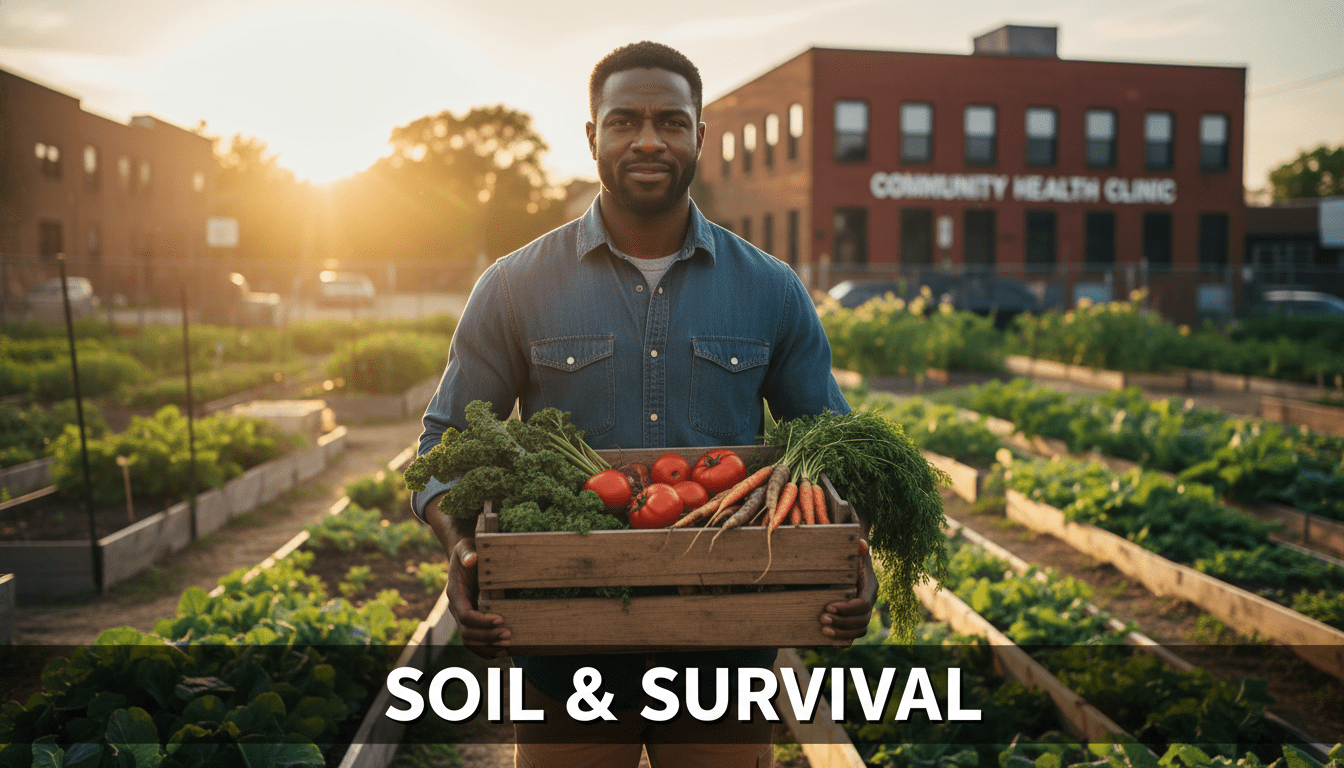
In the historic community of Sunnyside in south Houston, growing organic vegetables has become a vital act of survival (wordinblack.com). For Jeremy Peaches, a thirty-three-year-old agriculturalist, farming is a way to nourish his neighborhood (wordinblack.com). He manages twenty-five acres of crops for local food banks and residents (wordinblack.com). However, the daily struggle has expanded far beyond the soil of the farm into the waiting rooms of medical clinics. A close friend and fellow farmer recently suffered a severe injury from heavy machinery on the job (wordinblack.com). Because he could not work during his recovery, he lost his health insurance (wordinblack.com). Almost overnight, his monthly medication costs surged from thirty dollars to six hundred dollars (wordinblack.com). Without these crucial medications, he cannot return to the land to feed his family (wordinblack.com).
This crisis is not an isolated event. Across the United States, Black agricultural networks are elevating the intersection of food security and healthcare access as a premier civil rights issue. Independent Black farmers are mobilizing to demand strong policy protections as they face a triple threat. They must navigate escalating operational costs, the systemic erosion of federal food assistance, and the sudden expiration of medical safety nets (wordinblack.com). To understand how agriculture and healthcare became the frontlines of a modern social justice movement, one must examine a century of systemic land loss, urban food apartheid, and the fragile state of healthcare in America.
The Great Dispossession: Black-Owned Farmland Decline
A visual comparison of active Black farm operators and total acreage from the historical peak to the modern era.
A Legacy of Dispossession: How Black Land Was Stolen
The precarity of the modern Black farmer is the direct result of a century-long campaign of economic exclusion. At the turn of the twentieth century, despite the broken Reconstruction-era promise of forty acres and a mule, Black Americans achieved remarkable agricultural success (radicalteatowel.com). By the year 1920, the United States Department of Agriculture recorded nearly one million Black farm operators (ucs.org). This number represented approximately fourteen percent of all farmers in the nation (ucs.org). This period marked the historical peak of Black agricultural self-sufficiency, with families holding title to millions of acres of rich southern farmland (ucs.org).
Unfortunately, this massive accumulation of wealth was systematically dismantled over the next several decades. By the year 2017, Black-owned land had plummeted to a mere fraction of its former acreage (ucs.org). Today, Black operators make up only 1.4 percent of the farming population, showing a ninety-eight percent decline (ucs.org). Historical researchers point to discriminatory practices by federal agencies that routinely denied Black farmers access to low-interest loans, crop insurance, and disaster subsidies (capitalbnews.org, ucs.org). At the same time, predatory legal tactics exploited families who owned land without a formal will, forcing unfair auctions that stripped families of their ancestral property (opencasebook.org). This severe economic extraction left communities of color vulnerable to systemic cycles of debt and deprivation.
A landmark study published by the American Economic Association quantified the economic damage of this century-long land loss (aeaweb.org). Economists calculated that the present-day, compounded value of Black land lost between 1920 and 1997 is a conservative 326 billion dollars (aeaweb.org). This massive loss of capital stripped generations of Black families of the collateral needed to secure home mortgages, fund higher education, or build safety nets for medical emergencies. While the class-action lawsuit Pigford versus Glickman resulted in payouts to settle discrimination claims, the litigation did little to restore the millions of acres of lost ancestral land (ucs.org, nationalaglawcenter.org).
The Battle of Sunnyside: Fighting Food Apartheid in Houston
The modern movement for food sovereignty is taking root in urban spaces that were shaped by decades of segregation and municipal neglect. In south Houston, the neighborhood of Sunnyside serves as a stark example of how historical disinvestment directly impacts community health. Over seventy percent of Sunnyside residents are subject to food apartheid, meaning they do not have easy access to fresh, affordable produce (texashousers.org, childrenatrisk.org). Furthermore, approximately twenty-five percent of households in the area do not own a vehicle (texashousers.org, childrenatrisk.org). This lack of transportation makes buying healthy groceries an incredibly difficult task that requires long, exhausting journeys on public transit.
The community has also faced severe environmental hazards that threaten public health. In the mid-twentieth century, municipal officials constructed a massive garbage incinerator and landfills directly in the center of the neighborhood (houstonchronicle.com). This heavy concentration of waste facilities exposed residents to toxic air pollutants and heavy metals for decades (houstonchronicle.com). Although federal regulators eventually shut down the incinerator, the toxic legacy of environmental racism remains (houstonchronicle.com). Because of chronic pollution and a lack of local medical resources, Sunnyside sits in the bottom ten percent for life expectancy nationwide (childrenatrisk.org). The neighborhood suffers from elevated rates of heart disease, diabetes, and respiratory illnesses (childrenatrisk.org).
To combat these deep disparities, local agriculturalists are actively organizing to transform their neighborhood. Ivy Lawrence-Walls, a former epidemiologist, returned to her family property to launch Ivy Leaf Farms in the year 2020 (ediblecommunities.com). She realized that prescribing fresh, organic food is just as important as prescribing pharmaceuticals to manage chronic disease (ediblecommunities.com). By partnering with Jeremy Peaches, she created the Black Farmer Box initiative to distribute affordable, locally grown produce to families (wordinblack.com, ediblecommunities.com). This project operates much like historic community programs designed by the Black Panther Party to feed and protect vulnerable urban populations. These agriculturalists believe that community health must begin with control over the food supply.
Sunnyside Neighborhood Disparities
The intersection of transit access, nutrition, and environmental health in south Houston.
A Dangerous Profession: The Farm Healthcare Crisis
While urban farms are successfully building local food systems, the farmers themselves face a quiet healthcare emergency. Independent farming is highly hazardous work that involves heavy machinery, exposure to extreme weather, and severe physical strain (nih.gov). However, most small-scale farmers do not have access to corporate health insurance plans (kff.org). Instead, they must purchase their own coverage through the individual marketplace established by the Affordable Care Act (kff.org). Approximately twenty-seven percent of the agricultural workforce relies on this individual marketplace, compared to only six percent of the general population (kff.org).
For several years, federal tax credits kept these insurance premiums affordable for families who operate on thin profit margins (kff.org, kff.org). That temporary safety net vanished when enhanced federal subsidies expired at the end of the year 2025 (kff.org, kff.org). Consequently, independent farmers in 2026 are experiencing massive premium increases that threaten to drive them out of business entirely. Some growers report that their monthly health insurance costs are jumping to thousands of dollars per month (wordinblack.com). This financial burden is deeply alarming because more than twenty percent of farm households in the United States already carry significant medical debt (nih.gov).
This medical debt is a major obstacle for farmers who are trying to preserve their ancestral land. When agricultural workers must choose between paying for health insurance premiums or buying seed and fertilizer, they often forgo medical coverage entirely. A single accident on the farm can lead to medical bankruptcy (wordinblack.com). In many cases, families are forced to sell their property to resolve hospital debts, which accelerates the loss of Black-owned land. This vulnerability shows how the lack of a basic medical safety net directly threatens the economic survival of independent agriculturalists (wordinblack.com).
Broken Promises: The Failure of Federal Policy
The contemporary healthcare crisis is worsening at the same time that federal safety nets for low-income families are being dismantled. Historically, Black farmers have struggled to receive fair treatment from federal agencies. This systemic bias led to the landmark civil rights lawsuit known as Pigford versus Glickman (nationalaglawcenter.org). Although the settlement provided financial relief to some claimants, it did not restore the millions of acres of lost Black farmland (oaklandinstitute.org, ucs.org). Today, new federal policies are putting additional strain on vulnerable communities and independent growers.
A major budget reconciliation bill passed in mid-2025, known as the One Big Beautiful Bill Act, has cut funding for vital social safety-net programs (capitalbnews.org, capitalbnews.org). This law slashes billions of dollars from Medicaid and the Supplemental Nutrition Assistance Program over the next decade (capitalbnews.org, capitalbnews.org). It introduces strict work-reporting requirements for Medicaid expansion enrollees and extends work requirements for SNAP recipients up to age sixty-four (capitalbnews.org, capitalbnews.org). These sudden cuts make it much harder for low-income families to afford fresh food from local growers (capitalbnews.org). These policies hit vulnerable populations hard, including veterans and youth exiting foster care (capitalbnews.org, capitalbnews.org).
In response to these cuts, independent Black farmers are stepping in to act as the ultimate safety net. For example, in Charlotte, North Carolina, Cherie Jzar has been giving away free bags of fresh greens and berries to senior citizens who have been impacted by federal food assistance delays (capitalbnews.org). Her actions show how Black workers fought and continue to fight to protect their communities when formal institutions fail. However, these farmers are carrying this burden without any formal safety net of their own (wordinblack.com).
Federal Safety Net Reductions (H.R. 1 Impact)
Projected 10-year federal spending cuts enacted under the One Big Beautiful Bill Act of 2025.
Reclaiming Sovereignty: The Call for Policy Protections
To address these compounding crises, Black agricultural networks are demanding immediate policy interventions from federal and state governments. Activists argue that food security and healthcare access are deeply connected issues that cannot be separated (wordinblack.com). They are urging lawmakers to establish a dedicated medical safety net for small-scale and independent farmers (wordinblack.com). This program would ensure that agricultural workers do not have to choose between their health and their livelihood.
Additionally, advocates are calling for increased funding to protect families from predatory land sales and legal exploitation (americanbar.org). They also want direct grants to build essential farming infrastructure, such as cold storage and processing centers, in historic neighborhoods like Sunnyside (wordinblack.com). By integrating local farms into state health programs, doctors could write prescriptions for fresh produce that are fully covered by insurance (wordinblack.com, ediblecommunities.com). This holistic approach would help heal communities from the inside out while supporting the independent growers who feed them. This struggle for health equity is deeply rooted in a painful history of medical exploitation that the Black community has fought against for generations.
These proposed “Food-as-Medicine” initiatives are showing promising results in pilot programs across the country. In practice, medical professionals screen patients for food insecurity and chronic conditions during routine clinic visits. They then write prescriptions for fresh produce that function much like standard pharmaceutical orders. Patients can redeem these prescriptions at participating local markets and Black-owned urban farms, which are subsequently reimbursed by state health plans. This system creates a healthy, sustainable cycle. It provides patients with highly nutritious foods while opening reliable revenue streams for small-scale minority growers who are fighting to stay on their land.
Planting Seeds of Resistance
The modern struggle of Black farmers in Houston and across the country demonstrates that food justice is inseparable from health equity. For over a century, the systematic loss of land stripped Black families of the economic foundation needed to survive major health crises and financial shocks (ucs.org). Today, as independent growers work to eradicate food apartheid and heal their neighborhoods, they remain highly vulnerable to volatile insurance systems and hostile federal policies (wordinblack.com, capitalbnews.org).
By demanding medical safety nets and strong economic protections, these agricultural networks are expanding the boundaries of civil rights. They are proving that the fight for freedom is not solely about legislative victories. It is about the fundamental right to own land, cultivate healthy food, and protect the health of future generations.
About the Author
Darius Spearman is a professor of Black Studies at San Diego City College, where he has been teaching for over 20 years. He is the founder of African Elements, a media platform dedicated to providing educational resources on the history and culture of the African diaspora. Through his work, Spearman aims to empower and educate by bringing historical context to contemporary issues affecting the Black community.
